

 Open Access||Research Article
Sustainable Social Enterprises in Post-Conflict Communities: Pathways to Resilience, Recovery, and Inclusive Development
1 Department of Social Work, Kalinga University, Raipur, Chhattisgarh 492101, India
2 Department of Social Development, Kano State Polytechnic, Kano, 700282, Nigeria
3 Department of Sociology, Bayero University, Kano, 700006, Nigeria
Abstract
Post-conflict communities face multidimensional challenges including disrupted economies, weakened governance systems, and eroded social cohesion. While humanitarian aid provides immediate relief, it often fails to generate long-term sustainability. Social enterprises — organizations that integrate social and environmental objectives into profit-making activities — offer a promising model for inclusive recovery. This study critically examines the role of sustainable social enterprises in post-conflict communities, focusing on their economic, social, and ecological contributions. Using a qualitative desk review and global case studies (Rwanda, Sierra Leone, Bosnia), the study proposes a framework for integrating sustainability into enterprise models. Findings reveal that social enterprises foster resilience, empower marginalized groups, and contribute to peacebuilding, though challenges remain in access to finance, governance, and capacity building. This study concludes by recommending policy reforms, multi-stakeholder partnerships, and social work engagement to strengthen sustainable enterprise development in fragile contexts.
Keywords
Graphical Abstract
Novelty Statement
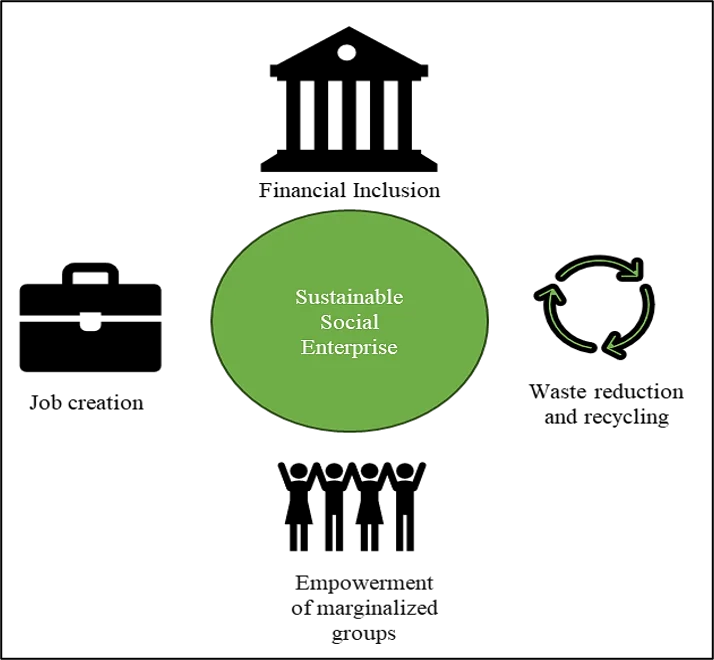
The role of sustainable social enterprises in post-conflict communities focusing on their economic, social, and ecological contributions.
1. Introduction
Post-conflict societies often emerge from violent conflict with fragile institutions, fractured social relations, and weakened economic structures. In such contexts, the challenges of reconstruction go beyond rebuilding physical infrastructure; they extend to restoring social cohesion, rebuilding trust, and creating pathways for sustainable livelihoods. Traditional humanitarian aid, though essential in the immediate aftermath of war, has been critiqued for fostering dependency, offering short-term relief rather than long-term empowerment.[1,2] For post-conflict communities to achieve resilience and self-reliance, innovative development strategies that integrate economic, social, and environmental dimensions are required. One such approach gaining scholarly and policy attention is the promotion of sustainable social enterprises. A social enterprise is broadly defined as an organization that applies market-based strategies to achieve social or environmental goals while generating financial returns.[3,4] Unlike conventional businesses, social enterprises embed social value creation within their core mission. In post-conflict settings, they provide a unique model for inclusive recovery, offering employment opportunities, fostering reconciliation, and promoting environmentally responsible practices. Their capacity to bridge the gap between profit-driven business and aid-driven charity makes them particularly relevant in fragile contexts where both state and market institutions are weak.[5] The concept of sustainability, often articulated through Elkington’s triple bottom line framework-people, planet, and profit-further strengthens the case for social enterprises in post-conflict recovery.[6] Sustainable social enterprises not only generate economic opportunities but also emphasize environmental stewardship and social inclusion. For example, agricultural cooperatives in Rwanda have simultaneously contributed to poverty reduction, reconciliation between formerly hostile groups, and ecological conservation.[7] Similarly, waste-to-wealth initiatives in Sierra Leone have demonstrated how social enterprises can reduce urban pollution while empowering marginalized youth through job creation.[8] Despite these promising examples, post-conflict environments pose complex barriers to enterprise sustainability. These include limited access to finance, weak governance, political instability, inadequate infrastructure, and the psychological scars of war that undermine trust and cooperation.[9] The paradox of post-conflict development is that while communities are in dire need of innovative economic models, the fragility of institutions often deters investment and hinders long-term business sustainability. Thus, examining how sustainable social enterprises can overcome these structural barriers is critical for theory and practice. This study addresses this gap by exploring the role of sustainable social enterprises in post-conflict recovery. Specifically, it investigates how these enterprises contribute to economic development, social cohesion, and environmental sustainability, while also identifying the challenges they face in fragile contexts. Drawing on secondary sources-including academic literature, NGO reports, and case studies from Rwanda, Sierra Leone, and Bosnia-the study develops a framework for embedding sustainability into enterprise models in post-conflict settings.
The study is guided by the following research questions:
1.How do sustainable social enterprises contribute to recovery and resilience in post-conflict communities?
2.What are the major challenges that constrain their effectiveness and sustainability?
3.What strategies or frameworks can strengthen their role in inclusive and sustainable post-conflict development?
By addressing these questions, the paper contributes to the academic and policy discourse in three key ways. First, it bridges the gap between social enterprise literature and post-conflict development studies, two fields that have traditionally been studied in isolation. Second, it highlights the relevance of sustainability in fragile contexts, where environmental degradation, social exclusion, and economic vulnerability are deeply interconnected. Third, it offers practical recommendations for policymakers, practitioners, and social work professionals who play a vital role in supporting vulnerable populations through community mobilization, psychosocial support, and advocacy. Following this introduction, the literature review examines theoretical and empirical perspectives on social enterprises, sustainability, and post-conflict development. The methodology outlines the qualitative desk research approach adopted for this study. The findings and discussion present evidence from global case studies and analyze the opportunities and challenges for sustainable social enterprises in fragile contexts. The implications for social work practice highlight the role of practitioners in supporting social enterprise initiatives in conflict-affected settings. Finally, the conclusion synthesizes insights and offers recommendations for future policy and practice. In doing so, this paper argues that sustainable social enterprises represent a vital yet underexplored pathway for resilience, recovery, and inclusive development in post-conflict communities. By aligning social justice, environmental sustainability, and economic empowerment, they offer a model of development that is not only transformative but also consistent with the aspirations of the United Nations’ Sustainable Development Goals (SDGs), particularly Goal 1 (No Poverty), Goal 8 (Decent Work and Economic Growth), and Goal 16 (Peace, Justice, and Strong Institutions).
2. Literature review
2.1 Social enterprises: concept and theory
The concept of social enterprise has gained significant attention in both academic and policy circles over the past three decades. Social enterprises are typically defined as organizations that blend social mission with market-based strategies, balancing financial sustainability with the pursuit of social or environmental goals.[3] This dual mission distinguishes social enterprises from traditional non-profit organizations, which primarily rely on external funding, and from profit-driven firms, which prioritize financial returns above all else.[5] Several theoretical perspectives underpin the study of social enterprises. The social innovation theory highlights the capacity of social enterprises to introduce novel solutions to entrenched social problems.[10] Meanwhile, the resource dependency perspective emphasizes how these organizations navigate resource constraints by diversifying funding sources, including grants, donations, and earned income.[11] Another useful lens is institutional theory, which explains how social enterprises adapt to complex institutional environments where they must align with both business norms and social accountability expectations.[12] The diversity of definitions and models of social enterprise reflects variations across regions. In Europe, the cooperative tradition has strongly influenced social enterprise models, emphasizing democratic governance and collective ownership.[13] In contrast, North American models often highlight innovation, entrepreneurship, and hybrid structures that combine non-profit and for-profit logics.[5] These contextual differences are important when considering post-conflict communities, where cultural values, governance systems, and economic institutions profoundly shape enterprise models.
2.2 Post-conflict development challenges
Post-conflict societies face a range of structural and psychosocial challenges that complicate recovery.
According to Collier, countries emerging from civil war are more likely to relapse into conflict within the first decade of peace, underscoring the fragility of such transitions. [1] Core challenges include:
1.Economic collapse and unemployment – Conflict often devastates local economies, destroys infrastructure, and disrupts livelihoods. In fragile contexts, unemployment rates can exceed 50%, especially among youth, creating fertile ground for renewed instability.[2]
2.Weak governance and institutions – Wars erode trust in public institutions and undermine state legitimacy. Post-conflict governments often lack the capacity to regulate markets, enforce contracts, or provide basic services.[14]
3.Social fragmentation and trauma – Conflict fosters mistrust, social divisions, and psychological trauma. Rebuilding social cohesion is as critical as physical reconstruction.[15]
4.Environmental degradation – Armed conflict accelerates deforestation, soil erosion, and resource depletion, further undermining community resilience.[16]
These interlinked challenges create a complex development landscape where traditional aid-driven interventions frequently fall short. Humanitarian assistance often addresses immediate needs but fails to empower communities or build long-term resilience.[17] Social enterprises, with their hybrid structure and sustainability orientation, present a compelling alternative for addressing these multidimensional challenges.
2.3 Sustainability frameworks
The integration of sustainability into social enterprise models is crucial in post-conflict contexts. The most widely recognized framework is Elkington’s triple bottom line (TBL), which emphasizes the simultaneous pursuit of people (social equity), planet (environmental protection), and profit (economic viability).[6] This framework aligns closely with the mission of social enterprises, which are designed to balance financial sustainability with social impact. Furthermore, the United Nations Sustainable Development Goals (SDGs), adopted in 2015, provide a global framework for linking social enterprise activities to broader development objectives. For example, Goal 1 (No Poverty) and Goal 8 (Decent Work and Economic Growth) directly resonate with the employment and income-generation potential of social enterprises, while Goal 13 (Climate Action) and Goal 15 (Life on Land) highlight the importance of environmental stewardship.[18] In post-conflict settings, sustainability frameworks help to ensure that interventions do not simply deliver short-term recovery but contribute to long-term resilience. For instance, integrating ecological practices into agricultural enterprises can both restore livelihoods and rehabilitate degraded environments, while inclusive governance in social enterprises can promote reconciliation and trust-building among divided groups.
2.4 Case studies from post-conflict contexts
A growing body of empirical research highlights the potential of social enterprises in post-conflict recovery.
- Rwanda: After the 1994 genocide, coffee cooperatives played a critical role in rebuilding livelihoods and fostering reconciliation between Hutu and Tutsi communities. These cooperatives not only generated income but also provided spaces for dialogue and collective decision-making.[7]
- Sierra Leone: Waste management enterprises have emerged as innovative solutions to urban unemployment and environmental degradation. By engaging youth in recycling and waste-to-wealth projects, these enterprises reduce pollution while addressing youth marginalization, a key driver of conflict.[8]
- Bosnia and Herzegovina: Social cooperatives supporting war veterans and internally displaced persons have been instrumental in integrating vulnerable groups into the labor market while strengthening social cohesion.[19]
- Afghanistan: Women-led enterprises in handicrafts and agriculture have empowered women economically while challenging restrictive gender norms in conservative societies.[20]
- These case studies demonstrate that social enterprises can address intertwined economic, social, and environmental needs in fragile contexts. However, they also reveal challenges such as limited scalability, dependence on donor funding, and vulnerability to political instability.
2.5 Gaps in literature
Despite increasing attention, research on sustainable social enterprises in post-conflict communities remains limited in several respects. First, most studies focus on isolated case studies without developing comparative frameworks that generalize across contexts. Second, while there is substantial literature on either post-conflict development or social enterprises, the intersection of the two fields remains underexplored.[9] Third, limited attention has been paid to the role of social workers and local practitioners in supporting enterprise development, despite their critical role in mobilizing communities and addressing psychosocial needs. Finally, sustainability dimensions, particularly environmental considerations are often sidelined in post-conflict enterprise literature, even though ecological degradation is a significant challenge in many fragile contexts.
In summary, the literature underscores the potential of sustainable social enterprises as innovative vehicles for post-conflict recovery. By blending social, environmental, and economic goals, they offer a holistic model for resilience-building. However, gaps remain in theory, practice, and policy, necessitating further research and frameworks to strengthen their effectiveness in fragile settings.
3. Methodology
3.1 Research design
This study adopts a qualitative desk research design, which is appropriate for exploring complex and multidimensional issues such as the role of sustainable social enterprises in post-conflict recovery. Desk research, also referred to as secondary research, involves the systematic collection, review, and synthesis of existing literature, including academic publications, NGO reports, policy documents, and case studies.[21] Unlike primary research, which collects new empirical data, desk research draws upon already available data to identify patterns, generate insights, and build conceptual frameworks. This approach is particularly valuable in fragile and conflict-affected settings, where access to primary data can be constrained by security risks, logistical challenges, and ethical concerns.[22]
3.2 Rationale for qualitative approach
Qualitative research methods are well-suited for this study because they allow for an in-depth understanding of social processes, institutional dynamics, and contextual realities that shape enterprise development in post-conflict settings. Unlike quantitative approaches that emphasize measurement and statistical generalization, qualitative analysis focuses on interpretation, meaning, and contextual richness.[23] This study aims not to measure the scale of social enterprises in post-conflict settings, but to understand how they function, what challenges they face, and how sustainability can be integrated into their models.
3.3 Case study method
The study employs a case study approach to analyze examples of social enterprises in post-conflict communities. Case study research is particularly effective in exploring contemporary phenomena within real-life contexts, especially when the boundaries between the phenomenon and its context are blurred.[24] By examining case studies from Rwanda, Sierra Leone, Bosnia and Herzegovina, and Afghanistan, the paper identifies patterns of success, challenges, and lessons that can inform broader frameworks for sustainable enterprise development in fragile contexts.
3.4 Data sources
Secondary data for this research were drawn from multiple sources to ensure validity and triangulation. These include:
- Academic Literature: Peer-reviewed journal articles and books on social enterprises, post-conflict recovery, and sustainability.
- Policy and NGO Reports: Documents from the United Nations Development Programme (UNDP), World Bank, International Labour Organization (ILO), and international NGOs involved in post-conflict development.
- Case Study Documentation: Reports and evaluations of specific social enterprise projects in post-conflict regions.
The use of diverse sources enhances the credibility and robustness of findings by providing multiple perspectives on the phenomenon under study.[25]
3.5 Analytical framework
Data were analyzed through thematic analysis, which involves identifying, categorizing, and interpreting recurring themes within the literature.[26] The analysis focused on three thematic dimensions aligned with the triple bottom line framework:
1.Economic outcomes (employment, income generation, market access).
2.Social outcomes (reconciliation, social cohesion, empowerment).
3.Environmental outcomes (resource management, ecological sustainability).
This thematic structure provided a systematic lens for comparing case studies and synthesizing insights.
3.6 Limitations
As a desk-based study, this research is limited by its reliance on secondary data, which may reflect the biases or priorities of original authors or institutions. Furthermore, the availability of high-quality data varies across contexts; some post-conflict regions have more extensive documentation than others. The absence of primary fieldwork also limits the ability to capture lived experiences of community members engaged in social enterprises. Nonetheless, the triangulation of diverse secondary sources helps to mitigate these limitations and provides a strong foundation for conceptual analysis.
In summary, the methodological approach-qualitative desk research with a case study focus-offers an effective means of exploring the contributions and challenges of sustainable social enterprises in post-conflict settings. By drawing on multiple data sources and employing thematic analysis, the study ensures a comprehensive and context-sensitive understanding of the subject matter.
4. Findings and discussion
4.1 Introduction to findings
The analysis of literature and case studies reveals that sustainable social enterprises make significant contributions to post-conflict recovery by promoting economic resilience, social cohesion, and environmental sustainability. These contributions, however, are mediated by structural challenges, including fragile governance systems, limited access to finance, and socio-political instability. This section discusses findings across three dimensions of the triple bottom line framework-economic, social, and environmental-before addressing the key challenges faced by social enterprises and proposing a conceptual framework for strengthening their role in post-conflict recovery.
4.2 Economic contributions of social enterprises
Economic recovery is a central priority in post-conflict contexts, where livelihoods are disrupted, unemployment is widespread, and markets are underdeveloped. Social enterprises offer innovative mechanisms for generating income and creating sustainable employment, as shown in Fig. 1.
Fig.1: Economic contributions of the social enterprises.
4.2.1 Job creation and livelihood restoration
Social enterprises in Rwanda provide a strong example of how collective enterprise can generate employment and rebuild livelihoods. Coffee cooperatives established after the 1994 genocide not only restored agricultural production but also created jobs for thousands of smallholder farmers.[7] These cooperatives enabled farmers to access international markets, increase their incomes, and reduce reliance on subsistence farming. Similarly, waste-to-wealth initiatives in Sierra Leone employed marginalized youth in recycling projects, reducing unemployment and improving urban sanitation.[8]
4.2.2 Financial inclusion and market access
Many post-conflict populations lack access to formal banking systems due to the collapse of financial institutions during war. Social enterprises often establish microfinance schemes and savings cooperatives that enhance financial inclusion. For example, women-led agricultural enterprises in Afghanistan provided small loans and training to rural women, allowing them to engage in productive activities and gain financial independence.[20] These initiatives empower vulnerable groups to participate in markets, thereby strengthening community resilience.
4.2.3 Local economic development
Beyond individual livelihoods, social enterprises stimulate broader local economic development. By sourcing locally, employing community members, and reinvesting profits into social initiatives, they contribute to community wealth-building. In Bosnia, cooperatives supporting war veterans facilitated not only individual reintegration but also strengthened local economies by reviving agricultural value chains.[19]
4.3 Social contributions of social enterprises
Post-conflict recovery requires more than economic reconstruction; it also necessitates the rebuilding of trust, reconciliation, and social capital. Social enterprises, through their collective and participatory models, contribute significantly to these processes.
4.3.1 Reconciliation and trust-building
Social enterprises often create platforms for individuals from formerly hostile groups to collaborate in shared economic ventures. For instance, coffee cooperatives in Rwanda brought together Hutu and Tutsi farmers in collective decision-making structures, fostering dialogue and reconciliation.[7] By working toward a shared goal, these communities rebuilt trust and reduced intergroup hostility.
4.3.2 Empowerment of marginalized groups
Social enterprises frequently focus on empowering vulnerable groups, including women, youth, and internally displaced persons (IDPs). Women-led enterprises in Afghanistan challenged restrictive gender norms by enabling women to engage in public and economic life.[20] Similarly, youth-led recycling enterprises in Sierra Leone empowered disenfranchised young men-previously at risk of engaging in violence-by providing them with meaningful employment and social recognition.[8]
4.3.3 Strengthening social capital
By fostering cooperation, transparency, and democratic decision-making, social enterprises contribute to the rebuilding of social capital. They promote collective ownership and community participation, which are crucial for long-term stability. Branzei and Abdelnour argue that in fragile contexts, the participatory governance structures of social enterprises enhance community agency and reduce dependency on external aid.[9]
4.4 Environmental contributions of social enterprises
Environmental degradation is both a cause and a consequence of violent conflict. Sustainable social enterprises, through their ecological focus, contribute to environmental rehabilitation in post-conflict communities.
4.4.1 Resource management and conservation
Agricultural cooperatives in Rwanda adopted sustainable farming techniques, such as soil conservation and organic farming, which not only improved yields but also rehabilitated degraded land.[7] Such practices enhance food security while ensuring long-term environmental sustainability.
4.4.2 Waste reduction and recycling
In urban post-conflict settings, waste management is a critical challenge. Recycling enterprises in Sierra Leone addressed this issue by transforming waste into marketable products, simultaneously reducing environmental pollution and creating economic opportunities.[8] This dual benefit underscores the potential of environmentally oriented social enterprises to address multiple dimensions of post-conflict recovery.
4.4.3 Climate change adaptation
Post-conflict communities are particularly vulnerable to climate change due to weakened institutions and depleted resources. Social enterprises promoting renewable energy and sustainable agriculture provide adaptive strategies that reduce vulnerability to environmental shocks. By integrating climate resilience into their models, these enterprises help communities withstand future crises.
4.5 Challenges facing social enterprises in post-conflict contexts
Despite their contributions, social enterprises face significant barriers in fragile environments.
1. Limited access to finance: Post-conflict economies often lack functioning financial systems, making it difficult for social enterprises to secure capital for startup and expansion.[9]
2.Weak governance and policy support: Governments emerging from conflict may lack the institutional capacity to provide regulatory frameworks, legal recognition, or incentives for social enterprises.[14]
3.Dependence on donor funding: Many social enterprises in fragile contexts rely heavily on donor support, which raises concerns about sustainability and autonomy.[17]
4.Social fragmentation and trauma: The psychological scars of conflict, distrust, fear, and trauma, can hinder collaboration and collective action, which are essential for social enterprise success.[22]
5.Market Constraints: Poor infrastructure, limited access to international markets, and weak value chains reduce the competitiveness of social enterprises in fragile settings.
These challenges highlight the need for enabling policies, financial mechanisms, and capacity-building programs to strengthen social enterprises in post-conflict communities.
4.6 Proposed framework for sustainable social enterprises in post-conflict contexts
Drawing on the findings, this paper proposes a four-pillar framework for enhancing the sustainability of social enterprises in post-conflict recovery:
1.Policy and institutional support: Governments and international agencies should establish legal frameworks that recognize social enterprises, provide tax incentives, and facilitate access to credit.
2.Inclusive governance and participation: Social enterprises should adopt participatory decision-making models to build trust, promote reconciliation, and ensure representation of marginalized groups.
3.Multi-stakeholder partnerships: Collaboration between governments, NGOs, private sector actors, and social enterprises can mobilize resources, knowledge, and markets to scale impact.
4.Monitoring and evaluation for sustainability: Integrating sustainability indicators, economic, social, and environmental, into evaluation frameworks can help track progress and ensure accountability.
This framework aligns with the broader goals of sustainable development and peacebuilding, offering a holistic approach to post-conflict recovery that transcends traditional aid paradigms.
4.7 Synthesis
The findings demonstrate that sustainable social enterprises play a transformative role in post-conflict communities by addressing intertwined economic, social, and environmental needs. While significant challenges remain, their hybrid model provides a unique pathway for inclusive and sustainable development. The proposed framework underscores the importance of supportive policies, inclusive governance, and partnerships in enhancing the long-term viability of social enterprises in fragile contexts.
5.1 Community mobilization and participation
Social workers play a crucial role in mobilizing communities and fostering participation in social enterprises. Post-conflict communities often suffer from mistrust and social fragmentation, which can hinder collective action. Social workers, drawing on their skills in group facilitation and community organizing, can help build inclusive spaces where diverse community members collaborate in enterprise development. By ensuring the participation of marginalized groups-such as women, youth, and internally displaced persons-social workers contribute to the equitable distribution of benefits and strengthen the legitimacy of social enterprises.[27]
5.2 Psychosocial support and trauma healing
Conflict leaves deep psychological scars that can undermine participation in collective ventures. Trauma, grief, and distrust often persist long after hostilities end, limiting people’s willingness to cooperate. Social workers are trained to provide psychosocial support, trauma counseling, and group therapy, which can be integrated into social enterprise programs. For instance, combining income-generating activities with trauma-healing workshops ensures that economic initiatives are accompanied by the emotional resilience needed to sustain them.[15] In this sense, social work enhances the social dimension of enterprise sustainability.
5.3 Advocacy and policy engagement
Social enterprises in post-conflict settings often struggle due to the absence of enabling policy frameworks.
Social workers can act as advocates at local, national, and international levels, pushing for laws and policies that recognize and support social enterprises. Advocacy efforts may include lobbying for access to microfinance, inclusion of social enterprises in national recovery plans, or the creation of legal frameworks for cooperatives. By engaging with policymakers, social workers contribute to structural reforms that strengthen the sustainability of enterprises.[28]
5.4 Capacity building and skills development
Another important role for social workers lies in capacity building. Many community members in post-conflict contexts lack the entrepreneurial, managerial, or technical skills required to sustain enterprises. Social workers can collaborate with NGOs, universities, and training institutions to design and deliver capacity-building programs. These may include workshops on financial literacy, cooperative governance, or environmentally sustainable practices. By enhancing human capital, social workers help communities manage and sustain their enterprises effectively.[29]
5.5 Ethical considerations and safeguarding
Social workers are bound by ethical principles that prioritize the dignity and rights of individuals. In the context of social enterprises, practitioners must ensure that vulnerable groups are not exploited for profit or subjected to unsafe working conditions. Ethical oversight is essential to prevent the replication of inequities within enterprise models. Social workers, by applying codes of ethics and safeguarding frameworks, protect the rights of participants while promoting collective well-being.[30]
5.6 Integration with sustainable development goals
Finally, social workers can position social enterprise initiatives within the broader agenda of the Sustainable Development Goals (SDGs). By linking enterprise activities to global goals such as poverty reduction (SDG 1), gender equality (SDG 5), and climate action (SDG 13), social workers enhance the visibility and legitimacy of local initiatives. This alignment also opens opportunities for international partnerships and funding, strengthening the long-term sustainability of social enterprises.
5.7 Synthesis
In sum, social work practice is integral to the success of sustainable social enterprises in post-conflict communities. By mobilizing communities, addressing psychosocial needs, advocating for enabling policies, building capacity, and ensuring ethical standards, social workers enhance the social, economic, and environmental impact of enterprises. Their involvement ensures that social enterprises not only generate economic benefits but also foster healing, inclusion, and resilience.
6. Conclusion
This paper has examined the role of sustainable social enterprises in post-conflict communities, emphasizing their contributions to economic recovery, social cohesion, and environmental sustainability. By integrating social mission with market-based strategies, social enterprises provide innovative solutions that extend beyond the short-term relief often associated with humanitarian aid. Case studies from Rwanda, Sierra Leone, Bosnia, and Afghanistan illustrate how social enterprises can foster livelihoods, empower marginalized groups, and promote reconciliation, while also addressing ecological concerns. Nevertheless, the findings also reveal significant challenges, including weak governance, limited access to finance, and the psychosocial legacies of conflict. These barriers highlight the need for enabling policy frameworks, capacity-building initiatives, and stronger multi-stakeholder collaborations to ensure the long-term viability of social enterprises. For social work practitioners, the study underscores the importance of community mobilization, trauma healing, advocacy, and skills development in supporting enterprise initiatives. Social workers’ involvement ensures that these ventures are not only economically viable but also socially inclusive and ethically sound. Ultimately, sustainable social enterprises offer a promising pathway toward resilience, recovery, and inclusive development in fragile contexts. By aligning with the Sustainable Development Goals (SDGs), they provide a holistic model that integrates economic empowerment, social justice, and environmental stewardship. Future research should deepen comparative analyses across diverse contexts, explore innovative financing mechanisms, and examine the long-term impacts of enterprise-led recovery on peacebuilding and community resilience.
Funding Declaration
This research did not receive any specific grant from funding agencies in the public, commercial, or not-for-profit sectors.
Data Availability Statement
The datasets and supporting analytical results generated and/or analyzed during this study are available from the corresponding author upon reasonable request.
Conflict of Interest
There is no conflict of interest.
Artificial Intelligence (AI) Use Disclosure
The authors confirm that there was no use of artificial intelligence (AI)-assisted technology for assisting in the writing or editing of the manuscript and no images were manipulated using AI.
Supporting Information
Not Applicable.
References
- [1] P. Collier, The bottom billion: Why the poorest countries are failing and what can be done about it, Oxford University Press, 2007.
- [2] World Bank, Pathways for peace: Inclusive approaches to preventing violent conflict, World Bank, 2018, doi: 10.1596/978-1-4648-1162-3.
- [3] J. G. Dees, The meaning of social entrepreneurship, Stanford University, 2001, Retrieved from https://entrepreneurship.stanford.edu, Accessed 29 June 2025.
- [4] M. Yunus, Creating a world without poverty: Social business and the future of capitalism, 2007, PublicAffairs, https://www.globalurban.org/GUDMag08Vol4Iss2/Yunus.pdf, Accessed 29 June 2025.
- [5] J. A. Kerlin, Defining social enterprise across different contexts: a conceptual framework based on institutional factors, Nonprofit and Voluntary Sector Quarterly, 2013, 42, 84–108, doi: 10.1177/0899764011433040.
- [6] J. Elkington, Cannibals with forks: The triple bottom line of 21st century business, Journal of Business Ethics, 2000, 23, 229–231, doi: 10.1023/A:1006129603978.
- [7] H. Hintjens, Post-genocide identity politics in Rwanda, Ethnicities, 2013, 13, 72–100, doi: 10.1177/1468796812453610.
- [8] J. Cooper, C. M. Vargas, Social entrepreneurship and post-conflict reconstruction: Waste-to-wealth initiatives in Sierra Leone, Journal of Social Entrepreneurship, 2019, 10, 127–146, doi: 10.1080/19420676.2018.1561494.
- [9] O. Branzei, S. Abdelnour, Another day, another dollar: Enterprise resilience under terrorism in developing countries, Journal of International Business Studies, 2010, 41, 804–825, doi: 10.1057/jibs.2009.52.
- [10] G. Mulgan, The process of social innovation, Innovations: Technology, Governance, Globalization, 2006, 1, 145-162, doi: 10.1162/itgg.2006.1.2.145.
- [11] K. A. Froelich, Diversification of revenue strategies: Evolving resource dependence in nonprofit organizations. Nonprofit and Voluntary Sector Quarterly, 1999, 28, 246–268, doi: 10.1177/0899764099283002.
- [12] P. A. Dacin, M. T. Dacin, P. Tracey, Social entrepreneurship: a critique and future directions, Organization Science, 2011, 22, 1203–1213, doi: 10.1287/orsc.1100.0620.
- [13] J. Defourny, M. Nyssens, Conceptions of social enterprise and social entrepreneurship in Europe and the United States: Convergences and divergences, Journal of Social Entrepreneurship, 2010, 1, 32–53, doi: 10.1080/19420670903442053.
- [14] D. W. Brinkerhoff, Rebuilding governance in failed states and post‐conflict societies: Core concepts and cross‐cutting themes, Public Administration and Development, 2005, 25, 3–14. doi: 10.1002/pad.352.
- [15] S. Barakat, S. A. Zyck, The Evolution of Post-conflict Recovery, Third World Quarterly, 2009, 30, 1069-1086, doi: 10.1177/0967010608100844.
- [16] J. C. Keenan, K. Conca, Environmental peacebuilding theory and practice, In T. Homer-Dixon & J. Blitt (Eds.), Ecoviolence: Links among environment, population, and security, Rowman & Littlefield, 2006, 77–98.
- [17] S. Autesserre, Peaceland: Conflict resolution and the everyday politics of international intervention, Cambridge University Press, 2014, https://www.carnegiecouncil.org/media/podcast/20141001-peaceland-conflict-resolution-and-the-everyday-politics-of-international-intervention, Accessed 29 June 2025.
- [18] United Nations, Transforming our world: The 2030 agenda for sustainable development, UN, 2015, https://sdgs.un.org/2030agenda, Accessed 30 June 2025.
- [19] P. Stubbs, Social enterprise in transition: A case study from post-war Bosnia and Herzegovina, South East European Journal of Economics and Business, 2009, 4, 99–110, doi: 10.2478/v10033-009-0012-9.
- [20] P. Kantor, Women’s Exclusion and Unfavorable Inclusion in Informal Employment in Lucknow, India: Barriers to Voice and Livelihood Security, World Development, 2009, 37, 194-207, doi: 10.1016/j.worlddev.2008.01.002.
- [21] A. Bryman, Social research methods (5th ed.). Oxford University Press, 2016.
- [22] S. Barakat, S. Ellis, Researching under fire: Issues for consideration when collecting data and information in war circumstances, with specific reference to relief and reconstruction projects, Disasters, 1996, 20, 149–156, doi: 10.1111/j.1467-7717.1996.tb01031.x.
- [23] J. W. Creswell, C. N. Poth, Qualitative inquiry and research design: Choosing among five approaches (4th ed.). Sage, 2018.
- [24] R. K. Yin, Case study research: Design and methods (5th ed.). Sage, 2014.
- [25] G. A. Bowen, Document analysis as a qualitative research method, Qualitative Research Journal, 2009, 9, 27–40, doi: 10.3316/QRJ0902027.
- [26] V. Braun, V. Clarke, Using thematic analysis in psychology, Qualitative Research in Psychology, 2006, 3, 77–101, doi: 10.1191/1478088706qp063oa.
- [27] L. Dominelli, Green social work: From environmental crises to environmental justice, Polity Press, 2012.
- [28] L. M. Healy, International social work: Professional action in an interdependent world (2nd ed.), Oxford University Press, 2014.
- [29] J. Midgley, Social development: Theory and practice, Sage, 2014.
Publisher Note
The views, statements, and data in all publications solely belong to the authors and contributors. GR Scholastic is not responsible for any injury resulting from the ideas, methods, or products mentioned. GR Scholastic remains neutral regarding jurisdictional claims in published maps and institutional affiliations.
Open Access
This article is licensed under a Creative Commons Attribution-NonCommercial 4.0 International License, which permits the non-commercial use, sharing, adaptation, distribution and reproduction in any medium or format, as long as appropriate credit to the original author(s) and the source is given by providing a link to the Creative Commons License and changes need to be indicated if there are any. The images or other third-party material in this article are included in the article's Creative Commons License, unless indicated otherwise in a credit line to the material. If material is not included in the article's Creative Commons License and your intended use is not permitted by statutory regulation or exceeds the permitted use, you will need to obtain permission directly from the copyright holder. To view a copy of this License, visit: https://creativecommons.org/licenses/by-nc/4.0/
© The Author(s) 2025