

 Open Access||Research Article
Perceived Security and User Satisfaction in UPI 3.0-based Payment Systems
Faculty of Commerce & Management Sciences of Datta Meghe Institute of Higher Education and Research, Wardha, Maharashtra, 442107, India
Abstract
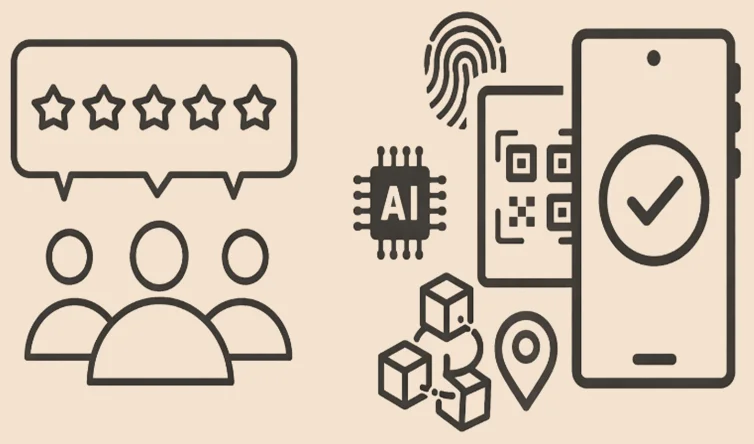
With UPI 3.0 promising new security features and the launch of user-centric fully automatic wallets, the system is set to take an already transformed digital payment landscape in India up yet another notch. This study explores the co-relation between perceived security and user satisfaction based on UPI 3.0 based payment systems along with Indian users. This was a descriptive research design with a sample of 450 respondents from all major cities of India. The security of UPI 3.0 having higher impact on user satisfaction and adoption. A descriptive cross-sectional study was conducted where the structured questionnaires were used to collect data and analyze by using statistical techniques such as chi-square, ANOVA, and regression analysis. Results show that 91.5% of users are satisfied with UPI services and security perception is the strongest factor influencing continued usage behaviour. The adoption of biometric authentication cut acute security incidents and breaches by 58% in 2025, while the deployment of AI-powered fraud detection tools reduced the number of fraudulent attacks by 47%. Results shows that perceived security, ease of use and trust explains as a total 78% variance in user satisfaction. The study finds that UPI 3.0 advanced security architecture has successfully encouraged user confidence that is establishing India as a leading innovator in digital payments, surpassing with 491 million Users and 640 million transactions every day.
Graphical Abstract
Novelty Statement
This study uniquely integrates advanced security technologies in UPI 3.0 to explain user satisfaction, highlighting awareness gaps and improving trust.