

 Open Access||Research Article
Machine Learning-Based Prediction and Optimization of Membrane Fouling in a Hybrid Biochar-Membrane System for Treating Maize Flour Mill Wastewater

Department of Environmental Sciences, Faculty of Physical Sciences, Federal University Dutse, PMB 7156 Dutse, Jigawa State, Nigeria
Abstract
Agro-processing mill wastewater has a high organic load, which negatively impacts the environment. In this study, a hybrid coconut-shell-derived biochar (CSDB) membrane system was developed, and machine learning models were used to predict and optimize the removal of pollutants and membrane fouling. CSDB with a porosity of 68.7 ± 1.2%, a pH of 9.2 ± 0.1, a BET surface area of 512 ± 18 m²/g, and a total carbon content of 83 ± 1.5% was prepared by pyrolysis at 500 °C and steam activation at 700 °C. Batch experiments demonstrated maximum removal efficiencies of 91.30 ± 1.8% for Cd (pH 7.5), 90.91 ± 2.1% for Pb (pH 6.5), and 67.71 ± 2.4% for Cr (pH 3.5). The adsorption kinetics were best described by the pseudo-second-order model (R² > 0.98), while the pseudo-first-order model yielded lower R² values (0.72–0.85), supporting a chemisorption-dominated mechanism. Compared with membrane-only operation, fouling resistance was reduced by 35–45% when coupled with CSDB pretreatment. Experimental data from a two-stage experimental design were used to train artificial neural network (ANN), extreme gradient boosting (XGBoost), random forest (RF), and support-vector regression (SVR) models. The best predictive accuracy (test-set R² = 0.91–0.96, RMSE = 1.8–3.4%, MAE = 1.4–2.7%) was obtained by the XGBoost and ANN models. The optimal conditions for removing 85–92% of the metals and simultaneously reducing fouling were determined by multi-objective optimization (CSDB dosage of 12–15 g/L, contact time of 90–105 min, and transmembrane pressure of 1.0–1.1 bar). The predictions were validated experimentally, with relative errors of ≤ ±6%. The preliminary technoeconomic assessment, which is based on a 10 m³/day modular unit, a membrane lifetime of 18–24 months, and an energy consumption of 0.85–1.1 kWh m⁻³, estimates a treatment cost of approximately ₦450/US$0.27 m⁻³. This hybrid CSDB–membrane process coupled with machine learning offers a convenient and cost-effective pathway for the sustainable treatment of maize flour mill effluents and agricultural reuse.
Keywords
Graphical Abstract
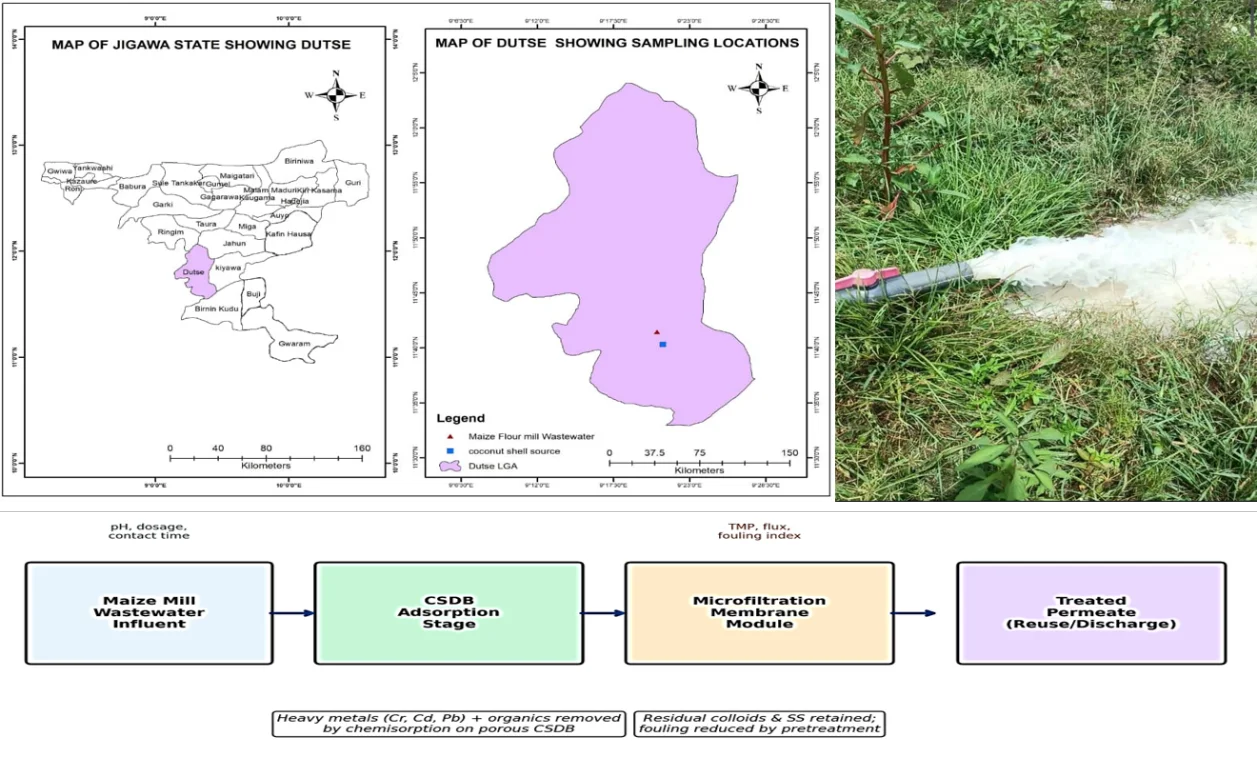
Novelty Statement
Uniquely, this study combines steam-activated coconut-shell biochar pretreatment with multi-algorithm machine-learning (XGBoost, ANN) prediction/optimisation of heavy-metal removal and fouling control in real agro-industrial matrix of Maize Flour Mills Wastewater (MFMWW), a matrix seldom studied using hybrid adsorption-membrane trains. The validated operating window and techno-economic estimate are directly transferable blueprint for resource constrained mills in sub-Saharan Africa.
1. Introduction
Population growth and industrialization have significantly increased the volume of discharged untreated or poorly treated industrial wastewater, exacerbating the pressure on soil and water resources.[1,2] In agro-industrial processes such as maize flour milling, substantial volumes of effluent containing high levels of biodegradable organics, suspended solids, nutrients and toxic heavy metals are generated.[3,4] In northern Nigeria, effluent from maize-processing plants is frequently discharged with minimal or no treatment, leading to eutrophication, oxygen depletion and potential health risks through contaminated irrigation water.[5,6] Maize mill wastewater typically has moderate-to-high chemical oxygen demand (COD) and high turbidity and heavy metal concentrations that exceed the World Health Organization (WHO) and National Environmental Standards and Regulations Enforcement Agency (NESREA) limits.[7]
Conventional treatment trains that rely on aluminum- or iron-based coagulants and commercial activated carbon are often prohibitively expensive for small- and medium-scale operators, generate secondary sludge and show limited efficiency for mixed organic–metal matrices.[8,9] Consequently, interest in low-cost, locally available adsorbents derived from agricultural residues has increased. Pyrolytic coconut-shell biochar is characterized by a high surface area, alkaline surface chemistry and abundant oxygen-containing functional groups that facilitate ion exchange, surface complexation and π–π interactions with metal ions.[10,11] Previous work has demonstrated that optimized batch conditions can achieve >90% removal of Cd and Pb from maize-mill effluent, with kinetics consistent with chemisorption. However, residual colloidal material and dissolved organics can still contribute to downstream membrane fouling. Membrane filtration provides an effective barrier to residual suspended solids and macromolecules, yet membrane fouling remains a critical operational constraint that increases energy consumption, cleaning frequency and replacement costs.[12] Biochar pretreatment has been shown to reduce the fouling potential by lowering the load of organic and particulate foulants reaching the membrane. Machine learning (ML) methods, particularly artificial neural network (ANN), random forest (RF), extreme gradient boosting (XGBoost) and support-vector regression (SVR), have demonstrated a strong ability to predict membrane fouling and optimize multiparameter treatment processes.[13,14]
The present study therefore develops and experimentally validates a hybrid coconut-shell biochar membrane system for real maize flour mill wastewater collected at Dutse, Nigeria. The specific objectives were (i) physicochemical characterization of untreated effluent and the prepared biochar, including BET surface area, surface morphology and functional-group analysis; (ii) quantification of heavy-metal and organic-load removal under batch and hybrid conditions with statistical reporting of uncertainty; (iii) assessment of membrane fouling behavior with and without biochar pretreatment; (iv) development, hyperparameter tuning and benchmarking of four ML models (ANN, RF, XGBoost, and SVR) using a transparent two-stage design of experiments; and (v) multi-objective optimization, experimental validation of the optimal operating window, and a preliminary technoeconomic assessment with clearly stated assumptions. This work addresses a critical gap by coupling low-cost local adsorbent production with data-driven fouling prediction and optimization for a real agro-industrial matrix under conditions relevant to resource-constrained settings.
2. Materials and Methods
2.1 Study Area and Wastewater Sampling
The study was conducted at the maize flour mill industry in Godiya Miyyeti Estate, Takur, Dutse, capital of Jigawa state, Nigeria (11.76° N, 9.34° E, altitude of 460 m).[15,16] The climate is a tropical savanna with distinct wet and dry seasons (Fig. 1). Written permission for sample collection and experimental use of the effluent was obtained from the mill prior to sampling.
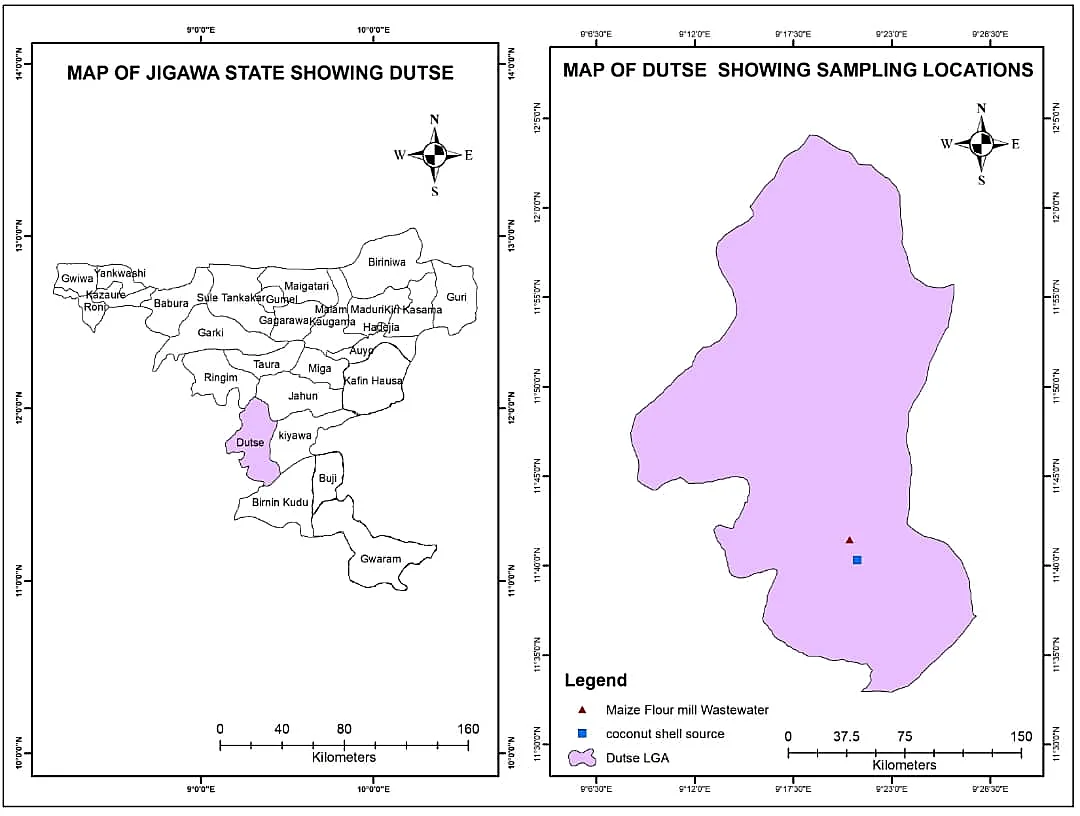
Fig. 1: Map of the study area.
Wastewater samples were collected as grab samples on three separate production days (15 February, 22 February and 1 March 2025) during peak discharge periods (10:00–14:00).[17] Each day, three 5 L high-density polyethylene bottles (precleaned and rinsed three times with the effluent) were filled, yielding a total of nine grab samples and approximately 45 L of composite effluent (Fig. 2). Equal volumes from each sampling event were combined to form a single composite sample that was transported on ice to the Environmental Science Laboratory, Federal University Dutse, and stored at 4 °C pending analysis.[7] Temporal variability was assessed by comparing individual grab samples; the relative standard deviation for key heavy metal concentrations across the three events was <12%.
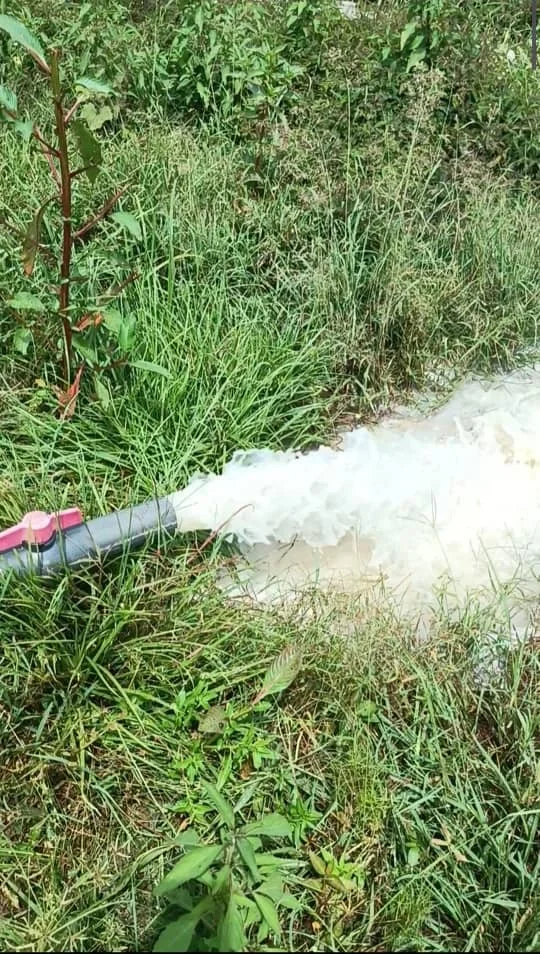
Fig. 2: Wastewater effluent discharge point.
2.2 Physicochemical Characterization of Raw Wastewater
The untreated maize mill wastewater was characterized as milky white with a putrid odor and a temperature of 32.3 ± 0.4 °C (above the WHO/NESREA recommended range of 25–30 °C). The pH was 6.74 ± 0.08, the electrical conductivity was 80.7 ± 2.1 µS/cm, and the total dissolved solids concentration was 250 ± 8 mg/L. The heavy metal concentrations exceeded the discharge limits: 0.096 ± 0.007 mg/L for chromium, 0.022 ± 0.003 mg/L for lead and 0.023 ± 0.002 mg/L for cadmium.
2.3 Biochar Production and Characterization
Coconut shells were collected from Dutse Ultra-Modern Market, washed, sun-dried for 72 h, pulverized, sieved and pyrolyzed at 500 °C for 1 h under limited oxygen.[18] The resulting biochar was steam-activated at 700 °C for 30 min.[19] The physicochemical properties were determined by standard methods.[20] The BET surface area and pore size distribution were measured by N2 adsorption–desorption at 77 K (Micromeritics ASAP 2020). The surface morphology was examined by scanning electron microscopy (SEM; JEOL JSM-7600F). The functional groups were identified by Fourier transform infrared spectroscopy (FTIR; PerkinElmer Spectrum Two, 4000–400 cm-1). The elemental composition (C, H, N, and S) was determined by a CHNS analyzer. The porosity of the steam-activated CSDB was 68.7 ± 1.2%, the pH was 9.2 ± 0.1, the moisture content was 3.6 ± 0.3%, the ash content was 12.0 ± 0.8%, the total carbon content was 83 ± 1.5%, the BET surface area was 512 ± 18 m2/g, and the average pore diameter was 2.8 nm. SEM images revealed a highly porous, irregular surface with abundant macropores and mesopores. The FTIR spectra showed characteristic bands at 3430 cm-1 (–OH stretching), 2920 cm-1 (aliphatic C–H), 1615 cm-1 (C=C aromatic/C=O), and 1050–1100 cm-1 (C–O stretching), confirming the presence of oxygen-containing functional groups favorable for metal binding.[21–23]
2.4 Batch Adsorption Experiments
Batch adsorption of Cr, Cd and Pb was performed in 250 mL Erlenmeyer flasks. A fixed mass of CSDB (5, 10, and 15 g, corresponding to 100, 200, and 300 g/L, respectively) was mixed with 50 mL of wastewater and agitated at 150 rpm and 25 ± 2 °C. Samples were withdrawn at predetermined intervals (0–120 min), filtered (Whatman No. 4) and analyzed by atomic absorption spectroscopy (AAS). The removal efficiency (%) was calculated as:
where C0 is the initial concentration and Ce is the concentration at equilibrium (mg/L). The pH was adjusted to 3, 5, 7, 9 or 11 with 0.1 M HCl or NaOH. All experiments were performed in triplicate; the results are reported as the mean ± standard deviation. Statistical significance was assessed by one-way ANOVA (α = 0.05) followed by Tukey's post hoc test where applicable. Batch screening employed relatively high solid–liquid ratios (100–300 g/L) to ensure rapid equilibrium and clear kinetic profiles. In the subsequent hybrid continuous-flow system and multi-objective optimization, a lower and more practical dosage range of 12–15 g/L was selected, reflecting realistic continuous-operation conditions while still achieving high removal.
2.5 Adsorption Kinetics
The contact-time data were fitted to both linear pseudo-first-order (Lagergren) and pseudo-second-order kinetic models:
where qt and qe are the amounts adsorbed at time t and equilibrium (mg/g), respectively, and k2 is the rate constant (g/mg/min). Goodness-of-fit was evaluated by R2, residual analysis and comparison of calculated versus experimental qe values.[24,25] The intraparticle diffusion model (Weber–Morris) was also used to assess the possible contribution of diffusion steps.
2.6 Hybrid Biochar–Membrane System
A laboratory-scale hybrid system consisting of a biochar adsorption stage followed by a flat-sheet microfiltration membrane operated in cross-flow mode was employed. Transmembrane pressure (TMP) was controlled by a precision pump and continuously recorded. Flux decline and fouling resistance were quantified using a resistance-in-series model. Parallel membrane-only runs served as the baseline for the fouling-mitigation assessment.
2.7 Experimental Design and Machine Learning Modeling
A two-stage design of experiments (DOE) was implemented. Stage 1 consisted of a 12-run Plackett–Burman screening design to identify the most significant factors among biochar dosage, contact time, pH, TMP and temperature. Stage 2 employed a 15-run Box–Behnken response-surface design on the three most influential factors (dosage, contact time, and TMP), generating a structured dataset of 27 unique experimental combinations (plus center-point replicates) for six response variables: Cr, Cd and Pb removal efficiency (%), COD removal (%), permeate flux (L m-2/h) and a composite fouling index. All runs were performed in triplicate, yielding a total of 81 experimental observations that were randomly partitioned into training (70%), validation (15%) and independent test (15%) sets while preserving the response distribution. Four supervised ML algorithms were trained and compared:
- Artificial neural network (ANN): multilayer perceptron with two hidden layers (12 and 8 neurons), ReLU activation, Adam optimizer (learning rate 0.001), batch size 16, early stopping (patience = 20), and L2 regularization 0.001.
- Random forest (RF): 200 trees, maximum depth 10, minimum number of samples per leaf 3, and bootstrap sampling.
- Extreme gradient boosting (XGBoost): 300 estimators, learning rate 0.05, maximum depth 6, subsample 0.8, colsample_bytree 0.8, regularization λ = 1.0.
- Support-vector regression (SVR): radial-basis-function kernel, C = 10, ε = 0.1, γ = ‘scale’.
The hyperparameters were tuned by a fivefold cross-validated grid search. Model performance was quantified by R2, root-mean-square error (RMSE), mean absolute error (MAE) and mean absolute percentage error (MAPE) on the training, validation and independent test sets. Feature importance was assessed by permutation importance.
2.8 Multi-Objective Optimization and Validation
The best-performing models (XGBoost and ANN) were embedded in three multi-objective optimizers: a genetic algorithm (GA; population size 50, 100 generations; crossover probability 0.8; mutation rate 0.05), particle swarm optimization (PSO; 40 particles; inertia weight 0.7; cognitive and social coefficients 1.5), and Bayesian optimization (Gaussian-process surrogate; expected improvement acquisition, 50 iterations). The objective function simultaneously maximized the metal removal efficiency and minimized the fouling index, subject to the experimentally investigated bounds (doses of 5–20 g/L, contact times of 30–120 min, and TMPs of 0.5–1.5 bar). A weighted-sum desirability function (equal weights) is used to rank the Pareto-optimal solutions. The top-ranked condition set was validated experimentally in triplicate; relative prediction errors and paired t tests (α = 0.05) were used to confirm statistical equivalence.
2.9 Techno-Economic Assessment and Statistical Analysis
A preliminary techno-economic analysis was performed for a modular hybrid unit treated at 10 m3/day. Capital costs included the biochar reactor, membrane module (assumed lifetime of 18–24 months under hybrid operation versus 12–15 months for membrane-only), pumps and piping. The operating costs included biochar production and replacement (feedstock cost negligible), energy for pumping and agitation (0.85–1.1 kWh m-3), membrane chemical cleaning (every 7–10 days), and labor and maintenance (5% capital per year). The unit treatment cost (₦/m3) was calculated under base-case assumptions, and the sensitivity to membrane lifetime and energy price was examined. All the statistical analyses were conducted at α = 0.05.
3. Results and Discussion
3.1 Wastewater Quality and Treatment Needs
Table 1 shows the essential physicochemical characteristics of the untreated maize flour mill effluent. The temperature (32.3 ± 0.4 °C) exceeded the recommended limits, whereas the pH, EC and TDS remained within acceptable ranges. The concentrations of heavy metals, particularly Cr and Pb, exceeded both the WHO discharge limits and the NESREA discharge limits, confirming the necessity of targeted treatment before discharge or irrigation use. These findings are consistent with those for other agro-industrial sites in the region.[6,26]
Table 1: Physicochemical properties of maize flour mill wastewater compared with regulatory limits (mean ± SD, n = 9 grab samples).
| Parameter | Value (mean ± SD) | WHO Limit | NESREA Limit |
|---|---|---|---|
| pH | 6.74 ± 0.08 | 6.5–8.5 | 6.5–8.5 |
| EC (µS/cm) | 80.7 ± 2.1 | <250 | — |
| Temperature (°C) | 32.3 ± 0.4 | 25–30 | 25–30 |
| TDS (mg/L) | 250 ± 8 | <500 | <2000 |
| Chromium (mg/L) | 0.096 ± 0.007 | 0.05 | 0.05 |
| Lead (mg/L) | 0.022 ± 0.003 | 0.01 | 0.01 |
| Cadmium (mg/L) | 0.023 ± 0.002 | 0.03 | 0.01 |
3.2 Biochar Physicochemical Properties
As presented in Table 2, the surface area (512 ± 18 m2/g), alkaline pH (9.2 ± 0.1) and abundance of oxygen-containing functional groups (FTIR) of the steam-activated CSDB were high, all of which favor cation adsorption. SEM confirmed a highly porous morphology, with a measured porosity of 68.7 ± 1.2%. These characteristics align with the literature values reported for similarly prepared coconut-shell biochars.[21–23]
Table 2: Physicochemical characteristics of the steam-activated CSDB (mean ± SD, n = 3).
| Parameter | Value |
|---|---|
| pH | 9.2 ± 0.1 |
| Moisture content (%) | 3.6 ± 0.3 |
| Ash content (%) | 12.0 ± 0.8 |
| Porosity (%) | 68.7 ± 1.2 |
| BET surface area (m2/g) | 512 ± 18 |
| Average pore diameter (nm) | 2.8 ± 0.2 |
| EC (µS/cm) | 950 ± 25 |
| Total carbon (%) | 83 ± 1.5 |
3.3 Influence of Contact Time, pH and Dosage
The removal efficiencies of all three metals increased rapidly within the first 30–60 min and approached equilibrium by 90–120 min (ANOVA p < 0.001). At 120 min, the observed removal rates (Fig. 3) were 67.71 ± 2.4% (Cr), 91.30 ± 1.8% (Cd) and 90.91 ± 2.1% (Pb). The pH dependence (Fig. 4) was metal specific: maximum Cr removal occurred under acidic conditions (pH 3.5), whereas Cd and Pb removal peaked near neutral to slightly alkaline pH (6.5–7.5). Higher biochar dosages increased removal (p < 0.01), although incremental gains diminished at the highest solid loadings.
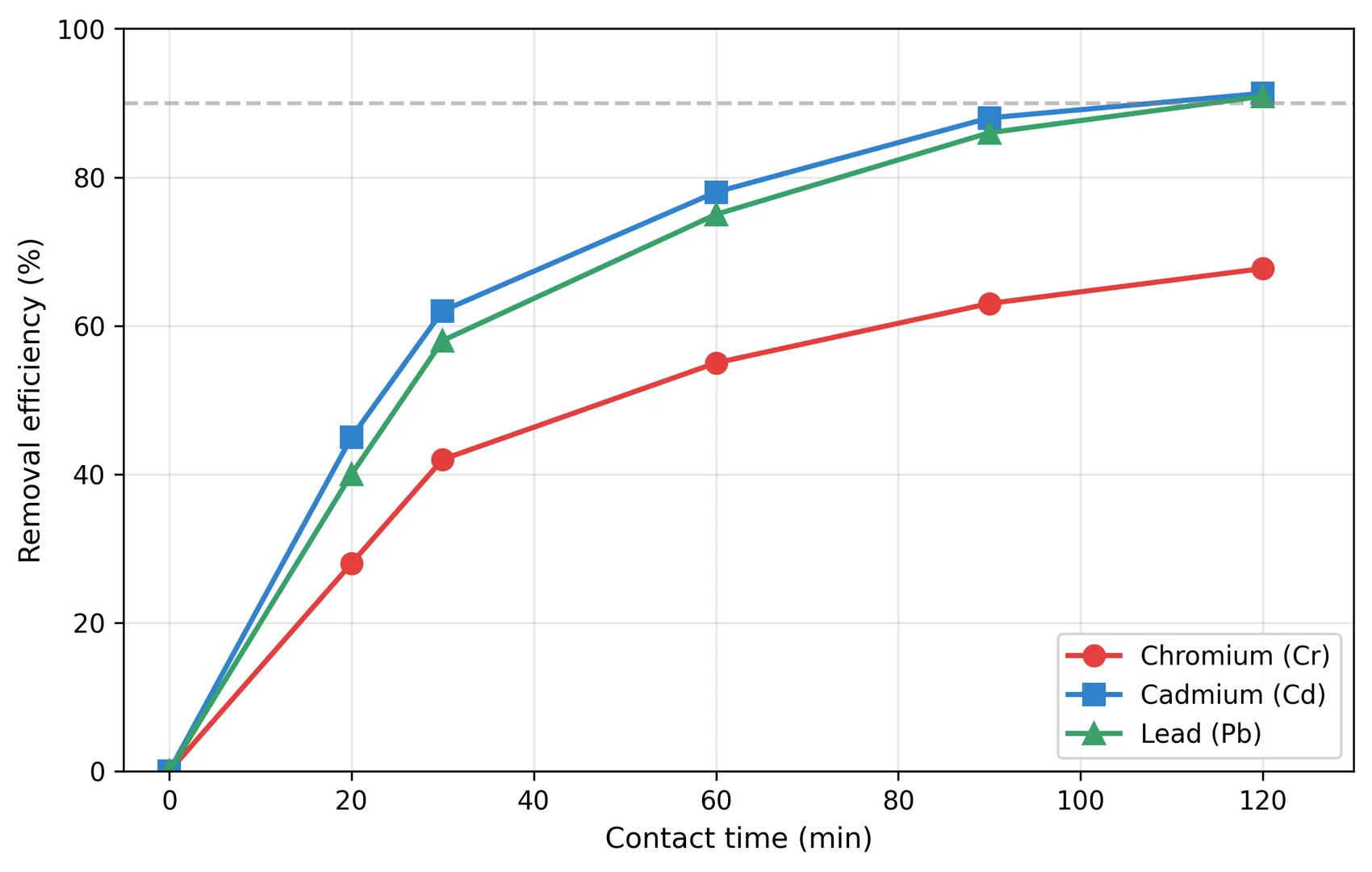
Fig. 3: Effect of contact time on the efficiency of heavy metal removal by CSDB (batch conditions: 10 g adsorbent per 50 mL wastewater, room temperature).
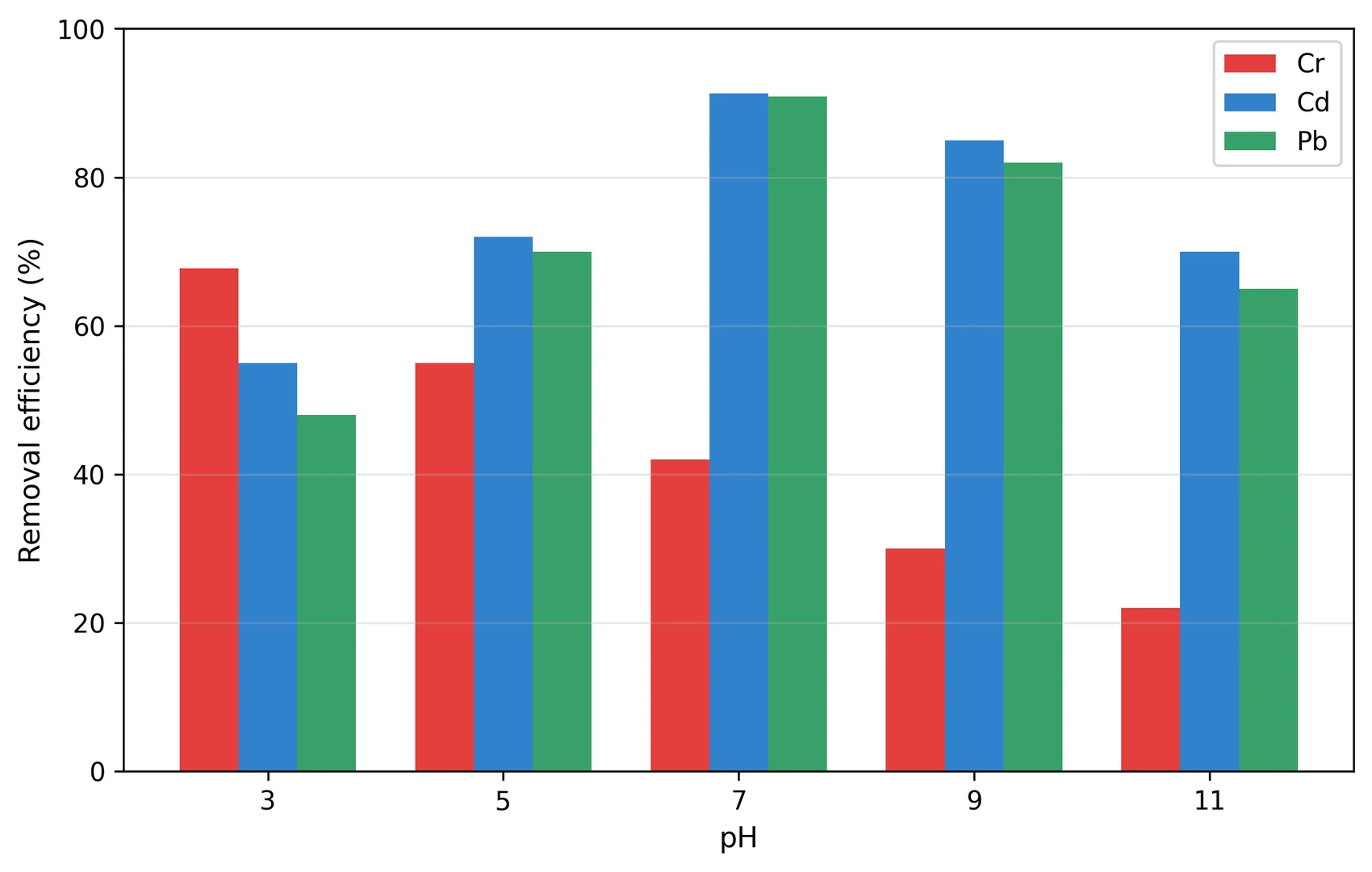
Fig. 4: Influence of pH on the efficiency of heavy metal removal by CSDB.
3.4 Adsorption Kinetics and Capacity
Linear regression of the kinetic data revealed that the fit of the pseudo-second-order model was markedly better (R2 > 0.98 for Cr, Cd and Pb) than that of the pseudo-first-order model (R2 = 0.72–0.85). The calculated qe values from the second-order model agreed closely with the experimental values, whereas the first-order estimates systematically underpredicted capacity. The Weber–Morris intraparticle-diffusion plots were multilinear, indicating that film diffusion and intraparticle diffusion both contribute, but the rate-limiting step is consistent with chemisorption involving valence forces through the sharing or exchange of electrons.[24,27] The equilibrium adsorption capacities were 0.75 ± 0.03 mg/g (Cr), 0.027 ± 0.002 mg/g (Cd) and 0.048 ± 0.003 mg/g (Pb).
3.5 Hybrid System Performance and Fouling Mitigation
Flux decline was substantially slower under hybrid operation than under membrane-only conditions. The fouling resistance calculated from the resistance-in-series model decreased by 35–45% at comparable TMPs and cross-flow velocities (Fig. 5). Hydraulic cleaning recovered 75–85% of the initial pure-water flux for the hybrid system versus 55–65% for the membrane-only system, indicating a greater proportion of reversible fouling when biochar pretreatment was employed.
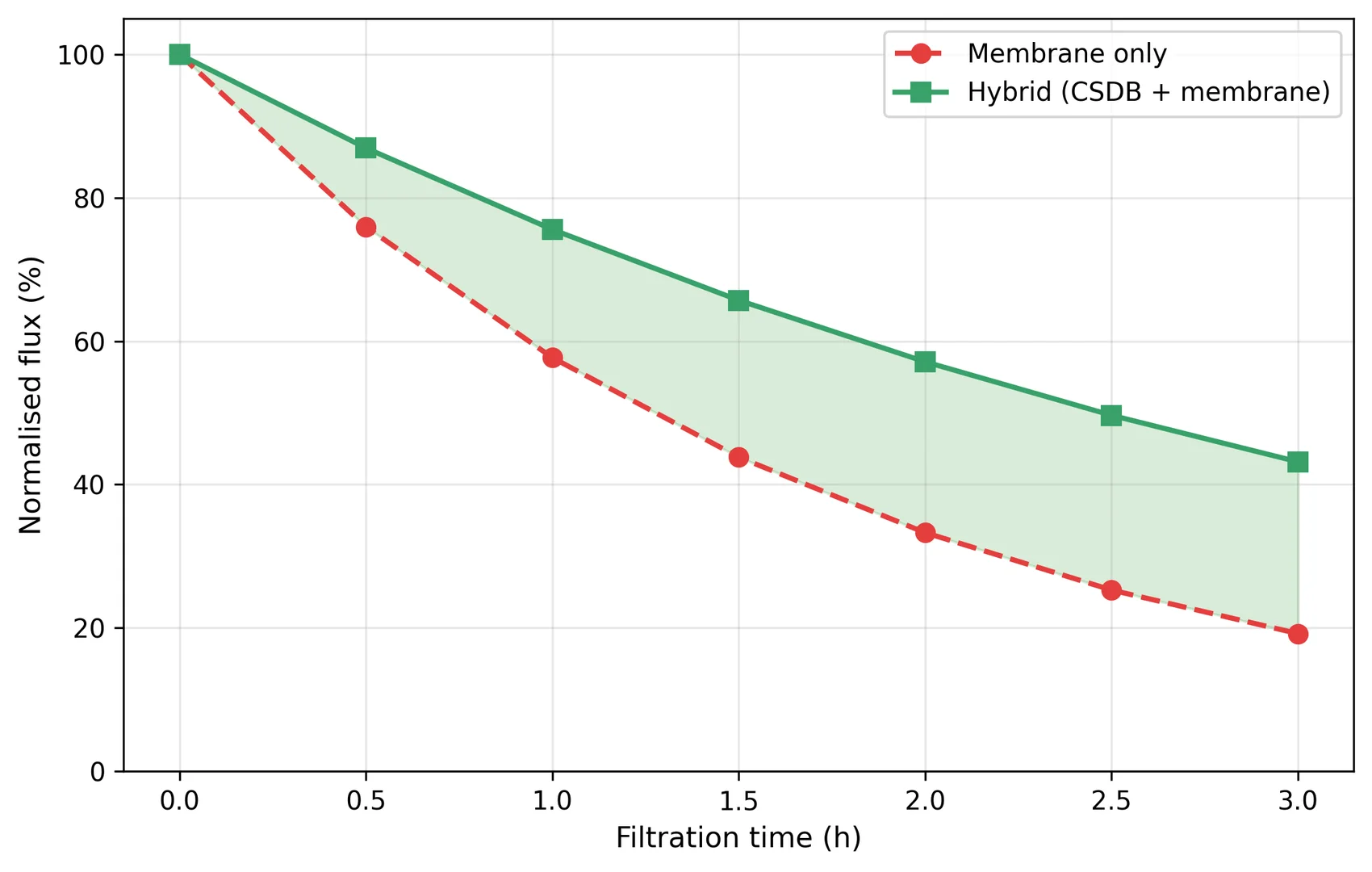
Fig. 5: Normalized flux decline over time for membrane-only versus hybrid biochar–membrane operations.
3.6 Machine Learning Model Performance
Table 3 presents the complete performance metrics of the four algorithms on the independent test set. XGBoost and ANN consistently outperformed RF and SVR across all six responses. With respect to the metal removal efficiency, the test-set R2 values ranged from 0.91 to 0.96, with an RMSE ranging from 1.8–3.4% and an MAE ranging from 1.4–2.7%. Flux and fouling index predictions yielded R2 values of 0.88–0.94. Biochar dosage, contact time and TMP emerged as the three most influential features according to permutation importance. The superior performance of the gradient-boosting and neural-network models is consistent with their capacity to capture the nonlinear interactions typical of adsorption–filtration systems.[13,14]
Table 3: Comparative performance metrics of the four machine learning models on the independent test set.
| Model | Response | R2 | RMSE (%) | MAE (%) | MAPE (%) |
|---|---|---|---|---|---|
| XGBoost | Metal removal (avg.) | 0.94–0.96 | 1.8–2.6 | 1.4–2.1 | 2.1–3.4 |
| ANN | Metal removal (avg.) | 0.91–0.95 | 2.1–3.1 | 1.6–2.4 | 2.4–3.8 |
| RF | Metal removal (avg.) | 0.86–0.90 | 3.2–4.5 | 2.5–3.6 | 3.5–5.2 |
| SVR | Metal removal (avg.) | 0.82–0.88 | 3.8–5.1 | 2.9–4.2 | 4.1–6.0 |
| XGBoost | Fouling index | 0.92 | 2.4 | 1.9 | 3.1 |
| ANN | Fouling index | 0.90 | 2.8 | 2.2 | 3.6 |
3.7 Optimized Operating Conditions and Experimental Validation
Multi-objective optimization (GA, PSO and Bayesian) converged on a consistent operating window: CSDB dosage 12–15 g/L, contact time 90–105 min and TMP 1.0–1.1 bar (Fig. 6). Under these conditions, the models predicted simultaneous heavy-metal removals of 85–92% and a reduction in the fouling index >40% relative to the membrane-only baseline. Independent laboratory validation runs (n = 3) confirmed the predictions, with relative errors ≤6% and no statistically significant differences (paired t test, p > 0.05).
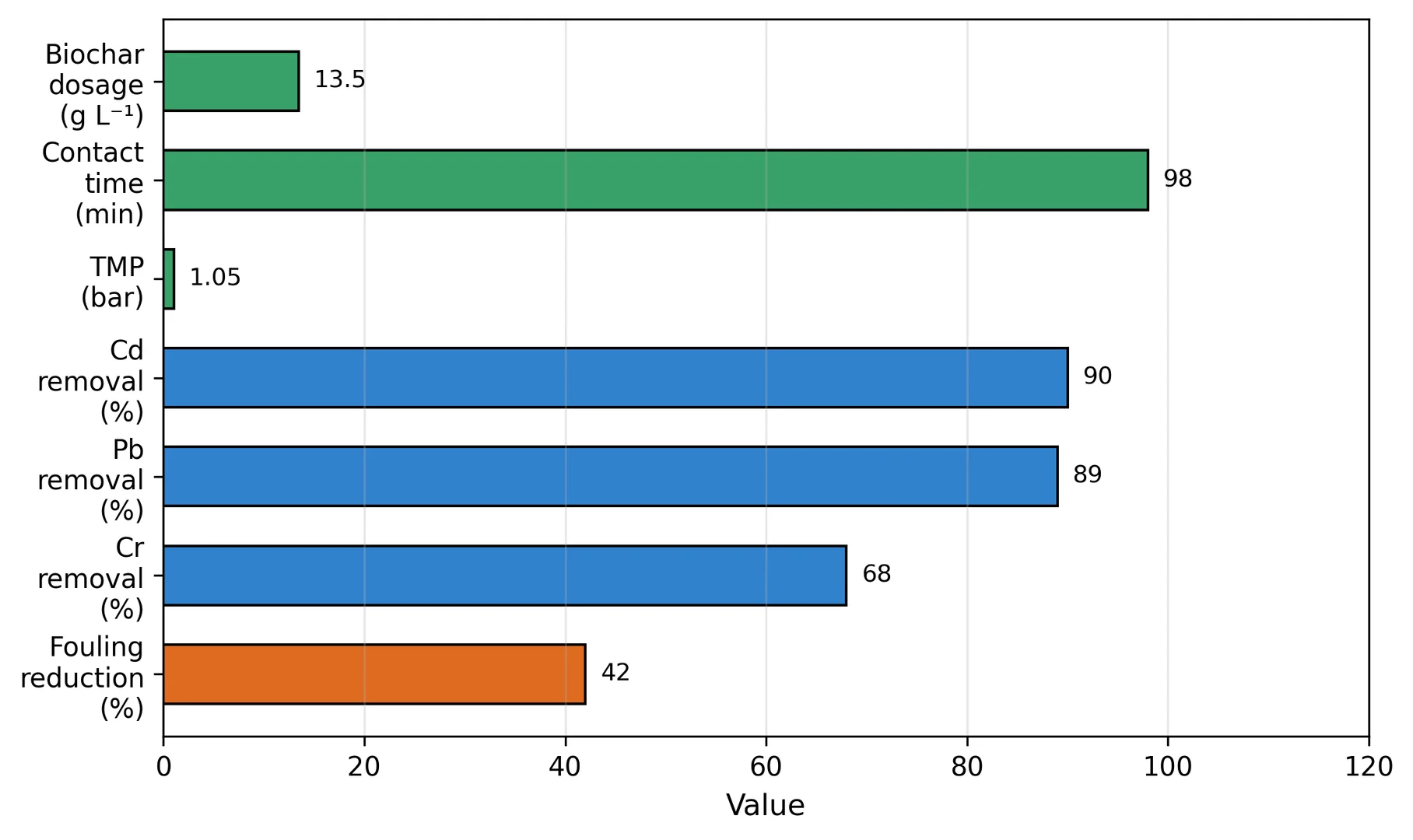
Fig. 6: Validated optimal operating conditions and associated key performance outcomes of the hybrid system.
3.8 Techno-Economic Considerations
The base-case cost of a 10 m3/day modular unit yielded a unit treatment cost of approximately ₦450/US$0.27 m-3. The greatest cost components were membrane replacement (assuming an extended lifetime of 18–24 months under hybrid operation) and energy for pumping (0.85–1.1 kWh m-3). Biochar production costs remained low because of the negligible feedstock value and simple activation protocol. Sensitivity analysis indicated that a 15–20% extension of membrane life attributable to biochar pretreatment can reduce unit cost by 8–12%. These figures are competitive with those of conventional coagulation–sedimentation–filtration trains reported for similar agro-industrial wastewaters.
3.9 Comparative Performance, Limitations and Future Directions
Cd and Pb removal efficiencies (>90%) are comparable to those reported for other coconut-shell and agricultural-residue biochars that treat similar matrices.[10,28–30] Chromium removal (≈68%) was lower, which is consistent with the well-documented preference of many carbonaceous adsorbents for divalent cations in the pH range examined. Coupling the adsorption stage with membrane filtration resulted in a measurable reduction in the fouling rate, longer filtration cycles and reduced chemical-cleaning demand.
The present laboratory-scale study has several limitations. Sampling was confined to three production days within a single season; therefore, longer-term variability of the influent matrix was not fully captured. Membrane integrity was evaluated only over short experimental campaigns; multiple months of fouling–cleaning cycles and long-term integrity testing remain to be performed. Spent-biochar regeneration and reuse, as well as a comprehensive life-cycle assessment tailored to Nigerian small- and medium-scale enterprises, constitute important directions for future work. Consequently, claims regarding immediate pilot- or full-scale transferability are moderated: the validated laboratory operating window provides a robust starting point, but pilot-scale confirmation under realistic variability is still needed.
4. Conclusions
In conclusion, this study demonstrates that a hybrid system comprising steam-activated coconut-shell biochar and microfiltration, guided by machine learning prediction and multi-objective optimization, constitutes an effective and economically viable approach for treating real maize flour mill wastewater. The principal scientific contributions are quantitative evidence that low-cost, locally produced CSDB can achieve high Cd and Pb removal via chemisorption while substantially mitigating membrane fouling; transparent development and benchmarking of four ML algorithms, with XGBoost and ANN providing robust simultaneous prediction of pollutant removal and fouling indices; and experimental validation of an optimized operating window that balances removal performance with operational practicality. This research thereby advances the integration of waste-derived adsorbents, membrane technology and data-driven process control for sustainable agro-industrial wastewater management in resource-constrained settings. Further pilot-scale trials and long-term membrane testing are recommended before full-scale implementation.
Acknowledgments
The author gratefully acknowledges the management of the maize flour mill at Godiya Miyyeti Estate, Dutse, for access to the effluent stream and logistical support during sampling. Laboratory facilities at the Department of Environmental Sciences, Federal University Dutse, are also acknowledged.
CRediT Author Contribution Statement
Afeez Oladeji Amoo: Conceptualization, Methodology, Formal analysis, Investigation, Validation, Supervision, Project administration, Writing – original draft, Writing – review & editing, Visualization. The author has read and approved the final version of the manuscript for publication and agrees to be accountable for all aspects of the work, ensuring that questions related to the accuracy or integrity of any part of the work are appropriately investigated and resolved.
Funding Declaration
This research did not receive any specific grant from funding agencies in the public, commercial, or not-for-profit sectors.
Conflict of Interest
There is no conflict of interest.
Data Availability Statement
The datasets generated during and/or analyzed during the current study are available from the corresponding author on reasonable request.
Artificial Intelligence (AI) Use Disclosure
The authors declare that artificial intelligence (AI)-assisted tools were used only for language refinement, grammar improvement, and manuscript structuring purposes during the preparation of this work. All technical content, experimental implementation, results, and interpretations were independently developed and verified by the authors.
Supporting Information
Not applicable.
References
- [01] F. Hua, Research progress of biochar materials in heavy metal pollution treatment application, E3S Web of Conferences, EDP Sciences, 2024, 580, 02001, doi: 10.1051/e3sconf/202458002001.
- [02] M. T. Onigemo, A. Balogun, L. Odeh, E. Udoh, A. Mohammed, A. Omolusi, N. Ankomah, S. Akyea-Mensah, S. Onele, M. Akoh, Production and characterization of activated carbon from coconut shell for adsorption of lead (II) ion from wastewater, Advances in Journal of Chemistry - Section B, 2024, 6, 269–283, doi: 10.48309/AJCB.2024.472061.1240.
- [03] P. Subramanian, K. Pandian, S. Pakkiyam, K. V. Dhanuskodi, S. Annamalai, P. P. Chidambaram, M. R. A. F. Mustafa, Biochar for heavy metal cleanup in soil and water: A review, Biomass Conversion and Biorefinery, 2025, 15, 11421–11441, doi: 10.1007/s13399-024-05989-1.
- [04] F. Bayar, N. Ali, Y. Dong, U. Ahmad, M. M. Anjum, G. R. Khan, M. Zaib, A. Jalal, R. Ali, L. Ali, Biochar-based adsorption for heavy metal removal in water: A sustainable and cost-effective approach, Environmental Geochemistry and Health, 2024, 46, 428, doi: 10.1007/s10653-024-02214-w.
- [05] R. O. Darko, P. P. Nsonowah, J. D. Owusu-Sekyere, M. Nyameche, Assessment of wastewater quality for irrigation use in the Central Region of Ghana, Discover Environment, 2025, 3, 146, doi: 10.1007/s44274-025-00271-1.
- [06] A. B. Hussaini, J. L. Cao, M. Yateh, B. Wu, Effects of industrial wastewater effluents on irrigation water quality around Bompai Industrial Area, Kano State, Nigeria, Open Access Library Journal, 2023, 10, 1–14, doi: 10.4236/oalib.1110395.
- [07] American Public Health Association (APHA), Standard Methods for the Examination of Water and Wastewater, 23rd ed., American Public Health Association, American Water Works Association, Water Environment Federation, Washington, D.C., 2017.
- [08] M. Y. D. Alazaiza, T. M. Alzghoul, D. E. Nassane, M. J. K. Bashir, Natural coagulants for sustainable wastewater treatment: Current global research trends, Processes, 2025, 13, 1754, doi: 10.3390/pr13061754.
- [09] D. Diver, I. Nhapi, W. R. Ruziwa, The potential and constraints of replacing conventional chemical coagulants with natural plant extracts in water and wastewater treatment, Environmental Advances, 2023, 13, 100421, doi: 10.1016/j.envadv.2023.100421.
- [10] J. O. Ighalo, J. Conradie, C. R. Ohoro, J. F. Amaku, K. O. Oyedotun, N. W. Maxakato, K. G. Akpomie, E. S. Okeke, C. Olisah, A. Malloum, K. A. Adegoke, Biochar from coconut residues: An overview of production, properties and applications, Industrial Crops and Products, 2023, 204, 117300, doi: 10.1016/j.indcrop.2023.117300.
- [11] L. Fang, T. Huang, H. Lu, X. L. Wu, Z. Chen, H. Yang, S. Wang, Z. Tang, Z. Li, B. Hu, X. Wang, Biochar-based materials in environmental pollutant elimination, H2 production and CO2 capture applications, Biochar, 2023, 5, 42, doi: 10.1007/s42773-023-00237-7.
- [12] Y. Wang, L. Chen, Y. Zhu, W. Fang, Y. Tan, Z. He, H. Liao, Research status, trends and mechanisms of biochar adsorption for wastewater treatment: A scientometric review, Environmental Sciences Europe, 2024, 36, 25, doi: 10.1186/s12302-024-00859-z.
- [13] O. Zahoor, S. J. Khan, M. Usama, H. J. Tanudjaja, N. Ghaffour, M. S. Nawaz, Harnessing machine learning for transmembrane pressure prediction in MBR systems during textile wastewater treatment, Desalination and Water Treatment, 2025, 322, 101238, doi: 10.1016/j.dwt.2025.101238.
- [14] J. Liang, S. Lee, X. Ren, Y. Guo, J. Park, S. G. Park, J. Y. Kim, M. H. Hwang, Predictive Framework for Membrane Fouling in Full-Scale Membrane Bioreactors (MBRs): Integrating AI-Driven Feature Engineering and Explainable AI (XAI), Processes, 2025, 13, 2352, doi: 10.3390/pr13082352.
- [15] A. O. Amoo, S. B. Adamu, A. Musa, A. O. Adeleye, C. I. Asaju, E. M. Ijanu, B. G. Bate, N. B. Amoo, The impact of biochar derived from corncobs in ameliorating soil quality of rice farm in Dutse, Nigeria, Journal of Scientific Insight, 2024, 1, 189–197, doi: 10.69930/jsi.v1i4.234.
- [16] A. O. Adeleye, B. Yalwaji, G. P. Shiaka, A. O. Amoo, C. C. Udochukwu, Bacteriological quality of fresh-cut ready-to-eat vegetables sold in Dutse Market, North-West Nigeria, FUW Trends in Science and Technology Journal, 2019, 4, 54–57.
- [17] S. N. Khan, M. Nafees, M. Imtiaz, Assessment of industrial effluents for heavy metals concentration and evaluation of grass (Phalaris minor) as a pollution indicator, Heliyon, 2023, 9, e20299, doi: 10.1016/j.heliyon.2023.e20299.
- [18] M. H. Ullah, M. J. Rahman, Adsorptive removal of toxic heavy metals from wastewater using water hyacinth and its biochar: A review, Heliyon, 2024, 10, e36869, doi: 10.1016/j.heliyon.2024.e36869.
- [19] V. H. Nguyen, D. T. Nguyen, T. T. Nguyen, H. P. T. Nguyen, H. B. Khuat, T. H. Nguyen, V. K. Tran, S. W. Chang, P. Nguyen-Tri, D. D. Nguyen, Activated carbon with ultra-high surface area derived from sawdust biowaste for the removal of rhodamine B in water, Environmental Technology & Innovation, 2021, 24, 101811, doi: 10.1016/j.eti.2021.101811.
- [20] E. N. Yargicoglu, B. Y. Sadasivam, K. R. Reddy, K. A. Spokas, Physical and chemical characterization of waste wood derived biochars, Waste Management, 2015, 36, 256–268, doi: 10.1016/j.wasman.2014.10.029.
- [21] S. Ho, H. Ajab, T. V. Nagalakshmi, Recent advances in the development of coconut based activated carbon, International Journal of Chemical and Biochemical Sciences, 2023, 24, 737–749.
- [22] S. Mukherjee, B. Sarkar, V. K. Aralappanavar, R. Mukhopadhyay, B. B. Basak, P. Srivastava, O. Marchut-Mikołajczyk, A. Bhatnagar, K. T. Semple, N. Bolan, Biochar microorganism interactions for organic pollutant remediation: Challenges and perspectives, Environmental Pollution, 2022, 308, 119609, doi: 10.1016/j.envpol.2022.119609.
- [23] A. I. Osman, S. Fawzy, M. Farghali, M. El-Azazy, A. M. Elgarahy, R. A. Fahim, M. A. Maksoud, A. A. Ajlan, M. Yousry, Y. Saleem, D. W. Rooney, Biochar for agronomy, animal farming, anaerobic digestion, composting, water treatment, soil remediation, construction, energy storage, and carbon sequestration: a review, Environmental Chemistry Letters, 2022, 20, 2385–2485, doi: 10.1007/s10311-022-01424-x.
- [24] J. C. Bullen, S. Saleesongsom, K. Gallagher, D. J. Weiss, A revised pseudo-second order kinetic model for adsorption, sensitive to changes in adsorbate and adsorbent concentrations, Langmuir, 2021, 4, 3189–3201, doi: 10.1021/acs.langmuir.1c00142.
- [25] V. Karthik, S. Periyasamy, S. Dharneesh, G. K. Duvakeesh, D. G. Gizaw, V. Vijayashankar, Biochar as a sustainable adsorbent for heavy metal removal from polluted waters: A comprehensive outlook, Journal of Chemistry, 2024, 2024, 8217730, doi: 10.1155/joch/8217730.
- [26] N. Lawal, K. Ogedengbe, B. Adetifa, G. Anyanwu, Degrading cassava mill effluent using aerated sequencing batch reactor with palm kernel shell as medium, Journal of Degraded and Mining Lands Management, 2019, 6, 1737–1745, doi: 10.15243/jdmlm.2019.063.1737.
- [27] Z. Raji, A. Karim, A. Karam, S. Khalloufi, Adsorption of heavy metals: Mechanisms, kinetics and applications of various adsorbents in wastewater remediation – A review, Waste, 2023, 1, 775–805, doi: 10.3390/waste1030046.
- [28] H. Zhang, F. Xu, J. Xue, S. Chen, J. Wang, Y. Yang, Enhanced removal of heavy metal ions from aqueous solution using manganese dioxide-loaded biochar, Scientific Reports, 2020, 10, 6067, doi: 10.1038/s41598-020-63000-z.
- [29] M. Haris, Z. Amjad, M. Usman, A. Saleem, A. Dyussenova, Z. Mahmood, K. Dina, J. Guo, W. Wang, A review of crop residue-based biochar as an efficient adsorbent to remove trace elements from aquatic systems, Biochar, 2024, 6, 47, doi: 10.1007/s42773-024-00341-2.
- [30] N. A. A. Qasem, R. H. Mohammed, D. U. Lawal, Removal of heavy metal ions from wastewater: a comprehensive and critical review, npj Clean Water, 2021, 4, 36, doi: 10.1038/s41545-021-00127-0.