

 Open Access||Editorial
Welcome to the New Era of AI, IoT, and Edge Systems Shaping the Future of ICT
1 Department of Computer Science, Trinity University, Texas, 78212, USA
2 Editor-in-Chief, Journal of Information and Communications Technology: Algorithms, Systems and Applications, GR Scholastic, Ahmedabad, Gujarat, 382424, India
3 GR Scholastic, Ahmedabad, Gujarat, 382424, India
4 Managing Editor, Journal of Information and Communications Technology: Algorithms, Systems and Applications, GR Scholastic, Ahmedabad, Gujarat, 382424, India
Information and communication technology (ICT) refers to all technology used to handle telecommunications, broadcast media, intelligent information management systems, audio-visual media processing and transmission systems, and network-based control and monitoring functions. In this modern era of many key applications and technological developments are going around Artificial Intelligence (AI) and Machine Learning (ML) such Internet of things (IoT), edge computing and AI applications.[1-3] In this transformation, Information and Communication Technologies (ICT) have played a fundamental role in developing and advancing Artificial Intelligence (AI) by providing essential infrastructure, data, and tools.[4] ICT plays important role in education, engineering, medical and agriculture.[5-7]
Journal of Information and Communications Technology: Algorithms, Systems and Applications (https://gr-journals.com/Ictasa/index.php) (accessed 25 June 2025) is an open-access, quarterly, peer-reviewed journal that publishes high-quality research articles covering all aspects of ICT, ranging from key enabling technologies like micro- and nanoelectronics, advanced materials, and photonics, to transformative applications in robotics, bioengineering, and cyber-physical systems. Also, it covers, advances in cross-cutting transformative applications of ICT in the field of robotics, bioengineering and cyber–physical systems, through to progress in data processing and computing. The journal serves as an advanced platform for the development of cutting-edge ICT systems, technologies, and their associated services, applications, and emerging trends. Its goal is to highlight how ICT can play an increasingly pivotal role in addressing global challenges and unlocking new frontiers in fields such as science, medicine, and engineering.
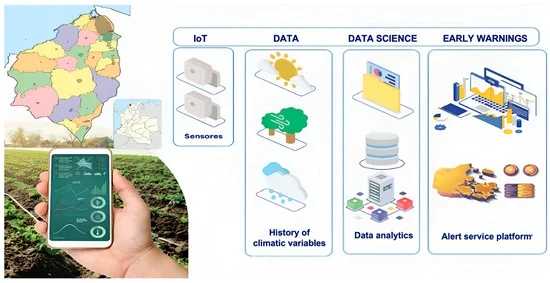
Fig. 1: The desired architecture of a precision agriculture system.[8]
This journal welcomes a variety of article types, including original research papers, comprehensive reviews, and impactful case studies, offering a dynamic space for scholarly exchange and professional insights.
This first issue (June 2025) brings together a diverse collection of high-quality research articles. Barhate et al. reviewed various machine learning techniques for cyberbullying with comparative analysis. Salve et al. introduced the cutting-edge anti-collision drone traffic control system, employing swarm technology, represents a breakthrough in ensuring the secure operation of autonomous aerial vehicles. Asane et al. security system using face recognition technique and machine learning using a facial recognition model coupled with Support Vector Machine (SVM) classification. Rathod et al. reported intelligent formulation recommendation system in order to make the process of choosing the best Ayurvedic formulations based on symptoms, patient characteristics, and contraindications easier. Bidve et al. reported email aliasing to provide helpful information to people and businesses looking to improve email management procedures by clarifying how email aliasing contributes to increased email security and efficiency.
As a newly launched journal in this transformative era of Artificial Intelligence (AI) and Machine Learning (ML), Edge computing, and Internet of Things (IoT), we are dedicated to providing a leading platform to advancing research in the multifaceted domain of ICT. We are committed to uphold the rigorous and efficient peer review process ensuring that every published work meets the highest standards.
On behalf of the Editorial Office, we extend a heartfelt welcome to all our readers, authors, and reviewers. Your participation and engagement are critical to the success of this journal. We encourage you to contribute your work, share your insights, and help us to shape this journal into a leading forum for innovation and discovery.
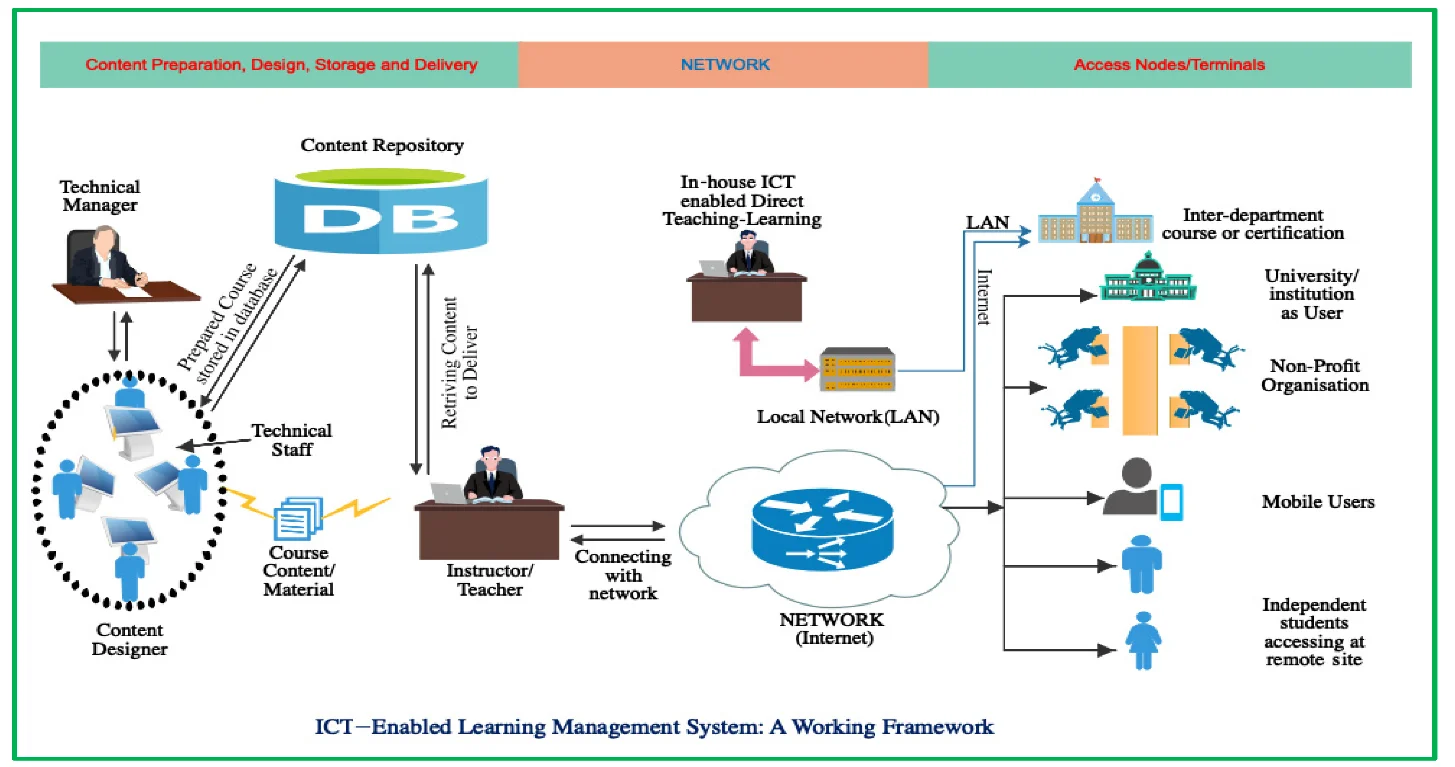
Fig. 2: An ICT-enabled learning management system.[5]
Conflict of Interest
There is no conflict of interest.
Artificial Intelligence (AI) Use Disclosure
The authors confirm that there was no use of artificial intelligence (AI)-assisted technology for assisting in the writing or editing of the manuscript and no images were manipulated using AI.
Supporting Information
Not applicable.
References
- [1] S. B. Far, A. I. Rad, Internet of Artificial Intelligence (IoAI): the emergence of an autonomous, generative, and fully human-disconnected community, Discover Applied Sciences, 2024, 6, 91, doi: 10.1007/s42452-024-05726-3.
- [2] S. D. Datta, M. Islam, Md. H. R. Sobuz, S. Ahmed, M. Kar, Artificial intelligence and machine learning applications in the project lifecycle of the construction industry: A comprehensive review, Heliyon, 2024, 10, e26888, doi: 10.1016/j.heliyon.2024.e26888.
- [3] S. Leleko, R. Chupryna, AI and IoT: A New Era of Technological Integration, accessed 02 June 2025.
- [4] The role of ICT in the development of Artificial Intelligence, Accessed on 25 June 2025, available at: https://www.hepaoffice.gr/en/the-role-of-ict-in-the-development-of-artificial-intelligence/
- [5] S. M. Saif, S. I. Ansarullah, M. T. Ben Othman, S. Alshmrany, M. Shafiq, H. Hamam, Impact of ICT in modernizing the global education industry to yield better academic outreach, Sustainability, 2022, 14, 6884, doi: 10.3390/su14116884.
- [6] N. Ahmad, I. Atoum, J. Khan, Y. Alqahhas, ICT application and use in health sciences research at the global level: a scientometric study, Healthcare, 2022, 10, 1701, doi: 10.3390/healthcare10091701.
- [7] G. S. Gill, ICT in Indian Agriculture: Opportunities and Constraints. In: T. Senjyu, P. N. Mahalle, T. Perumal, A. Joshi (eds) ICT with Intelligent Applications, Smart Innovation, Systems and Technologies, Springer, Singapore, 2022, 248, doi: 10.1007/978-981-16-4177-0_3.
- [8] J. Díaz, Y. Quiñonez, E. De-la-Hoz-Franco, S. Butt-Aziz, T. Mercado, D. Salcedo, Information and communication technologies used in precision agriculture: a systematic review, AgriEngineering, 2025, 7, 167, doi: 10.3390/agriengineering7060167.
Publisher Note: The views, statements, and data in all publications solely belong to the authors and contributors. GR Scholastic is not responsible for any injury resulting from the ideas, methods, or products mentioned. GR Scholastic remains neutral regarding jurisdictional claims in published maps and institutional affiliations.
Open Access
This article is licensed under a Creative Commons Attribution-NonCommercial 4.0 International License, which permits the non-commercial use, sharing, adaptation, distribution and reproduction in any medium or format, as long as appropriate credit to the original author(s) and the source is given by providing a link to the Creative Commons License and changes need to be indicated if there are any. The images or other third-party material in this article are included in the article's Creative Commons License, unless indicated otherwise in a credit line to the material. If material is not included in the article's Creative Commons License and your intended use is not permitted by statutory regulation or exceeds the permitted use, you will need to obtain permission directly from the copyright holder. To view a copy of this License, visit: https://creativecommons.org/licenses/by-nc/4.0/
© The Author(s) 2025