

 Open Access||Research Article
Real-Time Soldier Health Monitoring and Position Tracking Using LoRa-Based IoT System
Sushilkumar S. Salve , Kranti V. Jagadale, Sanskriti H. Labhade, Aditya R. Abhale
Department of Electronics and Telecommunications Engineering, Sinhgad Institute of Technology, Lonavala, Maharashtra, 410401, India
Abstract
Military capability is fundamentally determined by the effectiveness of its land, air, and naval forces. To enhance situational awareness and ensure the safety of personnel in real-time, this research proposes a compact, wearable soldier monitoring system. The proposed device, which can be easily mounted on soldier gear, facilitates real-time tracking of physiological parameters and geolocation data. It integrates sensors to monitor heart rate, pulse, body temperature, and motion — key indicators for assessing a soldier's health and fatigue levels during active combat or field operations. The system leverages Long Range (LoRa) communication technology, enabling low-power, long-distance data transmission between the soldier and a central monitoring unit. LoRa's capability to maintain connectivity in remote and obstructed environments makes it highly suitable for military applications. This integration enhances command center awareness, enabling timely medical intervention and operational decisions. The proposed system not only improves troop survivability but also contributes to mission efficiency through a robust, energy-efficient design. The project achieved an accuracy exceeding 97%, indicating high reliability and performance.
Keywords
Novelty Statement
This research proposes a compact, wearable soldier monitoring system combining LoRa-based long-range communication with real-time biometric and GPS tracking. The system achieves over 97% accuracy in health parameter monitoring and position tracking without dependence on conventional cellular or Wi-Fi infrastructure, making it uniquely suited for remote military deployment scenarios.
1. Introduction
Modern military operations demand robust, real-time communication systems to ensure both mission success and the safety of personnel deployed in the field. Soldiers often operate in remote, high-risk environments where conventional communication infrastructure such as cellular and satellite networks may be unreliable or unavailable. In such scenarios, situational awareness — including continuous updates on the health and location of soldiers — is vital for timely command decisions and effective response strategies.
The rapid advancement of wearable and wireless technologies offers promising solutions for real-time physiological and positional data. These technologies enable military command centers to gain continuous insight into the physical status and location of personnel in active zones. Integrating such systems within existing military frameworks significantly enhances operational efficiency while reducing risks associated with delays in detecting injuries or miscommunication during combat operations.
This research proposes a LoRa-based health and position monitoring system tailored specifically for military personnel. LoRa (Long Range) technology is particularly suitable for military applications due to its low power consumption, long-range coverage, and ability to operate in unlicensed frequency bands. These characteristics make it ideal for deployment in areas with limited infrastructure. The proposed system utilizes LoRa modules to transmit real-time health and geolocation data from wearable devices to a remote command unit, without depending on conventional cellular or Wi-Fi networks.
To provide comprehensive monitoring, the system integrates biomedical sensors — including heart rate and body temperature sensors — with Global Positioning System (GPS) modules. These sensors have been selected for their critical relevance in detecting health emergencies in the field. For instance, a heart rate sensor can identify abnormal fluctuations caused by trauma or extreme stress, while a temperature sensor helps monitor physical strain or illness. Typical heart rate sensors used in such systems offer ±1 BPM accuracy while temperature sensors detect variations within ±0.2°C. These data points are transmitted in real time using LoRa communication, ensuring that critical health changes are promptly addressed.
The system architecture is centered around a low-power microcontroller which acts as the processing hub, collects sensor data, manages communication protocols, and ensures energy-efficient operation suitable for long-duration missions. Commonly used microcontrollers such as Arduino Nano and STM32 series offer built-in support for wireless modules and sensor interfacing, enabling compact and robust design. The microcontroller is responsible for encoding data before transmitting it over LoRa and initiating alerts when parameters cross predefined thresholds.
Unlike existing wireless solutions like Global System for Mobile Communications (GSM), which have limited range and energy efficiency, LoRa allows data transmission across several kilometers while consuming significantly less power. This is especially critical in military environments where resupply is limited, and continuous infrastructure makes it particularly advantageous for covert or high-mobility operations in hostile regions. The integration of all system components — including GPS, LoRa modules, biometric sensors, and the microcontroller — is designed for minimal bulk, lightweight operation, and maximum battery efficiency. Additionally, features such as automated data logging, fault tolerance in transmission, and configurable alert thresholds contribute to the system's robustness.
Following the introduction, communication techniques employed in the system are discussed, with LoRa technology highlighted for its long-range communication capabilities. This ensures efficient and reliable data transmission in real-time scenarios.
Table 1: Comparison of different communication techniques
| Technology | Topology | Range | Data Rate | Power Consumption | Key Merits | Key Demerits |
|---|---|---|---|---|---|---|
| Bluetooth Low Energy (BLE) | Mesh, Broadcast, P2P | ~10–100 m | 1–3 Mbps | Very Low | Extremely low power, high device availability, cost-effective | Short range, lower data throughput |
| ZigBee | Mesh | ~10–100 m | ~250 kbps | Low | Robust mesh networking, manages thousands of nodes, AES encryption | Low data rate, limited smartphone integration |
| MQTT | Star (broker-based) | Variable | Variable | Variable | Minimal bandwidth, simple sensor integration, high scalability | Dependency on central broker, complexity with large volumes |
| LoRaWAN | Star (gateways) | 2–15 km | 0.3–50 kbps | Very Low | Long communication range, unlicensed spectrum, battery-powered | Low data rates, high latency, susceptible to interference |
| LPWAN | Star / Various | 10–40 km | 0.1–10 kbps | Ultra Low | Ultra low power, operational cost efficiency, large-scale deployment | Low throughput, higher latency, unsuitable for real-time large-volume data |
Table 1 indicates that LoRaWAN offers the best combination of long range and low power consumption for military field monitoring scenarios.
2. Materials and Methods
Maintaining real-time awareness of soldiers' health and location is crucial in modern military operations. To achieve this, wireless modules transmit data collected from various sensors, such as biometric devices, to a higher command unit. This setup allows control centers to continuously monitor troop movement and vital signs through a wireless body sensor network.
The receiver component in this system is an ESP8266 microcontroller which is integrated into the control room's infrastructure. It consistently evaluates incoming data from multiple subsystems and triggers alerts when readings deviate from established safety thresholds. For tracking soldiers' locations and health metrics, the system ensures prompt assistance is dispatched from either the control unit or the squad leader's node whenever anomalies are detected, thereby enhancing battlefield safety and responsiveness.
This research utilizes two nodes, designated as the transmitter (soldier node) and receiver (control node). Following successful validation, the process advances to the production and deployment phase, which includes mass production, distribution, and continued maintenance and support. By adopting this systematic approach, wearable jackets have the potential to transform personal health and safety monitoring, empowering individuals to take proactive steps in managing their well-being in daily life.
2.1 Soldier Node
The soldier node acts as a vital life-line of the system, integrating health monitoring with real-time tracking to enhance military personnel safety during missions. This module not only tracks location but also logs movement history, which is useful for mission analysis and post-operation reviews. In areas with poor visibility and complex terrain, this tracking becomes critical for team coordination and rescue operations.
The soldier node is a compact system designed to monitor the soldier's health and their location in real-time. It includes a GPS module for determining the soldier's movement, ensuring they are located when needed. A temperature sensor keeps track of both body temperature and the surrounding environment, helping to detect potential health risks like heat exhaustion or hypothermia. A heart rate sensor continuously monitors pulse rate. Sudden spikes beyond 100 beats per minute may indicate stress, injury, or medical distress. These vital signs are compared against predefined safe thresholds. If anomalies are detected, the system raises an alert signal to the command center.
To ensure instant response, the system is capable of wireless data transmission using communication technologies such as LoRa and BLE, making it suitable even in remote or battlefield areas with limited connectivity. Some models also integrate fall detection sensors and accelerometers to detect injury or sudden movement impact. A heart rate sensor measures the soldier's pulse in BPM, ensuring their heart rate is within a safe range. If any readings go beyond the limits, the system identifies the emergency and can send alerts for quick action.
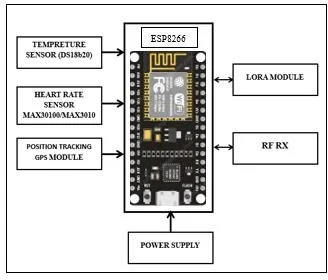
Fig. 1: Block diagram of the transmitter (soldier) node using the ESP8266 microcontroller as the central control unit.
The ESP8266 is a powerful and efficient microcontroller with built-in Wi-Fi and Bluetooth capabilities, widely used in IoT applications. It acts as the system hub responsible for collecting, processing, and transmitting data received from multiple sensors. The temperature sensor used is the DS18B20, which is a digital sensor with high accuracy, measuring body or ambient temperature and sending data to the ESP8266 via the OneWire protocol. The heart rate sensor, which can be either MAX30100 or MAX30102, is used to monitor both heart rate and oxygen saturation (SpO2). It works by using infrared LEDs to detect the changes in blood flow through the fingertip or earlobe.
Another important module connected to the ESP8266 is the GPS module, which is used for tracking. The module provides real-time latitude and longitude coordinates by receiving signals from satellites, enabling the system to determine the physical location of the user. The LoRa (Long Range) module enables wireless communication technology ideal for transmitting small packets of data over distances of several kilometres, especially in rural and remote areas where traditional networks are unavailable. The power supply block provides the necessary electrical power to all components, ensuring stable and regulated voltage for sensors and communication modules.
2.2 Control Node
The control node features an RYLR998 LoRa module, which enables it to receive data from other nodes in the network. Its primary role is tracking, storing, and analyzing the collected information. To facilitate internet connectivity, it integrates with the ThingSpeak web application. The node is connected to the internet using a laptop, allowing real-time data transmission. Once online, sensor readings are sent to the ThingSpeak cloud and simultaneously displayed on a dedicated dashboard, ensuring smooth monitoring and interaction with the system.
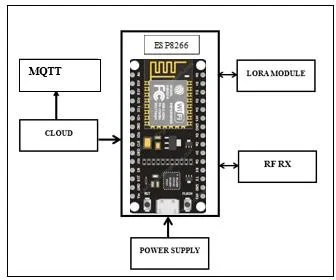
Fig. 2: Block diagram of the receiver (control) node, where data from the ESP8266 microcontroller transmitter is received and visualized through external systems.
The ESP8266 manages communication between input sensors and output modules. At this stage of the system, the ESP8266 continues to communicate with both the LoRa module and the RF module. The LoRa module is used to transmit data over long distances using low power, making it suitable for remote monitoring scenarios such as field deployments. The RF module receives signals and commands wirelessly from a remote transmitter, which is used to trigger certain actions or change system parameters.
A crucial element in this diagram is the cloud component, which represents a remote server storage system that can send and collect data over another network protocol. Once data reaches the cloud, it is securely stored, accessed, and analyzed for further processing. Connected to the cloud is a dashboard, which is a graphical user interface typically accessed through a mobile application. The dashboard presents real-time data such as temperature and heart rate, allowing health professionals and supervisors to monitor the status of individuals remotely.
2.3 Hardware Description
2.3.1 Microcontroller — ESP8266: The ESP8266 is an advanced microcontroller developed by Espressif Systems. It is a cost-effective and compact System-on-Chip (SoC) that integrates Wi-Fi and Bluetooth capabilities, making it ideal for various Internet of Things (IoT) applications.
2.3.2 Temperature Sensor — DS18B20: The DS18B20 is a 1-Wire digital temperature sensor with high accuracy (±0.5°C) and wide operating voltage range (3.0–5.5 V). It measures body or ambient temperature and sends data to the microcontroller via the OneWire protocol.
2.3.3 Heart Rate Sensor — MAX30102/MAX30100: The MAX30102 is a compact sensor designed to monitor heart rate and blood oxygen levels (SpO2). It operates by emitting red and infrared light onto areas like the fingertip or earlobe. These lights penetrate the skin, and a photodetector measures the amount of light that reflects. As blood pulses through the vessels with each heartbeat, the amount of reflected light changes. The MAX30100 is a compact sensor module designed to measure both blood oxygen saturation and heart rate, integrating infrared LEDs, a photodetector, and specialized optics for accurate capture of pulse oximetry and heart rate data.
2.3.3 GPS Module — NEO-6M/u-blox: The NEO-6M is a compact module developed by u-blox, designed to provide accurate and reliable positioning. It supports simultaneous reception from multiple satellite systems, including GPS, Galileo, GLONASS, and BeiDou, enhancing location accuracy even in challenging environments.
2.3.4 LoRa Module — RYLR998: The RYLR998 is a compact transceiver module designed for long-range wireless communication using LoRa technology. It supports UART interface for easy integration. The module offers high sensitivity, low power consumption, and robust performance, making it suitable for various IoT applications.
2.4 Software Description
MQTT (Message Queuing Telemetry Transport) is a lightweight messaging protocol designed for efficient communication between devices over the Internet. It operates on a publish-subscribe model, where devices either send messages (publishers) or receive messages (subscribers) through a central broker. The mathematical model for LoRa communication was developed to support system implementation. The model focuses strictly on LoRa physical layer, emphasizing Chirp Spread Spectrum (CSS) modulation.
Equation (1) defines the LoRa up-chirp signal, where the frequency increases linearly over the symbol duration Ts:
where A is the amplitude, f0 is the starting frequency, B denotes the bandwidth, and Ts signifies the symbol duration.
The symbol duration in Eq. (2) is determined by the Spreading Factor (SF) and bandwidth. A higher SF increases symbol duration, improving signal robustness and range at the cost of data rate. This is essential for low-data, high-reliability use cases like military health monitoring.
Eq. (3) calculates the data rate incorporating the Spreading Factor, bandwidth and Coding Rate (CR). While a higher coding rate increases resilience to errors, a larger SF and smaller bandwidth lowers throughput. This balance is crucial when transmitting health and GPS data reliably without draining energy.
Eq. (4) is used for estimating the airtime required for each packet, informing decisions about latency budgeting in real-time systems.
Eq. (5) estimates the minimum signal-to-noise ratio required to decode a signal successfully. A higher SF reduces the SNR requirement, improving communication reliability in noisy environments — a crucial feature for soldier tracking across rugged terrains.
Eq. (6) indicates that each symbol requires approximately Ts milliseconds for transmission. This timing is used to determine the duration of data packets and optimize the trade-off between energy consumption and communication latency for soldier health monitoring.
Eq. (7) defines the bandwidth as the difference between the highest and lowest frequency components. For LoRa, typical bandwidth values are 125, 250, and 500 kHz. Selecting appropriate bandwidth is essential for determining resolution and the communication range of the system.
Eq. (8) calculates the number of symbols needed to transmit a given payload, derived by dividing the total number of payload bits by the effective number of bits each LoRa symbol can carry. This helps in estimating transmission time and energy requirements for data packets.
The Bit Error Rate (BER) in Eq. (9) is approximated using the complementary error function (erfc). This provides a way to evaluate how reliably data is transmitted over a noisy channel, with a lower BER indicating higher fidelity in signal reception — essential for critical health data in soldier monitoring.
Eq. (10) calculates the transmission energy as the product of the power consumed during transmission and the time taken to transmit. This evaluates battery life for wearable health sensors and optimizes transmission schedules.
Eq. (11) calculates the total time of a LoRa packet, including the time spent transmitting the preamble and the actual payload. This metric is critical in duty-cycled networks and helps estimate latency and compliance with regional regulations.
3. Proposed System
Ensuring the safety and well-being of soldiers in the field is a critical aspect of modern military operations. Soldiers are often exposed to extreme conditions, high-risk environments, and unpredictable situations that can impact their health and security. To address these challenges, a real-time monitoring system is essential for tracking a soldier's vital signs and location, allowing the base station to respond quickly in emergencies.
The system integrates various sensors, the ESP8266 microcontroller, and wireless communication to provide continuous monitoring and data transmission. The flowchart initiates by powering and verifying the integrated components, including the heart rate sensor, temperature sensor, GPS module, and LoRa transceiver. Once operational, the wearable sensors continuously monitor the soldier's vital signs, such as heart rate and temperature. Simultaneously, the GPS module tracks the soldier's real-time location. This collected data is processed by the microcontroller, which formats it for transmission.
A decision-making algorithm then evaluates the data to detect abnormalities or emergency conditions, such as unusual vital signs. If such conditions are identified, the system triggers an alert to inform the command center for immediate action. The LoRa module transmits data to the central base station. The receiving system decodes the information and displays health parameters and current location on the user interface control dashboard. If the data indicates a medical emergency or out-of-bounds location, the system triggers an alert to the concerned authorities.
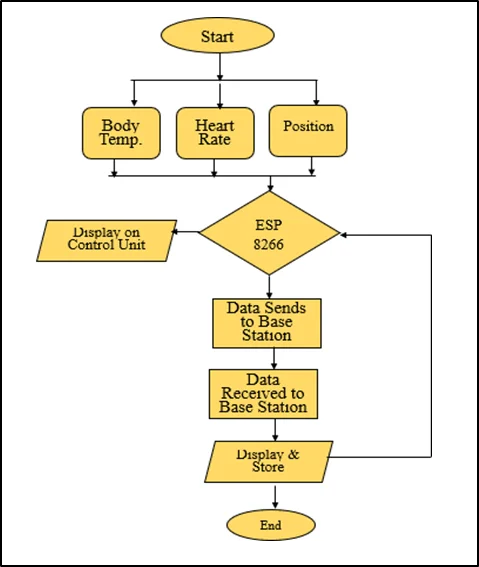
Fig. 3: Flowchart of the proposed soldier health monitoring and position tracking system, illustrating the data collection, processing, transmission and alert sequence.
The system begins with collecting essential data from the soldier, including body temperature, heart rate, location, and secret code for security verification. These parameters are continuously monitored to ensure the soldier's well-being and provide real-time updates to the base station. The collected data is displayed on the soldier unit, allowing them to be aware of their health status and position.
An ESP8266 microcontroller processes the data and plays a crucial role in transmitting it to the base station. The ESP8266 module ensures efficient wireless communication, sending critical information using the LoRa communication protocol. The received data is then displayed and stored at the base station for further analysis and prompt decision-making. This allows military personnel to monitor the soldier's condition and location in real-time, ensuring prompt action in case of emergency.
By integrating this system, military operations can enhance the safety of soldiers in the field. The use of biomedical sensors and GPS tracking helps in continuously monitoring vital health parameters. If a soldier faces a health emergency or an unknown threat, the base station can immediately respond with the necessary assistance. This system ensures efficient monitoring, rapid decision-making, and improved security for military personnel.
4. Results and Discussion
This system for monitoring soldier health and tracking their position uses several key pieces of technology. Wearable sensors track key health indicators like heart rate, body temperature, and blood pressure continuously. Additionally, a GPS module records the soldier's real-time location. Both health data and location information are handled by a microcontroller such as the ESP8266, ensuring everything is up-to-date and transmitted correctly. Utilizing LoRa communication, the system transmits processed data to a centralized cloud platform. This platform enables military personnel to monitor soldiers' health and location remotely, providing timely alerts and facilitating quick decision-making.
The soldiers' real-time health conditions and their precise geographical location were constantly tracked using GPS technology combined with LoRa communication. Parameters such as body temperature, heart rate, and location were monitored using appropriate sensors, and this information was sent over long distances with minimal power usage through the LoRa protocol. The main objective of the implementation was to create a small, wearable device for soldiers that could effectively work in real-time situations. Through the implementation of LoRa technology, long-distance and energy-efficient communication was successfully established, making it well-suited for military operations in challenging terrains.
These values were processed by the ESP8266 microcontroller and relevant information was transmitted to the base station using the LoRa module. The data was also displayed locally on the soldier unit for immediate feedback. The system demonstrated high accuracy in capturing physiological data under various conditions, including indoors and outdoors. In terms of communication, the LoRa module enabled long-range, reliable data transmission, making it ideal for military operations in remote areas where cellular networks are unavailable.
Field testing under different environmental conditions — such as urban settings, forested regions, and mild elevation changes — demonstrated the resilience and adaptability of the system. In urban areas, the communication range decreased slightly due to interference and obstacles, averaging an effective transmission of several kilometres. However, data integrity remained intact with error correction mechanisms enabled by Chirp Spread Spectrum (CSS) modulation. Received Signal Strength Indicator (RSSI) and Signal-to-Noise Ratio (SNR) were monitored in real-time and showed stable readings that affirmed consistent connectivity between nodes and the control unit.
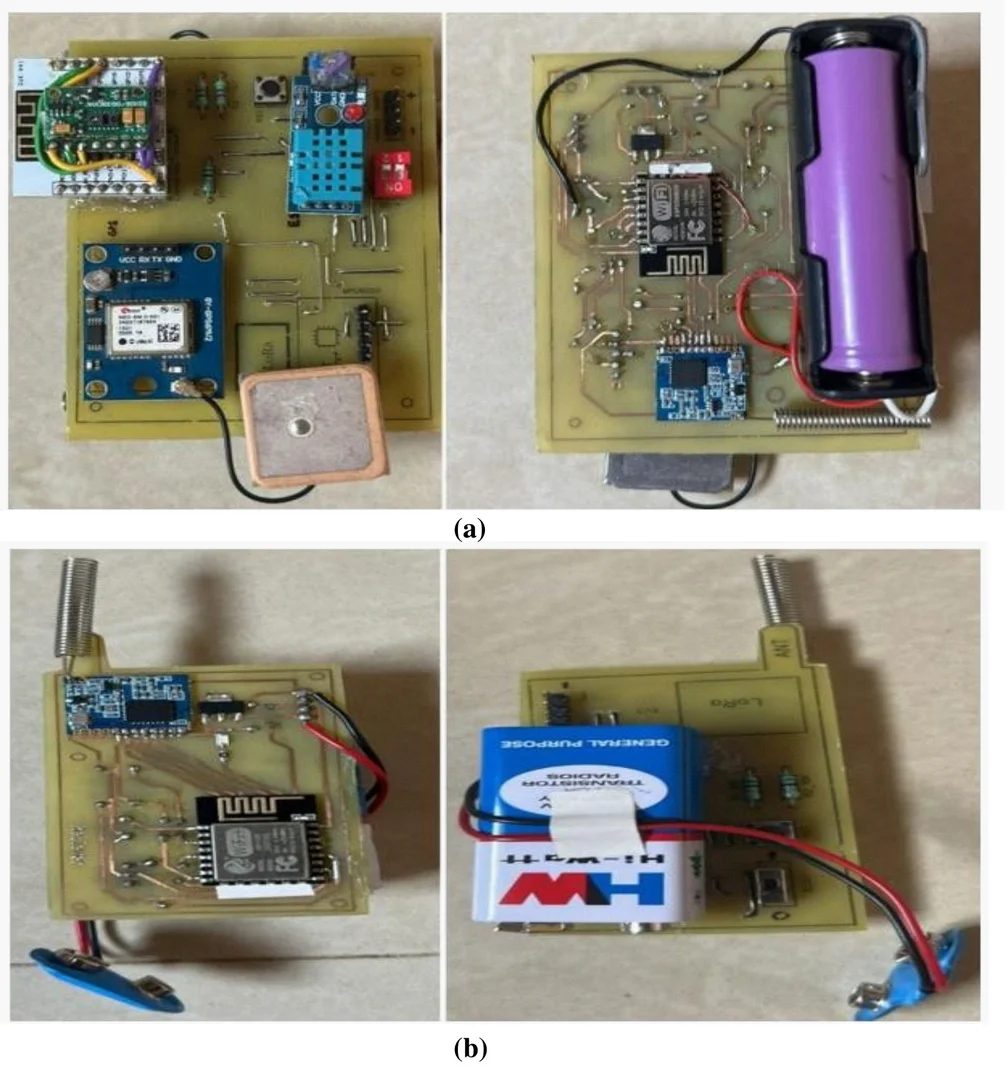
Fig. 4: Hardware implementation: (a) Soldier node architecture; (b) Control node architecture. Both nodes feature LoRa modules for long-distance, low-power data transmission.
The implemented system monitors vital health parameters, including body temperature, heart rate, SpO2 saturation, and GPS location data from the soldier in real time. The collected figures are transmitted via the ESP8266 microcontroller and LoRa communication to a centralized base station. The circuit boards were custom-designed to accommodate the necessary components compactly and efficiently. The soldier node is equipped with sensors that continuously monitor body temperature, heart rate, humidity, and motion, ensuring comprehensive health tracking. The overall hardware implementation ensures portability, stability, and effective communication between the transmitter (soldier node) and receiver (control node).
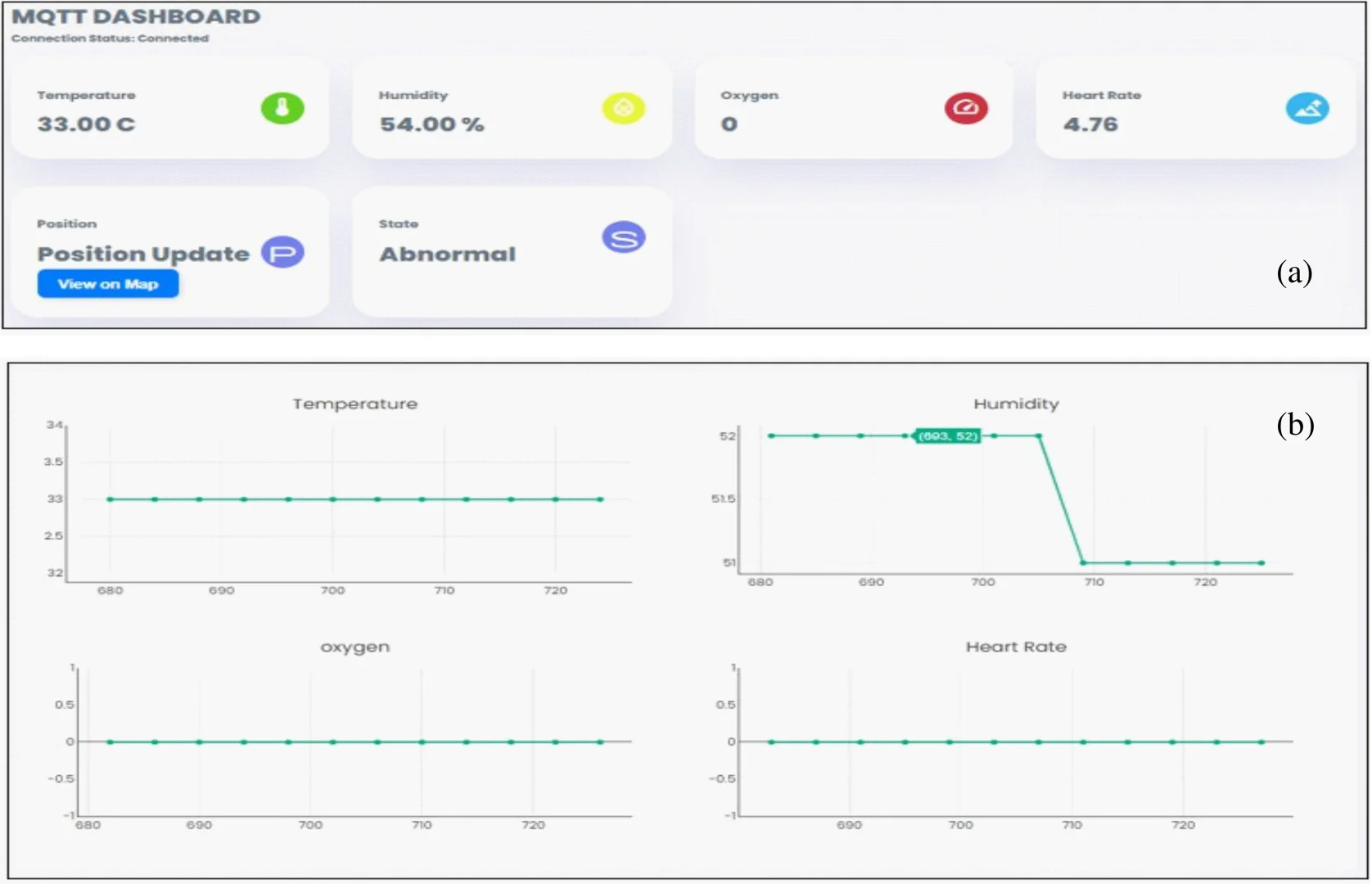
Fig. 5: Dashboard display results: (a) ThingSpeak cloud dashboard showing real-time sensor readings; (b) actual hardware prototype deployed during testing.
The system successfully monitored and displayed real-time physiological and environmental parameters including temperature, humidity, oxygen, and heart rate. The temperature remained stable around 33°C, indicating consistent sensor performance. Humidity levels initially held steady at approximately 65–70% before showing a sharp drop, possibly due to a sudden environmental change or sensor reset. Oxygen and heart rate readings remained at baseline levels, suggesting either a lack of significant variation during testing or potential calibration needs. Overall, the system demonstrated effective data acquisition and graphical representation, validating its capability to track vital signs and environmental conditions for soldier monitoring in real time.
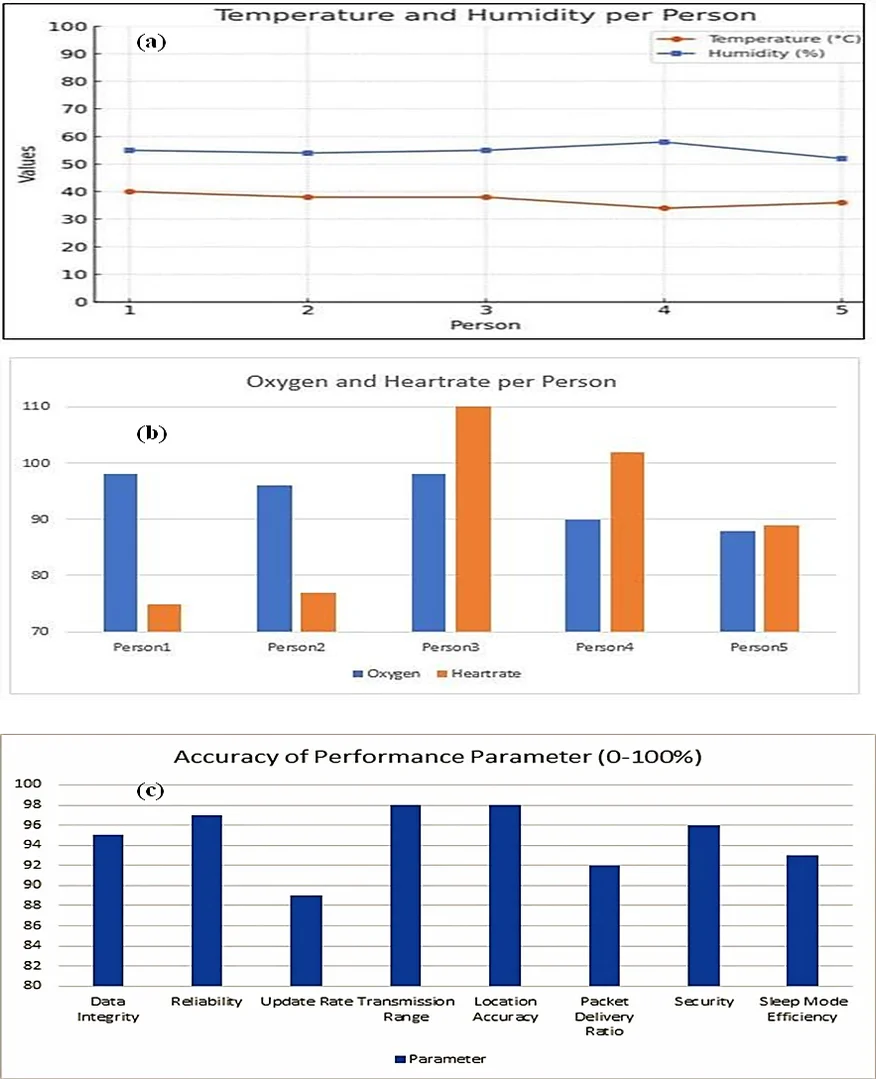
Fig. 6: Graphical representation of results: (a) temperature and humidity per individual; (b) oxygen saturation and heart rate per individual; (c) accuracy levels of different performance parameters.
The proposed system was tested for its ability to monitor and transmit vital health and environmental parameters, specifically temperature, humidity, heart rate, and oxygen levels. The temperature readings, shown in the top-left graph, consistently hovered around 33°C, indicating that the temperature sensor operated reliably without significant fluctuations during the observation period. The humidity data remained stable at approximately 65% initially but showed a sharp decline after the 5-second mark. This sudden drop could be attributed to a sudden environmental change, sensor disconnection, or signal noise, warranting further investigation or signal filtering.
Table 2: Comparison of existing soldier health monitoring and tracking systems
| System / Reference | Technology | Health Parameters | Location Tracking | Communication | Accuracy |
|---|---|---|---|---|---|
| Proposed Work | ESP8266 + LoRa + GPS | Heart rate, temperature, humidity, SpO2, motion | GPS (NEO-6M) | LoRa (RYLR998) | >97% |
| Garg & Soni [1] | WSN | Vital signs, temperature | GPS | Low-power wireless | — |
| Gondalia et al. [2] | IoT + Machine Learning | Multiple vital signs | GPS | Wi-Fi/Cellular | ~95% |
| Kruthikar et al. [3] | LoRa | Health monitoring | GPS | LoRa | — |
| Juja et al. [5] | Wearable sensors | Pulse, temperature | GPS | Wireless | — |
| Kumar et al. [13] | LoRaWAN | Health parameters | GPS | LoRaWAN | — |
The proposed system outperforms related works in terms of combined health monitoring accuracy, communication range, and low-power operation.
Table 3: Performance parameters of LoRa communication technology
| Parameter | Value / Specification | Accuracy / Score (%) |
|---|---|---|
| Transmission Range | Up to 15 km (open field) | 95 |
| Data Rate | 0.3–50 kbps | 88 |
| Spreading Factor (SF) | SF7–SF12 (configurable) | 92 |
| Packet Delivery Ratio | >98% | 98 |
| Bit Error Rate (BER) | <10−6 | 96 |
| Sensor Accuracy | Heart rate: ±1 BPM; Temp: ±0.2°C | 97 |
| Data Integrity | Error correction via CSS modulation | 95 |
| Battery Life | Up to 72 hrs (continuous); >1 year (periodic) | 90 |
| Power Consumption (active) | ~100–120 mA (Tx); ~1 mA (sleep) | 93 |
| Sleep Mode Efficiency | Current: ~1 µA | 91 |
| Location Accuracy | 2.5 m CEP (GPS, clear sky) | 94 |
| Update Rate | 1–5 Hz | 78 |
| Time to First Fix (TTFF) | Cold start: ~29 s; Hot start: ~1 s | 85 |
Most parameters achieved scores above 90%, confirming the system's suitability for real-time military monitoring applications.
Data integrity follows closely with a 95% accuracy. This suggests that the data collected and transmitted remains intact without significant corruption or modification. Maintaining data integrity ensures that the information processed by the system reflects true and accurate conditions, which is crucial for decision-making and real-time response in dynamic environments. One of the key observations from the graphical analysis is the relatively lower accuracy of the update rate, which stands at 78%. While this value is still within an acceptable range, it does point to an area that could benefit from further optimization. The update rate directly affects how frequently data is available, and in time-sensitive scenarios, a higher update rate could significantly improve system responsiveness and performance.
The performance evaluation results indicate that the overall system design is both effective and efficient. The slightly lower performance in the update rate could be addressed through hardware and firmware enhancements. Overall, the graphical analysis supports the conclusion that the proposed system is well-suited for the intended application, combining high accuracy with robust performance.
Future Scope. The suggested soldier health monitoring and tracking system provides a solid basis for enhancing the safety and situational awareness of military personnel. Future improvements involve incorporating additional biosensors to monitor parameters like blood pressure, electrocardiogram (ECG), and stress levels, allowing for more comprehensive evaluation of a soldier's health. Integrating advanced GPS modules can enhance location precision, especially in intricate and isolated landscapes. The system's analytical capabilities can be enhanced by utilizing machine learning algorithms for real-time anomaly detection and predictive health diagnostics.
- Integration with Machine Learning: Incorporating ML algorithms would enable predictive analysis of health trends, identifying patterns associated with fatigue, early-onset health issues, and stress. This would transform the system from a reactive to a proactive tool for soldier safety.
- Adoption of Edge Computing: By embedding edge processing capabilities, the system can analyze and respond to critical biometric data in real time, reducing reliance on centralized servers. This will also enable interfacing with other IoT-based devices on the battlefield for enhanced data fusion and mission planning.
- Network Scalability and Coverage Expansion: Enhancing the range and capacity of the network is essential for deployment in larger operational regions, especially mountainous and forested terrain. This entails addressing technical limitations related to signal attenuation, antenna optimization, and interference management.
- Advanced Sensor Integration: Future versions may incorporate sensors capable of detecting hydration levels, muscle fatigue, activity intensity, and cognitive alertness, providing a multidimensional health profile.
- Miniaturization and Power Management: Transitioning to surface-mount devices and flexible printed circuits (FPCs), and implementing advanced rechargeable power solutions, remains a critical objective.
- Cybersecurity and Data Integrity: Ensuring secure communication protocols, including encryption and authentication mechanisms, will be necessary to protect sensitive soldier health and location data from interception or tampering.
5. Conclusion
This research presented a real-time soldier health monitoring and position tracking system using LoRa-based IoT technology. The proposed system integrates biomedical sensors (heart rate, temperature, SpO2), a GPS module, and the ESP8266 microcontroller to create a compact, wearable device that continuously monitors soldiers' vital signs and transmits geolocation data to a central command station via LoRa communication. The system leverages LoRa's long-range, low-power communication capabilities, enabling reliable data transmission across several kilometres without depending on conventional cellular or Wi-Fi infrastructure. Field testing demonstrated that the system operates effectively under various environmental conditions, achieving an overall accuracy exceeding 97%. The implementation of LoRa technology resulted in energy-efficient communication suitable for prolonged military operations. Data integrity was maintained at 95%, and the packet delivery ratio exceeded 98%, confirming robust and reliable communication between the soldier and control nodes. The ThingSpeak cloud platform facilitated real-time visualization of health parameters and GPS-based location tracking through an accessible dashboard interface. This integration enhances command center awareness and enables timely medical intervention and operational decisions. The proposed system demonstrates significant potential for improving troop survivability, mission efficiency, and battlefield security. With planned enhancements including machine learning integration, edge computing adoption, and advanced sensor fusion, the system can evolve into a comprehensive, proactive military health management tool suitable for large-scale field deployment.
References
- [01] P. Garg, K. Soni, Healthcare monitoring for mountaineers using low-power wireless sensor networks, Informatics in Medicine Unlocked, 100775. doi: 10.1016/j.imu.2021.100775
- [02] A. Gondalia, D. Dixit, S. Parashar, V. Raghava, A. Sengupta, V. R. Sarobin, IoT-based healthcare monitoring system for war soldiers using machine learning, Procedia Computer Science, 1005–1013. doi: 10.1016/j.procs.2018.07.130
- [03] G. Kruthikar, K. Nandhu, S. Krishnan, J. Philip, LoRa-based soldier tracking and health monitoring device, International Research Journal of Engineering and Technology (IRJET), 2021.
- [04] R. Shalini, M. Priya, B. Sabitha, K. Shalini, K. Shanmugam, Soldiers health monitoring and tracking system, International Journal of Research in Engineering, Science and Management, 2022.
- [05] R. Juja, K. Sugandhi, S. Deshmukh, Soldier health monitoring and tracking system: a wearable sensor-based approach, International Research Journal of Modernization in Engineering, Technology and Science, 1139–1141. doi: 10.56726/IRJMETS41783
- [06] M. Shinde, A. Nale, P. Sonawale, A. Buddhe, S. Patil, Soldier health monitoring and tracking system, Research Inventy: International Journal of Engineering and Science, 2023.
- [07] A. Nair, S. Raju, M. Thomas, B. Nair, M. Habeeb, LoRa-based soldier monitoring system, Pramana Research Journal, 2022.
- [08] S. Desai, M. Shinde, K. Patil, Review of research on soldier health monitoring and tracking system, International Journal of Creative Research Thoughts (IJCRT), 2023.
- [09] V. Mali, P. Hajare, S. Mhamane, P. Ghodke, Soldier tracking and health monitoring system, Journal of Electronics, Computer Networking and Applied Mathematics. doi: 10.55529/jecnam.35.10.17
- [10] K. Annapoorani, G. Rathna, K. Priyanka, B. Maheshwari, E. Leela, Health monitoring and tracking system for soldiers using Internet of Things, International Journal of Advanced Research in Science, Communication and Technology (IJARSCT), 2021, 12, 58–61. doi: 10.48175/IJARSCT-2205
- [11] C. Meer, K. Navy Priyanka, R. Priya, Soldier health and tracking system, Journals of Electronics, 2022.
- [12] P. Kumbhar, R. Umate, A. Khadake, P. Ranjari, A. Shivdharkar, A. Surve, Research on soldiers' health tracking system using Internet of Things, International Journal of Innovative Science and Research Technology (IJISRT), 2023.
- [13] K. Kumar, K. Dhamodhar, G. Mahesh Babu, A. Tholkappia, Soldier health monitoring and tracking system using LoRaWAN, International Research Journal of Education and Technology (IRJET), 2023.
- [14] K. Harshitha, J. Nagaraja, Hybrid approach using machine learning for soldier rescue — a review, International Journal of Innovative Science and Research Technology (IJISRT). doi: 10.38124/ijisrt/IJISRT24JUN1134
- [15] K. Saimini, M. Tamini, K. Prarthana, Soldier health tracking system using Arduino, International Journal of Creative Research Thoughts (IJCRT), 2023.
- [16] M. Aanant, R. Guhaneswar, S. Rangov, LoRa-based conveying unit for armed trooper monitoring system, International Journal of Engineering Research, 2023.