

 Open Access||Research Article
Artificial Intelligence and ICT Systems for Promoting Inclusive, Equitable, and Quality Education
1 Department of Social Work, Kalinga University, Raipur, Chhattisgarh 492101, India
2 Department of Social Development, Kano State Polytechnic, Kano, 700282, Nigeria
3 Mumbayya House, Aminu Kano Centre for Democratic Studies, Bayero University, Kano, 700006, Nigeria
Abstract
The global demand for inclusive, equitable, and quality education, as articulated in Sustainable Development Goal 4 (SDG 4), has intensified the search for innovative solutions that address barriers to learning. Artificial Intelligence (AI) and Information and Communication Technology (ICT) systems have emerged as transformative tools with the potential to reshape educational landscapes, enhance access, and promote equity. This study examines the role of AI and ICT in advancing inclusive and quality education, focusing on their applications in personalized learning, accessibility for marginalized groups, and the reduction of systemic inequities. Through a review of existing literature, global case studies, and theoretical frameworks such as digital inclusion and constructivist learning, the study highlights both opportunities and challenges of integrating emerging technologies into education. Findings suggest that AI-driven adaptive learning platforms, ICT-enabled remote learning solutions, and assistive technologies can significantly improve educational outcomes. However, concerns about ethical use, digital divides, infrastructural gaps, and algorithmic bias must be addressed to ensure these tools fulfill their promise of equity and inclusivity. The study concludes with recommendations for policymakers, educators, and technology developers to create enabling environments that harness AI and ICT responsibly for sustainable educational development.
Keywords
Graphical Abstract
Novelty Statement
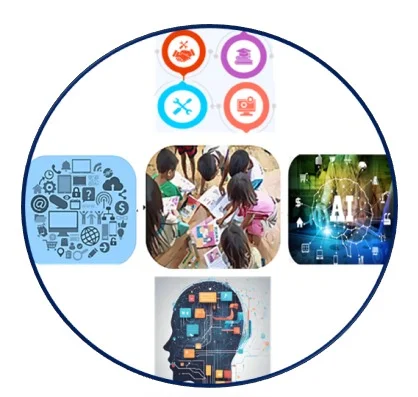
This study examines the role of AI and ICT in advancing inclusive and quality education, focusing on their applications.
1. Introduction
Education is universally recognized as a cornerstone of human development, social progress, and economic advancement. However, disparities in access, quality, and inclusivity continue to challenge the realization of equitable education systems, particularly in low- and middle-income countries.[1] Despite decades of reform, millions of learners remain excluded due to factors such as poverty, disability, gender inequality, conflict, and geographical remoteness.[2] The COVID-19 pandemic further exposed the fragility of global education systems, highlighting the urgent need for scalable, technology-driven solutions.[3,4]
Artificial Intelligence (AI) and Information and Communication Technology (ICT) systems are increasingly being explored as mechanisms for transforming education.[5,6] AI offers intelligent tutoring systems, predictive analytics, and adaptive learning platforms that can personalize education according to learners' unique needs.[7,8] ICT, on the other hand, provides digital infrastructure such as e-learning platforms, cloud-based resources, mobile learning, and assistive technologies that extend access to marginalized communities.[9] Together, AI and ICT present new opportunities to bridge educational gaps, support inclusive pedagogies, and align with global goals such as SDG 4: “Ensure inclusive and equitable quality education and promote lifelong learning opportunities for all.”
Despite the promise of AI and ICT systems, their integration into education raises important questions. How can these technologies be harnessed to promote inclusivity rather than deepen existing inequalities? What systemic challenges—such as infrastructure deficits, digital divides, and algorithmic biases—must be addressed? And what strategies can ensure that technology adoption aligns with the broader goals of social development and equity? These concerns necessitate a deeper inquiry into the transformative role of AI and ICT in education.
1.1 Research Objectives
This study aims to:
- Examine the applications of AI and ICT systems in promoting inclusive, equitable, and quality education.
- Analyze case studies and global practices that illustrate their potential and limitations.
- Identify challenges and risks associated with AI- and ICT-driven education.
- Recommend strategies for policymakers, educators, and technology developers to enhance inclusive adoption.
The study contributes to the growing discourse on the intersection of technology, education, and social development. By critically analyzing AI and ICT applications, it provides evidence-based insights for educational stakeholders, policymakers, and researchers interested in leveraging technology to reduce inequality. The paper also strengthens the link between education research and the broader development agenda, underscoring the necessity of responsible, ethical, and inclusive deployment of technological innovations.
2. Literature Review
The integration of Artificial Intelligence (AI) and Information and Communication Technology (ICT) into education has generated significant academic and policy interest in recent decades. This section reviews the existing body of knowledge on the role of AI and ICT in fostering inclusive, equitable, and quality education. It highlights global developments, thematic contributions, and the gaps that necessitate further research.
2.1 ICT in Education: A Historical Perspective
The use of ICT in education dates back to the early introduction of computer-assisted instruction in the 1960s and 1970s, which later evolved into e-learning and virtual learning environments. UNESCO report of 2015[10] emphasized ICT as a driver of lifelong learning, teacher development, and equitable access. Mobile technologies, cloud-based platforms, and online course delivery have expanded learning opportunities beyond traditional classrooms. In developing countries, ICT has been applied to bridge educational gaps by providing remote learning solutions and Open Educational Resources (OER). However, scholars such as Warschauer[11] caution that ICT adoption without proper infrastructure or teacher training risks reinforcing digital divides.
2.2 Artificial Intelligence in Education
AI has introduced adaptive learning systems, automated grading, and intelligent tutoring systems that tailor educational content to individual learner profiles. For example, AI-powered platforms such as Carnegie Learning and Squirrel AI use machine learning algorithms to identify learners' strengths and weaknesses, offering personalized pathways. Research by Holmes et al.[12] indicates that AI supports both academic performance and student engagement. AI-driven analytics can also predict at-risk students, enabling timely interventions.[13] Despite these advantages, concerns remain about algorithmic bias, data privacy, and over-reliance on technology at the expense of human pedagogical roles. Fig. 1 shows the applications, benefits, and challenges of Artificial Intelligence (AI) in education.
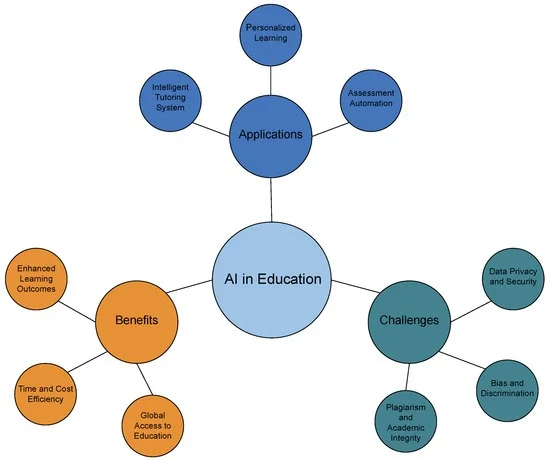
Fig. 1: Multifaceted impact of AI in education.[14]
2.3 ICT for Inclusive and Equitable Education
ICT has been recognized as a key enabler of inclusive education. Assistive technologies such as screen readers, speech recognition software, and text-to-speech applications support learners with disabilities. E-learning platforms allow access for geographically marginalized students, while mobile phones have become critical tools for rural education.[15] ICT also plays a role in addressing gender disparities by offering flexible learning opportunities for women and girls who face socio-cultural barriers. However, limited connectivity, affordability issues, and socio-economic inequalities restrict ICT's ability to fully achieve inclusivity in many contexts.
2.4 AI and ICT in the Context of the Sustainable Development Goals (SDGs)
The United Nations' Sustainable Development Goal 4 (SDG 4) emphasizes inclusive and equitable quality education for all by 2030. AI and ICT systems are seen as accelerators for achieving this goal. UNESCO report[16] highlights how digital learning platforms sustained education during COVID-19 school closures, demonstrating ICT's resilience potential. Nevertheless, the pandemic also revealed deep inequities, as millions of learners without internet access were excluded. This duality underscores the need for policies that align AI and ICT integration with principles of equity and inclusivity.
2.5 Challenges in Adoption
Despite their potential, integrating AI and ICT into education presents multiple challenges:
- Digital divide: Unequal access to technology persists, especially in rural and low-income settings.
- Infrastructure limitations: Unreliable electricity, poor connectivity, and outdated devices hinder adoption.
- Ethical concerns: AI systems may perpetuate biases, invade privacy, or reduce human agency.
- Capacity gaps: Teachers often lack digital literacy and training to effectively deploy AI and ICT tools.
- Sustainability issues: High costs of implementation and maintenance create barriers for developing countries.
2.6 Identified Research Gaps
While existing literature affirms the transformative potential of AI and ICT, gaps remain in:
- Understanding how these technologies can be systematically scaled in resource-constrained environments.
- Evaluating long-term impacts on marginalized groups.
- Addressing ethical concerns in algorithmic design for education.
- Exploring policy frameworks that align technology adoption with inclusive development agendas.
3. Theoretical Framework
The integration of Artificial Intelligence (AI) and Information and Communication Technology (ICT) in promoting inclusive, equitable, and quality education can be better understood through established theoretical perspectives.[17,18] This study is anchored in three interrelated frameworks: Digital Inclusion Theory, Constructivist Learning Theory, and the Sustainable Development Goals (SDG 4) Framework. Together, they provide a multidimensional lens for analyzing how emerging technologies influence educational access, equity, and learning outcomes.
3.1 Digital Inclusion Theory
Digital inclusion refers to the ability of individuals and communities to access and effectively use information and communication technologies. According to van Dijk,[19] digital inclusion is not only about connectivity but also encompasses affordability, digital literacy, and the capacity to derive meaningful benefits from technology. In the context of education, digital inclusion theory highlights how ICT and AI can reduce learning inequalities by providing disadvantaged learners with digital tools and platforms. However, it also underscores that mere access is insufficient without addressing deeper socio-economic barriers, such as poverty and inadequate infrastructure. This theory is relevant in understanding the digital divide that affects marginalized populations and informs the need for equitable policies in ICT adoption.
3.2 Constructivist Learning Theory
Constructivist learning theory, rooted in the works of Piaget and Vygotsky, emphasizes that learners actively construct knowledge through interaction, exploration, and collaboration. ICT and AI systems align with constructivist principles by offering interactive, learner-centered environments. For example, AI-driven adaptive learning platforms adjust content based on a learner's prior knowledge, thereby personalizing the learning experience. ICT tools such as collaborative platforms, virtual classrooms, and simulation software create opportunities for learners to engage with peers and content dynamically. From a constructivist perspective, AI and ICT serve as mediating tools that foster critical thinking, creativity, and problem-solving, essential for inclusive and quality education.
3.3 Sustainable Development Goal 4 (SDG 4) Framework
The United Nations' Sustainable Development Goal 4 provides a global framework for education that is inclusive, equitable, and of high quality. The SDG 4 framework emphasizes universal access, lifelong learning, gender equity, and inclusive opportunities for marginalized groups, including persons with disabilities and those in conflict-affected areas. AI and ICT systems are increasingly recognized as accelerators in achieving SDG 4 targets (UNESCO, 2021). For instance, ICT expands access through e-learning in remote areas, while AI supports inclusive pedagogies by tailoring education to learners' unique needs. However, SDG 4 also highlights the importance of ethical, fair, and context-sensitive implementation of these technologies, warning against solutions that may inadvertently reinforce inequality.
3.4 Integrative Perspective
By combining these frameworks, this study positions AI and ICT as tools that must be critically assessed through both pedagogical (constructivist) and developmental (digital inclusion, SDG 4) lenses. This integrated approach ensures that technology adoption is not only technically innovative but also socially equitable, contextually relevant, and aligned with broader goals of sustainable development.
4. Methodology
4.1 Research Design
This study adopts a qualitative, conceptual research design combined with a case study review approach. Since the focus is on exploring the transformative role of Artificial Intelligence (AI) and Information and Communication Technology (ICT) in promoting inclusive, equitable, and quality education, a qualitative framework is appropriate for capturing the depth, context, and complexity of technological integration in education systems. The design enables critical examination of existing theories, policies, and practices while drawing lessons from real-world implementations across diverse educational settings.
4.2 Data Sources
The research relies primarily on secondary data sources, including:
- Peer-reviewed journal articles on AI in education, ICT adoption, and inclusive learning.
- Reports and policy briefs from international organizations (UNESCO, UNICEF, World Bank, OECD).[20]
- Case studies of AI- and ICT-driven educational initiatives in both developed and developing countries.
- Grey literature such as conference proceedings, policy documents, and practitioner reports.
By synthesizing these sources, the study builds a holistic understanding of how AI and ICT systems contribute to inclusivity and equity in education.
4.3 Case Study Selection Criteria
Case studies were selected based on the following criteria:
- Relevance: Initiatives that explicitly use AI or ICT to promote inclusive or equitable education.
- Geographic diversity: Representation from both Global North (e.g., advanced AI adoption) and Global South (e.g., ICT solutions in resource-constrained contexts).
- Innovation: Use of novel technological applications (e.g., adaptive learning platforms, mobile learning, assistive devices).
- Documented outcomes: Availability of evaluations or measurable results on access, learning outcomes, or equity.
Examples include AI tutoring systems in China, ICT-enabled mobile classrooms in sub-Saharan Africa, and assistive learning platforms for students with disabilities in Europe.
4.4 Analytical Approach
The data were analyzed thematically, guided by the study's theoretical framework (digital inclusion, constructivist learning, and SDG 4). Key themes explored include:
- Access and equity: How AI and ICT systems reduce barriers for marginalized learners.
- Pedagogical innovation: The extent to which technology supports personalized and constructivist learning.
- Challenges and risks: Issues related to ethics, sustainability, digital divides, and teacher preparedness.
- Policy and practice implications: Lessons for governments, educators, and ICT developers.
The thematic analysis approach allows for identifying cross-cutting insights while recognizing contextual variations across different case studies.
4.5 Limitations
As a conceptual and case-based study, the research is limited by its reliance on secondary data, which may not capture all contextual nuances or long-term impacts of AI and ICT interventions. Additionally, the rapidly evolving nature of AI technologies means that findings may quickly become outdated, requiring continuous updating of evidence.
5. Findings and Discussion
The analysis of literature and global case studies highlights multiple ways in which Artificial Intelligence (AI) and Information and Communication Technology (ICT) systems are transforming education. This section discusses the key findings under four broad themes: AI in inclusive pedagogy, ICT for equitable access, challenges of integration, and opportunities for sustainable adoption.
5.1 AI in Inclusive Pedagogy
AI technologies have advanced personalized learning through adaptive systems that respond to individual learner profiles. Platforms such as Squirrel AI in China and Carnegie Learning in the United States use machine learning algorithms to diagnose students' strengths and weaknesses, tailoring content delivery accordingly.[12] These systems enhance inclusivity by accommodating diverse learning paces, abilities, and preferences.
Furthermore, AI-driven analytics are being used to predict student dropout risks, enabling timely interventions for vulnerable learners. In higher education, universities have applied AI chatbots to provide academic and psychosocial support, particularly benefiting first-generation and international students. Such innovations illustrate the constructivist potential of AI, where learners actively engage in customized educational journeys.
However, findings also reveal risks of algorithmic bias. If AI systems are trained on datasets that underrepresent marginalized groups, they may perpetuate inequities instead of reducing them. Ethical design and inclusive datasets are therefore essential for ensuring that AI supports equity in education.
5.2 ICT for Equitable Access
ICT systems have proven invaluable in expanding educational access, especially during the COVID-19 pandemic, when digital platforms sustained learning for millions. For example, UNESCO's Global Education Coalition mobilized ICT tools such as radio, television, and online platforms to reach learners worldwide. In sub-Saharan Africa, mobile phone–based learning initiatives such as M-Shule in Kenya demonstrated how low-cost ICT tools can deliver quality education to students in marginalized communities.
ICT has also improved inclusivity for learners with disabilities through assistive technologies like screen readers, text-to-speech applications, and speech recognition software. Similarly, ICT-supported open educational resources (OER) provide affordable and flexible access to materials, reducing cost barriers for disadvantaged students.
Nevertheless, ICT's promise is limited by the digital divide. Millions of learners in rural and low-income areas lack reliable internet connectivity, devices, or digital literacy skills. Findings confirm that ICT alone cannot guarantee equity unless accompanied by supportive policies, infrastructure investment, and teacher capacity building.
5.3 Challenges of Integration
Despite the demonstrated benefits, integrating AI and ICT in education faces persistent challenges:
- Infrastructure Deficits: In many low- and middle-income countries, unreliable electricity and limited internet access remain significant obstacles.[21]
- Teacher Preparedness: Many educators lack adequate training to integrate AI and ICT into pedagogy effectively.[13]
- Privacy and Ethics: The collection and use of student data by AI systems raise concerns about surveillance, consent, and misuse.
- Cost and Sustainability: The high cost of AI tools, licensing, and maintenance creates inequalities between well-resourced and under-resourced institutions.
These challenges illustrate the paradox of technology in education: while AI and ICT offer opportunities for inclusion, they may also exacerbate inequalities if structural barriers remain unaddressed.
5.4 Opportunities for Sustainable Adoption
Despite challenges, findings reveal significant opportunities for using AI and ICT to advance inclusive, equitable, and quality education:
- Personalized Learning at Scale: AI can democratize access to customized education, supporting learners of varied abilities and backgrounds.
- Hybrid and Remote Learning Models: ICT enables flexible learning pathways that can serve both urban and rural communities.
- Assistive and Inclusive Technologies: ICT tools promote accessibility for persons with disabilities, ensuring no learner is left behind.
- Data-Driven Policy Making: AI-generated insights can guide policymakers in resource allocation, dropout prevention, and curriculum development.
- Global Collaboration: ICT platforms enable knowledge sharing, virtual exchanges, and international partnerships that enrich educational systems worldwide.
The evidence suggests that AI and ICT systems, when guided by inclusive frameworks such as SDG 4, can significantly reduce educational inequalities. However, achieving this potential requires responsible design, equitable access policies, and investments in digital literacy.
6. Recommendations
Based on the findings, the following recommendations are proposed for policymakers, educators, and technology developers:
Invest in infrastructure and connectivity: Governments should prioritize the expansion of affordable internet, electricity, and digital devices, particularly in rural and underserved areas. Without adequate infrastructure, inclusive education through ICT and AI cannot be realized.
Strengthen teacher training and digital literacy: Teacher professional development programs should integrate AI and ICT competencies, equipping educators with the skills to effectively use technology in inclusive and learner-centered pedagogies.
Promote ethical and inclusive AI design: Developers must ensure that AI systems are built on diverse datasets and designed to minimize algorithmic bias. Ethical guidelines should safeguard student privacy, data security, and informed consent.
Leverage low-cost ICT solutions: Mobile-based learning applications, community ICT centers, and radio/television programs should be scaled to reach learners in low-resource contexts. These tools are cost-effective and adaptable to local realities.
Integrate ICT and AI in policy frameworks: National education policies should align with SDG 4 and explicitly integrate AI and ICT as tools for inclusion and equity. Policies must also address sustainability through public-private partnerships and donor engagement.
Encourage global and regional collaboration: International organizations, governments, and institutions should collaborate to share best practices, pool resources, and support cross-border digital education initiatives that foster inclusivity.
Continuous research and monitoring: Ongoing research should evaluate the long-term impacts of AI and ICT on marginalized learners, ensuring that interventions remain evidence-based, adaptive, and socially responsive.
7. Conclusion
This study explored the role of Artificial Intelligence (AI) and Information and Communication Technology (ICT) systems in promoting inclusive, equitable, and quality education within the framework of Sustainable Development Goal 4. Findings indicate that AI and ICT have transformative potential to address educational inequalities by enabling personalized learning, expanding access through digital platforms, and supporting marginalized groups with assistive technologies. AI-driven adaptive learning systems demonstrate how education can be tailored to individual learner needs, while ICT-based initiatives such as mobile learning platforms and open educational resources extend access to underserved populations. At the same time, the research highlights the risks associated with these technologies, including digital divides, infrastructural deficits, ethical dilemmas, and sustainability challenges. Overall, the study concludes that AI and ICT systems can be powerful enablers of educational equity only when implemented within inclusive frameworks that prioritize accessibility, affordability, teacher capacity, and ethical safeguards. Without these conditions, technological interventions risk exacerbating the very inequalities they aim to solve. AI and ICT systems represent unprecedented opportunities to reimagine education for inclusivity and equity. Yet, technology alone is not a panacea. Realizing their full potential requires a holistic approach that combines technological innovation, policy support, human capacity building, and social development frameworks. By embracing these elements, the global education community can move closer to achieving SDG 4 and ensuring that no learner is left behind.
Funding Declaration
This research did not receive any specific grant from funding agencies in the public, commercial, or not-for-profit sectors.
Data Availability Statement
The datasets generated and/or analyzed during the current study that support the findings are available from the corresponding author upon reasonable request.
Conflict of Interest
The authors received no specific financial support for the research, authorship, or publication of this work.
Artificial Intelligence (AI) Use Disclosure
The authors declare that artificial intelligence (AI)-assisted tools were used only for language refinement, grammar improvement, and manuscript structuring purposes during the preparation of this work. All technical content, experimental implementation, results, and interpretations were independently developed and verified by the authors.
Supporting Information
Not applicable.
References
- [1] UNESCO, Global Education Monitoring Report, 2023: Technology in Education: A Tool on Whose Terms? UNESCO: Paris, France, 2023, ISBN 978-92-3-100609-8.
- [2] UNESCO, Global Education Monitoring Report 2021: Central and Eastern Europe, the Caucasus and Central Asia – Inclusion and education: All means all (Regional Report), UNESCO Publishing, 2021.
- [3] N. AlQashouti, M. Yaqot, R. E. Franzoi, B. C. Menezes, Educational system resilience during the COVID-19 pandemic—review and perspective, Education Sciences, 2023, 13, 902, doi: 10.3390/educsci13090902.
- [4] T. Bates, Key issues in teaching and learning resulting from the Covid-19 pandemic, 2023, 52, e20118, doi: 10.1002/nse2.20118.
- [5] P. Reddy Mukkala, T. Vuyyuru, B. SNV Ramana Murthy, A. S. Rao, N. Al Said, Integrating ICT with artificial intelligence for transformative education, 2025, 10, 547–555, doi: 10.52783/jisem.v10i10s.1418.
- [6] M. P. Rojas, A. Chiappe, Artificial intelligence and digital ecosystems in education: a review, Technology, Knowledge and Learning, 2024, 29, 2153–2170, doi: 10.1007/s10758-024-09732-7.
- [7] C. C. Lin, A. Y. Q. Huang, O. H. T. Lu, Artificial intelligence in intelligent tutoring systems toward sustainable education: a systematic review, Smart Learning Environments, 2023, 10, 41, doi: 10.1186/s40561-023-00260-y.
- [8] I. Gligorea, M. Cioca, R. Oancea, A.-T. Gorski, H. Gorski, P. Tudorache, Adaptive learning using artificial intelligence in e-learning: a literature review, Educational Science, 2023, 13, 1216, doi: 10.3390/educsci13121216.
- [9] Z. D. Mulla, V. Osland-Paton, M. A. Rodriguez, E. Vazquez, S. Kupesic Plavsic, Novel coronavirus, novel faculty development programs: Rapid transition to eLearning during the pandemic, Journal of Perinatal Medicine, 2020, 48, 446–449, doi: 10.1515/jpm-2020-0197.
- [10] UNESCO Report, ICT in education: A framework for action, UNESCO, 2015.
- [11] M. Warschauer, Technology and equity in education, Harvard Educational Review, 2018, 88, 423–445, doi: 10.17763/1943-5045-88.3.423.
- [12] W. Holmes, M. Bialik, C. Fadel, Artificial intelligence in education: Promises and implications for teaching and learning, Center for Curriculum Redesign, 2019.
- [13] O. Zawacki-Richter, V. I. Marín, M. Bond, F. Gouverneur, Systematic review of research on artificial intelligence applications in higher education — where are the educators? International Journal of Educational Technology in Higher Education, 2019, 16, 1–27, doi: 10.1186/s41239-019-0171-0.
- [14] F. Kamalov, D. Santandreu Calonge, I. Gurrib, New era of artificial intelligence in education: towards a sustainable multifaceted revolution, Sustainability, 2023, 15, 12451, doi: 10.3390/su151612451.
- [15] M. West, S. Vosloo, Harnessing technology to advance education for all, World Bank, 2021.
- [16] UNESCO Report, Reimagining our futures together: A new social contract for education, UNESCO, 2021.
- [17] Y. Song, L. R. Weisberg, S. Zhang, X. Tian, K. E. Boyer, A framework for inclusive AI learning design for diverse learners, Computers & Education: Artificial Intelligence, 2024, 6, 100212, doi: 10.1016/j.caeai.2024.100212.
- [18] S. M. Pagliara, G. Bonavolongà, M. Pia, S. Falchi, A. L. Zurru, G. Fenu, A. Mura, The integration of artificial intelligence in inclusive education: a scoping review, Information, 2024, 15, 774, doi: 10.3390/info15120774.
- [19] J. van Dijk, The digital divide, Polity Press, 2020.
- [20] OECD, AI in education: Policy challenges and opportunities, OECD Publishing, 2021.
- [21] World Bank, The COVID-19 pandemic: Shocks to education and policy responses, World Bank, 2020.