

 Open Access||Research Article
AI-Powered Predictive Maintenance Framework Using Digital Twin Technology Enhancing Industrial Efficiency and Reducing Downtime
Kashif Iqbal1 , Sohaib Elahi2, Mairaj Nawaz2, Muhammad Rafey2, Nawaf Mir2, Zeeshan Kurd3
1 Department of Computer Science, Beaconhouse International College, Karachi, 75190, Pakistan
2 College of Computing and Information Sciences, Karachi Institute of Economics and Technology, Karachi, 75190, Pakistan
3 Department of Computer Science and Artificial Intelligence, Beaconhouse International College, Karachi, 75190, Pakistan
Abstract
Unplanned downtime and suboptimal maintenance practices remain a significant challenge across most industrial sectors, leading to costly operational interruptions and reduced productivity. The Institute of Mechanical Engineers estimates that industrial downtime costs the global economy approximately $500 billion annually, with the majority attributed to unplanned maintenance and equipment failures. Predictive Maintenance (PdM) systems leveraging digital twin technology offer promising solutions for real-time monitoring, fault detection, and failure prediction. However, many industries find it challenging to apply these technologies effectively due to data accuracy issues, system complexity, and scaling difficulties. This paper proposes an integrated digital twin-based PdM framework that enhances fault detection and diagnosis capabilities for complex industrial machinery, particularly wind turbines. The system simulates equipment behavior, predicts potential failures, and proactively schedules maintenance to reduce unplanned downtime through the exploitation of real-time data from Internet of Things (IoT) sensors. Moreover, integrating blockchain technology ensures secure, transparent data sharing among stakeholders. The proposed framework is projected, under the stated assumptions to reduce downtime and maintenance costs by margins consistent with prior digital-twin predictive-maintenance literature, pending empirical validation. Thus, this paper contributes a novel predictive maintenance approach that integrates leading-edge technologies, providing practical insights for future deployments across diverse industrial sectors. This indicates the high potential of digital twin technology as a foundation for the applications of Industry 4.0 and will lay the ground for more robust and efficient industrial operations. This paper presents a conceptual and theoretical framework; it has not been empirically validated on physical equipment or real operational data, and the figures reported herein are illustrative projections rather than measured outcomes.
Keywords
Graphical Abstract
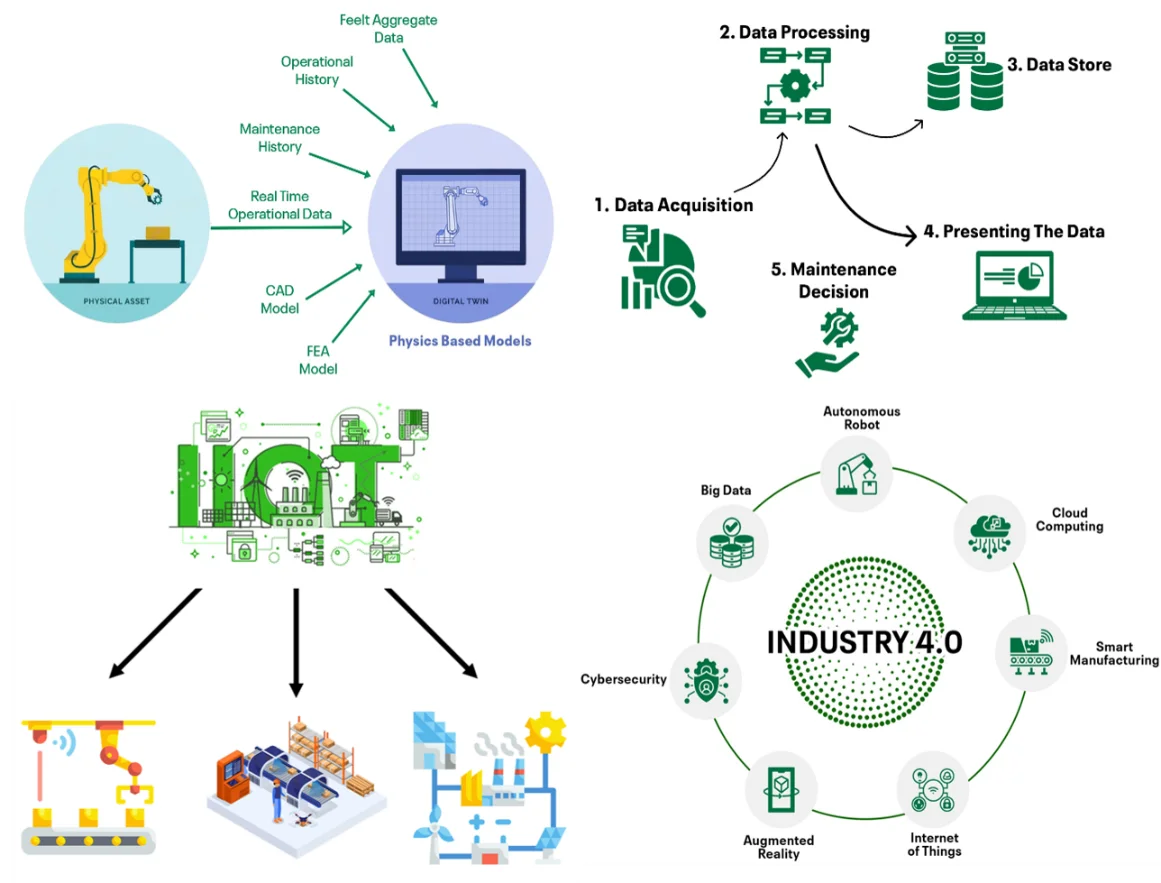
Novelty Statement
This paper proposes an integrated digital twin-based predictive maintenance framework combining IoT, blockchain, real-time simulation, and proactive scheduling to enhance fault diagnosis, secure data sharing, and operational reliability.
1. Introduction
The growing complexity of industrial processes and the associated need to increase efficiency are two aspects that have led to the rising importance of predictive maintenance in the field. In this regard, the key challenge posed by the manufacturing, transportation, and energy industries is ensuring minimal possible downtime and unplanned expenditures on servicing. Overall, these costs are reaching hundreds of billions of dollars annually, with the stoppages alone costing more than 500 billion dollars per year for industrial industries, primarily associated with breakdowns.[1] This requires an urgent solution to detect potential problems before they occur. Digital twin technology has been considered one of the most effective ways to address this challenge. Digital twins can enable continuous monitoring and real-time diagnostics of machinery and infrastructure by creating virtual replicas of real-world processes for enhanced operational performance. The suggested approach based on the application of digital twins would rely on IoT and use predictive analytics to monitor equipment health and optimize maintenance schedules while ensuring minimal disruption to operations.[2,3]
For example, high-speed railway transportation is a typical application area for digital twins, which allows for cost reduction through forecasting and prevention of defects.[1] Meanwhile, in reality, the application of the digital twin across various industries encounters numerous difficulties related to accuracy, scalability, and the use of legacy systems. Industrial facilities in the renewable energy domain represent one particularly compelling application of digital twins for predictive maintenance. Industrial facilities are typically situated in remote worksites, where maintenance and repair work is challenging to perform. For example, the cost of lost electricity production due to downtime in the case of wind turbines may often outweigh the costs of maintenance work, making any unplanned shutdowns particularly costly. Thus, the use of a digital twin for predictive maintenance in wind turbines, particularly for blades, gearboxes, or generators, involves data coming in from within the machines being monitored in real-time. The digital twins can predict possible failures before they occur by constantly simulating the condition of the turbine. Therefore, maintenance teams can schedule interventions based on real wear and tear instead of fixed intervals.[4] This reduces the risk of sudden downtime while simultaneously increasing the lifespan of such costly assets. It is one obvious example of how predictive maintenance could be applied to big and complex machines using digital twin technology.
This was coupled with the advancement of digital twin applications, whereby Artificial intelligence (AI) and Machine learning (ML) techniques are being added to enhance their predictive capability. Examples include using deep learning models to predict equipment failures with real-time data and using reinforcement learning for dynamic optimization of maintenance strategies.[5,6] However, current models do not fully appreciate this extremely attractive prospect that has already appeared in the field of industrial environments, despite their inherently realistic dynamics. In this regard, the paper under review tries to fill this gap by introducing optimal combinations of digital twins, artificial intelligence, and blockchain for high-performance predictive maintenance and decision-making accuracy. With the addition of blockchain technology comes yet another level of value, particularly in terms of the security and integrity of the information shared between stakeholders. Blockchain technology can facilitate decentralized, immutable, and transparent recording of all maintenance-related activity and performance data, thereby increasing the trust level of all stakeholders.[7] Thus, while blockchain offers tremendous amounts of benefits in terms of data security, the integration of blockchain with predictive maintenance systems remains an understudied area, and here lies a critical gap in the currently available literature.
This paper introduces a novel approach in predictive maintenance through the integration of digital twins, AI, and Blockchain. Specifically, we analyze how these high-tech systems can be tied together to optimize precision in predictive models for detecting faults and to enable the secure sharing of data across industrial ecosystems. The proposed future work shall address practical implications of the integration of such models based on either simulated data or real data available in practice to offer insights into future predictive maintenance frameworks. The sections of this paper are arranged in such a way that they will give an overview of the whole predictive maintenance framework proposed. Section 1 gives a background overview of the underlying fundamental concepts and technologies involved in digital twins, AI, and blockchain. Section 2 reviews the literature of the existing work, developments, and gaps in the current research in this direction. Section 3 describes the methodology followed for the execution of the proposed system. Sections 4 and 5 offer experimental analysis, results, and discussion. Directions for future research are outlined in Section 6. Section 7 discusses the major conclusions of the work with directions towards further work.
1.1 Scope and Validation Status
This paper presents a conceptual, theoretically grounded framework for AI-powered, digital-twin-based predictive maintenance. No physical prototype was built, and no dataset-based experiment was executed as part of this study; all quantitative figures reported in Sections 4 and 5 are illustrative projections derived from the framework design and from prior literature, not measured outcomes. Section 6 outlines the planned empirical validation study intended to test these projections against real data.
1.2 Motivation
The industrial world has been revolutionized by the IoT, AI, and digital twins, yet organizations still face unpredictable equipment failures, sub-optimal maintenance schedules, and too much downtime, all of which take a significant toll on revenue generation and business effectiveness. This is especially the case with alternative energy sources such as wind turbines that are both sophisticated and integral to the global ecosystem. This research is informed by the need to resolve the issues by developing a framework that is efficient, intelligent, and scalable in nature. By harnessing the potential of digital twins as well as artificial intelligence and machine learning algorithms, the study seeks to transform the landscape in which the predictive maintenance of machinery takes place. Indeed, the proposed approach offers a novel way of predicting, monitoring, and managing the functioning of equipment, resulting in reduced downtime-cost of maintenance costs while at the same time maximizing the performance of high-value capital assets. In addition, the framework aims to leverage Industry 4.0 as well as cutting-edge fault detection approaches to offer a comprehensive solution to the current limitations of predictive maintenance.
1.3 Research Problems
RQ1: In comparison to traditional maintenance practices, how could an AI-driven predictive maintenance system leveraging the power of IoT and digital twin lead to increased industrial productivity and reduced downtime?
RQ2: How does the application of digital twin technology enable surveillance, simulation, and prediction to help in the prophylactic maintenance of wind turbines?
RQ3: To identify failure trends and improve prediction performance of industrial machines, how effective is machine learning in exploring past and current sensor data?
RQ4: For industrial systems, how does IoT-enabled real-time data acquisition affect the reliability, timeliness, and effectiveness of decisions about predictive maintenance?
1.4 Contributions
C1: AI-driven maintenance framework suggests that this research proposes a new framework that uses digital twin and AI concepts to help increase performance while reducing downtime in industrial systems.
C2: By using digital twins, this research opens the door to real-time monitoring, simulation, and predictive analysis of machines — especially wind turbines. This lets engineers step in early, keeping things running smoothly with proactive maintenance.
C3: The study mentions the use of machine learning algorithms, which makes the process of predicting equipment failure smarter and therefore helps in predicting faults and reduces costs.
C4: The research discusses the collection of data about how the machines perform using the Internet of Things, which provides relevant information about the performance and helps in analysis.
2. Literature Review
2.1 Key Definitions
Predictive Maintenance (PdM) is a maintenance strategy that uses condition-monitoring data to estimate when an asset is likely to fail so that maintenance can be scheduled just before the predicted failure. This is distinct from Preventive/Scheduled Maintenance, which performs maintenance at fixed time or usage intervals regardless of the equipment's actual condition. Artificial intelligence (AI) is the broad field concerned with building systems that perform tasks normally requiring human intelligence; Machine Learning (ML) is a subset of AI in which systems learn patterns from data rather than following explicit rules; and Deep Learning (DL) is a subset of ML that uses multi-layer neural networks to learn hierarchical representations from large datasets. These three fields are hierarchically nested (AI ⊃ ML ⊃ DL), with each successive field representing a more specialized subset of the one preceding it.
2.2 Methodology Note
This section presents a narrative (non-systematic) literature review rather than a PRISMA-style systematic review. Its scope was deliberately bounded to digital twin technology, predictive maintenance, IoT, AI/ML/DL, blockchain, and Industry 4.0, so as to situate the proposed framework relative to the closest prior work in these areas.
In healthcare, context-aware IoT applications leverage digital twin technology to predict patient health outcomes and optimize resource allocation.[8,9,10] Studies have also demonstrated the critical importance of integrating sensor data with machine learning models. There are various research works on anomaly detection based on multilayered artificial intelligence frameworks and, at the same time, the scalability of IoT-based predictive systems for sophisticated industrial processes.[11,12] In addition, prognostics and health management (PHM) models are considered to be a promising technique for implementing effective failure prediction and real-time data analytics.[13] Furthermore, blockchain-based solutions enable the digital twin's decentralized data access and immutability.[14] These factors help introduce disruptive technologies and develop novel frameworks for transparent supply chains with enhanced decentralization.[15,16]
The comparison in Table 1 below is organized around five criteria: Digital Twin Technology (whether the study builds or employs a synchronized computerized model of a physical asset), Predictive Maintenance (whether the study is focused on prediction of failure or maintenance events rather than simply condition monitoring), Internet of Things (whether the study involves real-time acquisition of sensor data), Smart Industrial Technology (whether the study takes place in an Industry 4.0 / smart-manufacturing context) and Fault Detection and Diagnosis (whether the study attempts to detect, identify, or isolate a fault). AI, IoT, and edge computing appear to open promising avenues in latency reduction for predictive tasks.[17] Digital twins for energy-efficient manufacturing optimize workflows and reduce waste through real-time monitoring and adaptive controls.[20] Advanced algorithms in predictive maintenance enhance fault diagnostics.[21,22] Hybrid digital twinning models use statistical and machine learning techniques to enhance decisions in predictive maintenance.[23]
Table 1: Comparative analysis of previous studies.
| Reference | Digital Twin Technology | Predictive Maintenance | Internet of Things | Smart Industrial Technology | Fault Detection & Diagnosis | Remarks |
|---|---|---|---|---|---|---|
| [1] | ✖ | ✔ | ✖ | ✖ | ✔ | Integrates Predictive Maintenance and Fault Detection but lacks Digital Twin Technology and IoT. |
| [2] | ✖ | ✔ | ✔ | ✔ | ✖ | Combines Predictive Maintenance, IoT, and Smart Industrial Technology, but lacks Fault Detection. |
| [8] | ✔ | ✖ | ✖ | ✖ | ✔ | Focuses on Digital Twin Technology and Fault Detection, omitting Predictive Maintenance and IoT. |
| [5] | ✔ | ✖ | ✔ | ✔ | ✔ | Combines Digital Twin, IoT, Smart Industrial, and Fault Detection, but lacks Predictive Maintenance. |
| [7] | ✔ | ✖ | ✔ | ✔ | ✖ | Uses Digital Twin Technology, IoT, and Smart Industrial Technology, but lacks Predictive Maintenance and Fault Detection. |
| [14] | ✖ | ✖ | ✔ | ✖ | ✔ | Focuses on IoT and Fault Detection but lacks Digital Twin Technology, Predictive Maintenance, and Smart Industrial Technology. |
| [16] | ✖ | ✖ | ✔ | ✔ | ✖ | Focuses on IoT and Smart Industrial Technology, omitting Digital Twin, Predictive Maintenance, and Fault Detection. |
| [17] | ✔ | ✖ | ✔ | ✔ | ✔ | Uses Digital Twin Technology, IoT, Smart Industrial Technology, and Fault Detection, but lacks Predictive Maintenance. |
| [24] | ✔ | ✖ | ✔ | ✔ | ✖ | Combines Digital Twin Technology, IoT, and Smart Industrial Technology, but lacks Predictive Maintenance and Fault Detection. |
| [26] | ✔ | ✖ | ✔ | ✔ | ✖ | Integrates Digital Twin, IoT, and Smart Industrial Technology but lacks Predictive Maintenance and Fault Detection. |
| [27] | ✖ | ✖ | ✔ | ✖ | ✖ | Uses IoT only and omits all other technologies. |
| [28] | ✔ | ✖ | ✔ | ✖ | ✖ | Combines Digital Twin Technology and IoT but lacks Predictive Maintenance, Smart Industrial Technology, and Fault Detection. |
| [37] | ✖ | ✔ | ✖ | ✔ | ✔ | Applies Predictive Maintenance and Fault Detection, but lacks Digital Twin, IoT, and Smart Industrial Technology. |
| [18] | ✔ | ✔ | ✖ | ✔ | ✔ | Combines Digital Twin Technology, Predictive Maintenance, Smart Industrial Technology, and Fault Detection but lacks IoT. |
| [41] | ✖ | ✔ | ✔ | ✖ | ✖ | Applies Predictive Maintenance and IoT, omitting Digital Twin, Smart Industrial Technology, and Fault Detection. |
| [42] | ✔ | ✖ | ✖ | ✖ | ✖ | Focuses on Digital Twin Technology alone, lacking other technologies. |
| [43] | ✖ | ✖ | ✔ | ✖ | ✔ | Uses IoT and Fault Detection, but lacks Digital Twin, Predictive Maintenance, and Smart Industrial Technology. |
| [44] | ✖ | ✖ | ✔ | ✔ | ✔ | Combines IoT, Smart Industrial Technology, and Fault Detection, but lacks Digital Twin Technology and Predictive Maintenance. |
| [48] | ✔ | ✖ | ✖ | ✖ | ✖ | Focuses on Digital Twin Technology but lacks Predictive Maintenance, IoT, Smart Industrial Technology, and Fault Detection. |
| [49] | ✔ | ✖ | ✖ | ✔ | ✖ | Uses Digital Twin Technology and Smart Industrial Technology but lacks Predictive Maintenance, IoT, and Fault Detection. |
| [52] | ✔ | ✖ | ✖ | ✔ | ✔ | Combines Digital Twin Technology, Smart Industrial Technology, and Fault Detection, but lacks Predictive Maintenance and IoT. |
| [54] | ✖ | ✖ | ✖ | ✖ | ✖ | Lacks all technologies. |
| [62] | ✖ | ✔ | ✖ | ✔ | ✔ | Uses Predictive Maintenance, Smart Industrial Technology, and Fault Detection, but lacks Digital Twin and IoT. |
| [63] | ✖ | ✔ | ✖ | ✔ | ✔ | Focuses on Predictive Maintenance, Smart Industrial Technology, and Fault Detection, but lacks Digital Twin and IoT. |
| [55] | ✖ | ✖ | ✖ | ✔ | ✖ | Uses Smart Industrial Technology alone, lacking all other technologies. |
| [56] | ✖ | ✖ | ✖ | ✔ | ✖ | Focuses on Smart Industrial Technology, omitting all other technologies. |
| [57] | ✖ | ✔ | ✖ | ✔ | ✔ | Combines Predictive Maintenance, Smart Industrial Technology, and Fault Detection but lacks Digital Twin and IoT. |
| [19] | ✔ | ✖ | ✔ | ✔ | ✔ | Combines Digital Twin Technology, IoT, Smart Industrial Technology, and Fault Detection but lacks Predictive Maintenance. |
| [61] | ✖ | ✖ | ✔ | ✔ | ✖ | Applies IoT and Smart Industrial Technology but lacks Digital Twin, Predictive Maintenance, and Fault Detection. |
| [64] | ✖ | ✖ | ✖ | ✔ | ✖ | Focuses on Smart Industrial Technology, omitting all other technologies. |
| Present Study | ✔ | ✔ | ✔ | ✔ | ✔ | In our research paper, we propose a theoretical solution based on an AI-driven predictive maintenance framework that utilizes digital twin technology in combination with IoT for monitoring, predictive analysis to detect faults, and smart industrial technology to increase productivity. |
Positioning and Novelty: While the closest prior works each combine digital twin technology with IoT and, in some cases, predictive maintenance or fault detection, none of them integrate a severity-stratified taxonomy (Class I/II/III) that is tied directly to synchronized digital-twin drift signals and blockchain-logged triggers, and none target wind-turbine predictive maintenance specifically.[5,17,18,19] The framework proposed in this paper differs from these closest prior works in three respects: (1) it defines an explicit three-level failure-severity taxonomy (Section 4.2) driven by digital-twin drift monitoring rather than by raw sensor thresholds alone; (2) it couples that taxonomy to blockchain-logged maintenance triggers so that severity escalations are tamper-evident and auditable; and (3) it is scoped and illustrated specifically for wind-turbine predictive maintenance, an application domain not addressed by prior work.[5,17,18,19]
2.3 Cross-Domain Applications
Related digital-twin and IoT-AI techniques have also been reported in domains outside industrial machinery — healthcare diagnostics and privacy, agriculture, urban-rail passenger-flow prediction, and industrial wastewater treatment — illustrating the breadth of the underlying techniques, although these applications fall outside the wind-turbine/industrial-machinery focus of the present study.[62,63,65–68]
3. Methodology: Proposed AI-Based Predictive Maintenance Solution Using Digital Twin Technology
3.1 Digital Twin Technology
Digital twin technology involves creating a virtual replica of a physical object, system, or process, that mirrors its real-time behavior through continuous data synchronization with its physical counterpart. These virtual replicas allow the real-time monitoring, prediction, and analysis of the state in the entire lifecycle of the system. In the context of our study, digital technology serves as essential components for simulating the performance and health of complex machinery, such as wind turbines, while providing a foundation for predictive maintenance strategies. These digital twins enhance the predictions regarding equipment failures and maintain optimized schedules for maintenance and other works, which is in the direction of enhancing the dependability and efficiency of large-scale industrial systems, as illustrated in Fig. 1.
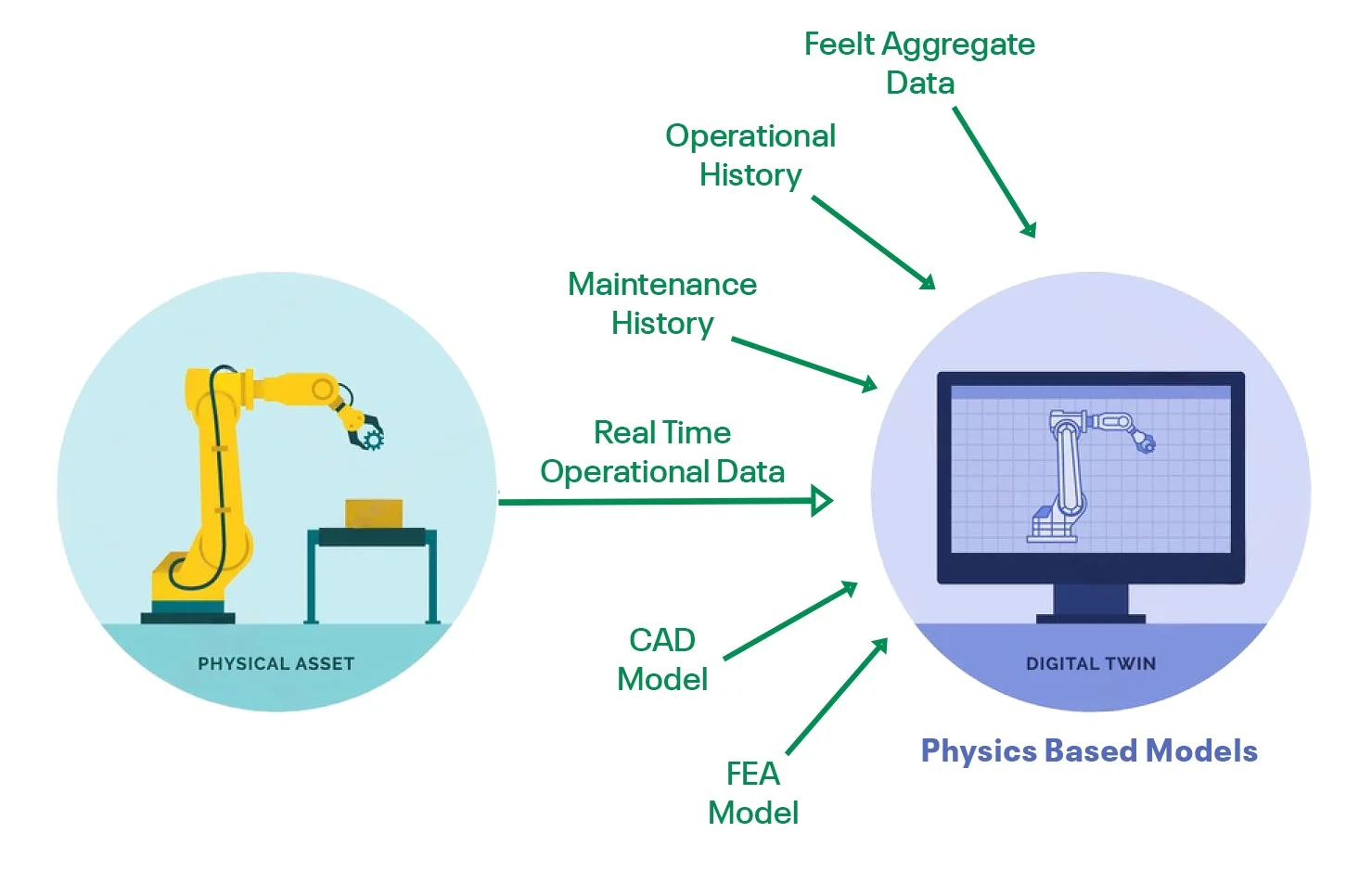
Fig. 1: Overview of digital twin technology.
3.2 Digital Twin Synchronization and Drift Management
Within the proposed framework, each physical asset's digital twin is kept in sync with sensor streams at the 1-second interval stated in Section 4.2. Synchronization is proposed to use a hybrid physics-informed and data-driven twin model: a physics-based component encodes known mechanical relationships (e.g., expected vibration and temperature envelopes for a given load), while a data-driven component learns residual behavior not captured by the physical model. To keep the twin from drifting away from the real asset over time, a 24-hour recalibration cycle is proposed, in which twin parameters are reconciled against maintenance-log ground truth. Between recalibrations, the framework monitors the residual error between predicted and observed sensor values; when the residual exceeds a defined threshold, a retraining trigger is raised. When twin output crosses the Class I/II/III severity thresholds defined in Section 4.2, the framework generates a corresponding maintenance recommendation.
3.3 Predictive Maintenance
Predictive maintenance integrates data analytics, sensors, and machine learning models to determine the probable timing of equipment failure. Maintenance operations are done at the exact time they are required, thus avoiding the conventional method of scheduled or corrective maintenance and greatly minimizing costs and downtime. Our research aims at minimizing this unplanned downtime in the industrial system, especially big machines, which are represented by wind turbines. We aim to identify the potential failures in advance, reduce maintenance costs, and increase the operational life of these expensive assets through the leveraging of predictive maintenance, following the process shown in Fig. 2.
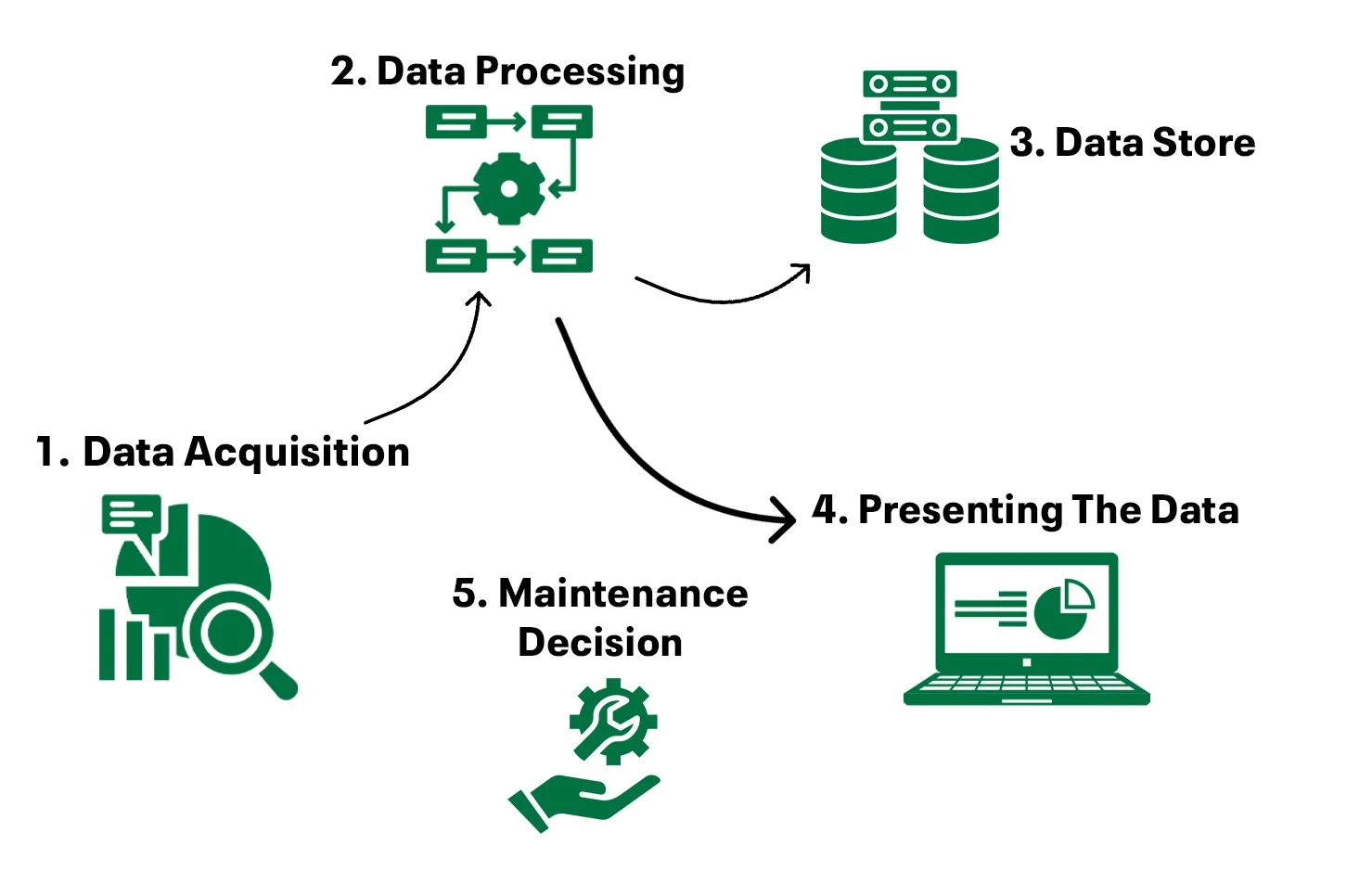
Fig. 2: Workflow and key stages of a predictive maintenance system.
3.4 Artificial Intelligence (AI)
Artificial intelligence is the simulation of human intelligence in machines programmed to think, learn, and act autonomously. AI encompasses a range of techniques, including machine learning, natural language processing, and robotics, which aid in the processing of large datasets to predict outcomes and optimize systems. In our study, AI is integral to intelligent decision-making in predictive maintenance. For example, based on sensor data, AI algorithms can be used to predict probable failures and propose optimum maintenance schedules for digital twins. Fig. 3 summarizes the core components of AI relevant to this framework.
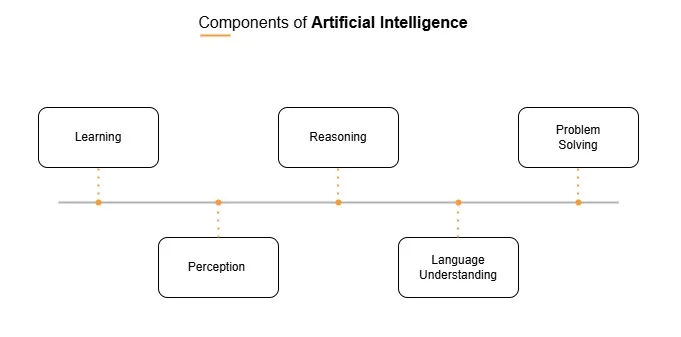
Fig. 3: Architectural breakdown of core artificial intelligence components.
3.5 Machine Learning (ML)
Machine learning is one of the subsets of AI, wherein it creates algorithms that enable the systems to learn from the data and make improvements through time without explicit programming. ML is more useful when applied to complex dataset recognition, so its application is mainly for predictive maintenance applications. In our research, machine learning models are used to examine historical and real-time data from sensors of wind turbines and other industrial machines. The failure patterns are, therefore, identified, along with the prediction of likely future breakdowns. The embedding of ML into digital twins allows for the creation of dynamic, self-improving predictive maintenance systems, as depicted in Fig. 4.
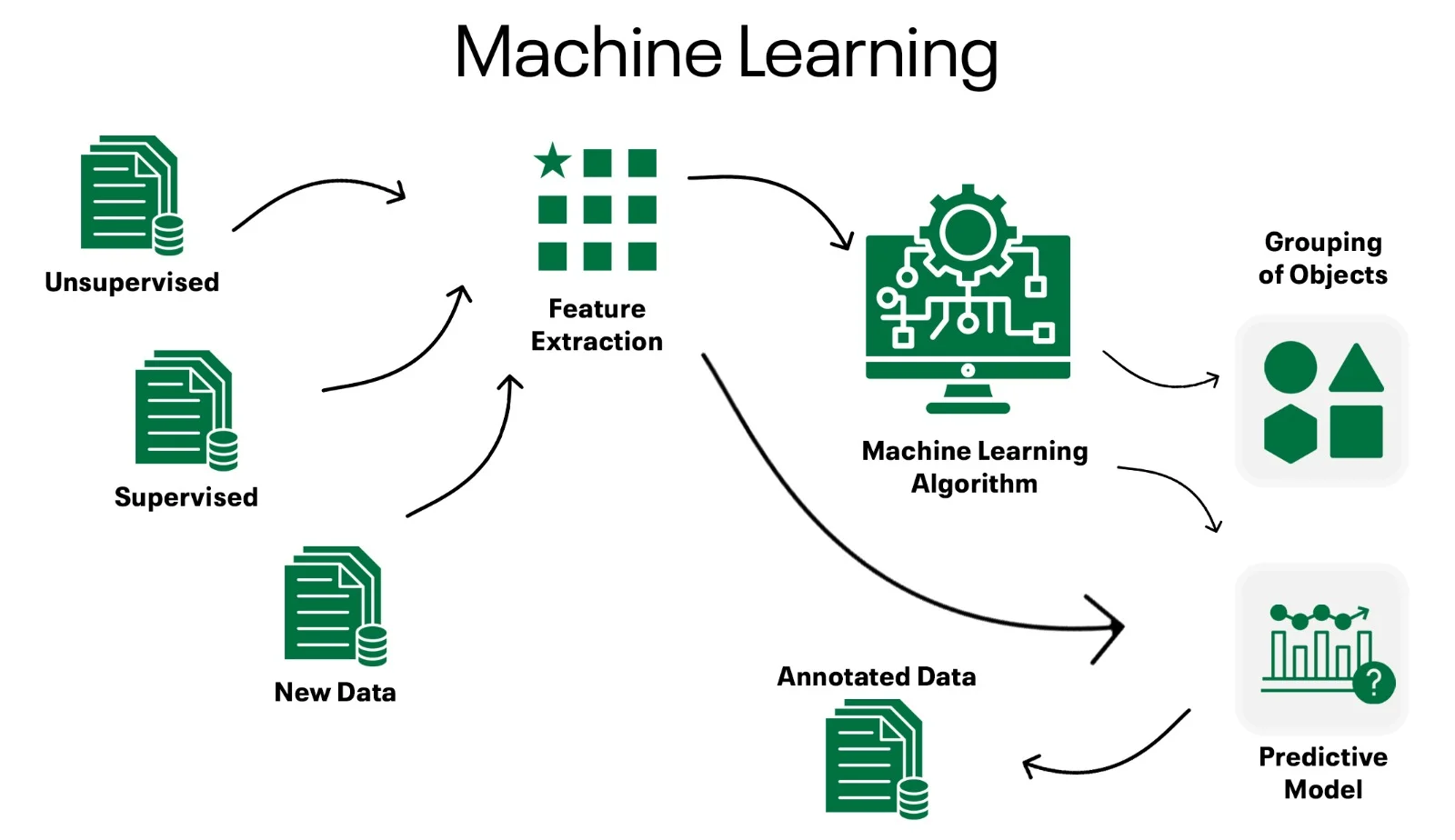
Fig. 4: Overview of machine learning.
3.6 Deep Learning
Deep learning is a branch of machine learning where deep neural networks model complex patterns in large datasets. Techniques developed under deep learning are particularly suitable for processing unstructured data, such as images, videos, and sensor signals, to provide high accuracy for predictions in highly dynamic environments. In our study, deep learning models are used to enhance capabilities in the predictive maintenance system towards deeper insights into equipment behavior and failure mechanisms, specifically in highly complex industrial setups like wind turbines.
3.7 Proposed Model Specification
The following model specification is the proposed methodology for the planned validation study described in Section 6; it has not yet been implemented or trained on real data. Candidate architectures include Long Short-Term Memory (LSTM) and Gated Recurrent Unit (GRU) networks for time-series remaining-useful-life (RUL) estimation, a 1-D CNN for vibration-signal fault classification, and Random Forest / XGBoost models as tabular-feature baselines. The proposed feature set combines raw and engineered signals from vibration, temperature, and power-output streams together with maintenance-log-derived labels. Data would be partitioned using a time-based 70/15/15 train/validation/test split to avoid temporal leakage, with model selection performed via 5-fold walk-forward cross-validation. Because failure events are expected to be rare relative to normal operation, class-weighting and/or SMOTE-based oversampling are proposed to address class imbalance. Proposed baselines for comparison are rule-based threshold alerting and a simulated scheduled-maintenance policy.
3.8 Internet of Things (IoT)
Internet of Things (IoT) means the network of physical devices, that are connected with each other and communicate with each other through data exchange by using the internet. Equipment monitoring over a period is something IoT allows for purposes of predictive maintenance applications. In our research study, real-time operational data from wind turbines and other machinery is gathered through IoT sensors and fed into digital twins for their analysis and decision-making. IoT is the backbone of our proposed system and provides an infrastructural backbone to collect and transmit the data required for predictive maintenance, as illustrated in Fig. 5 and Fig. 6.
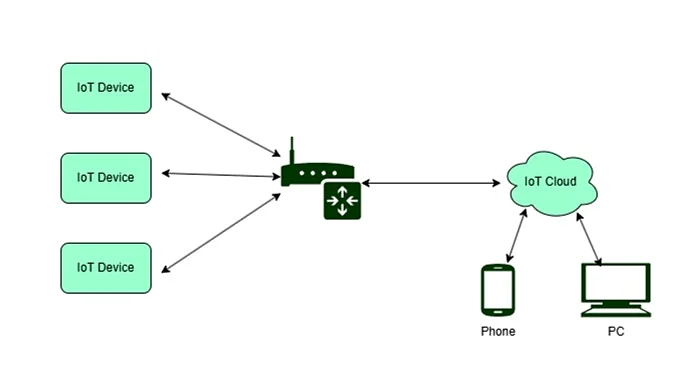
Fig. 5: Overview of internet of things.
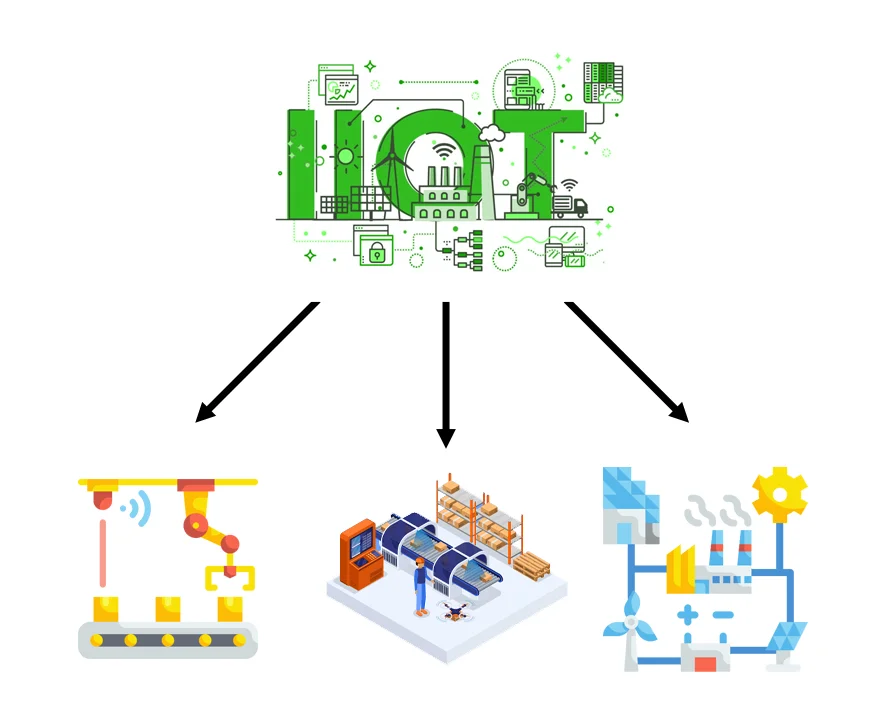
Fig. 6: Overview of industrial internet of things.
3.9 Industry 4.0
Industry 4.0 is the fourth industrial revolution through integrating digital technologies, primarily IoT, artificial intelligence, robotics, and automation of manufacturing and industrial processes in the industry. The industries are enabled to provide smarter, more flexible, and efficient production environments using a high level of advanced analytics and automation. In the context of our study, Industry 4.0 is, therefore, the overarching framework through which our proposed digital asset identification and predictive maintenance system will be operated. Using technologies under Industry 4.0, we will make industrial processes more efficient and resilient, particularly for renewable energy industry sectors, integrating the components shown in Fig. 7.
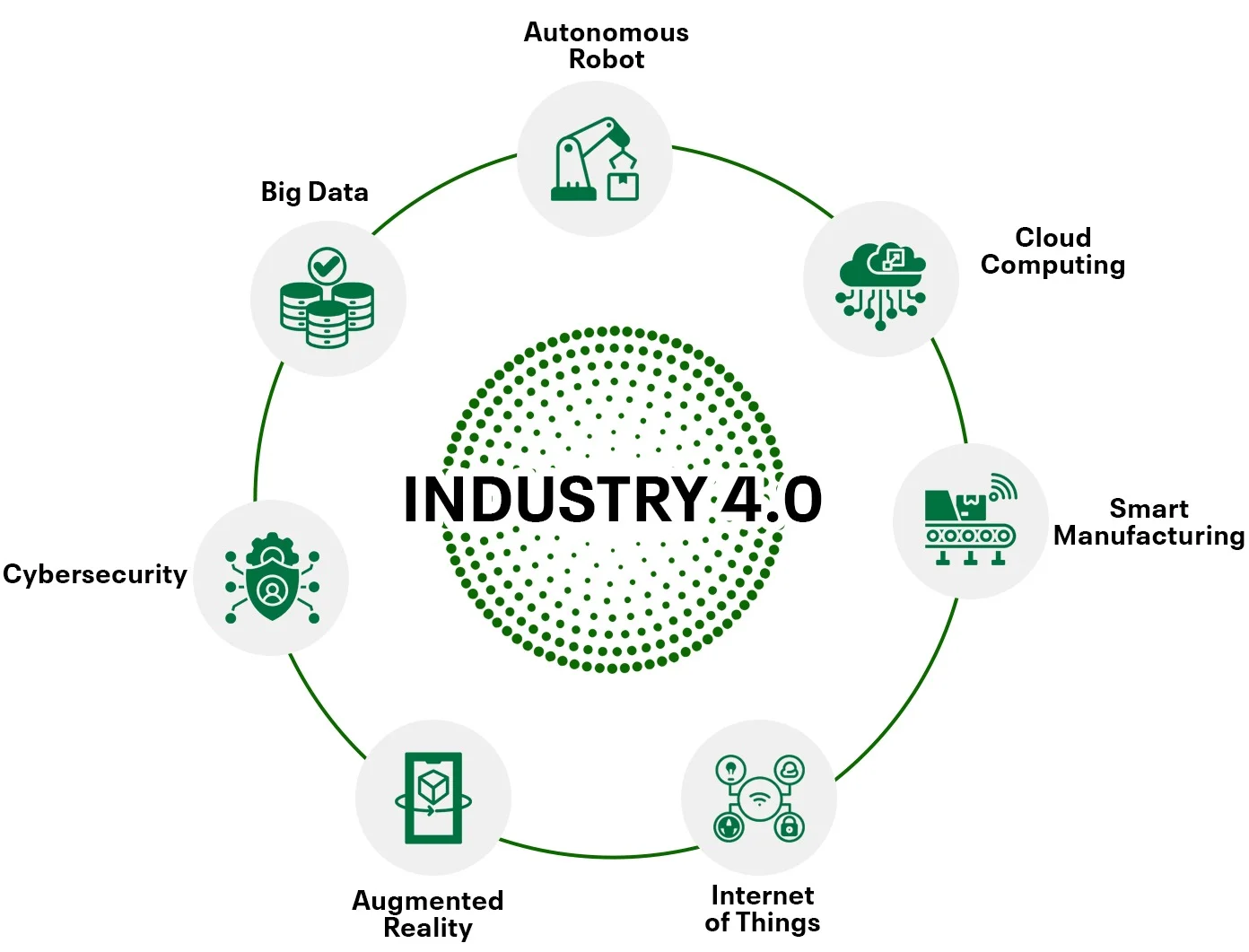
Fig. 7: Overview of smart industry 4.0.
3.10 Fault Detection and Diagnosis
Fault detection and diagnosis will involve the detection, isolation, and analysis of faults or failures in the machinery or systems. That will ensure that system health, including preventing catastrophic failures; those processes are very important when one is talking about our predictive maintenance framework developed over this study. With information sourced through IoT sensors and machine learning-based analyses, our system would spot faults early, contribute towards an assessment of the probable cause for faults, and subsequently act with timely intervention in avoiding surprise breakdowns, through the fault diagnosis stages outlined in Fig. 8.
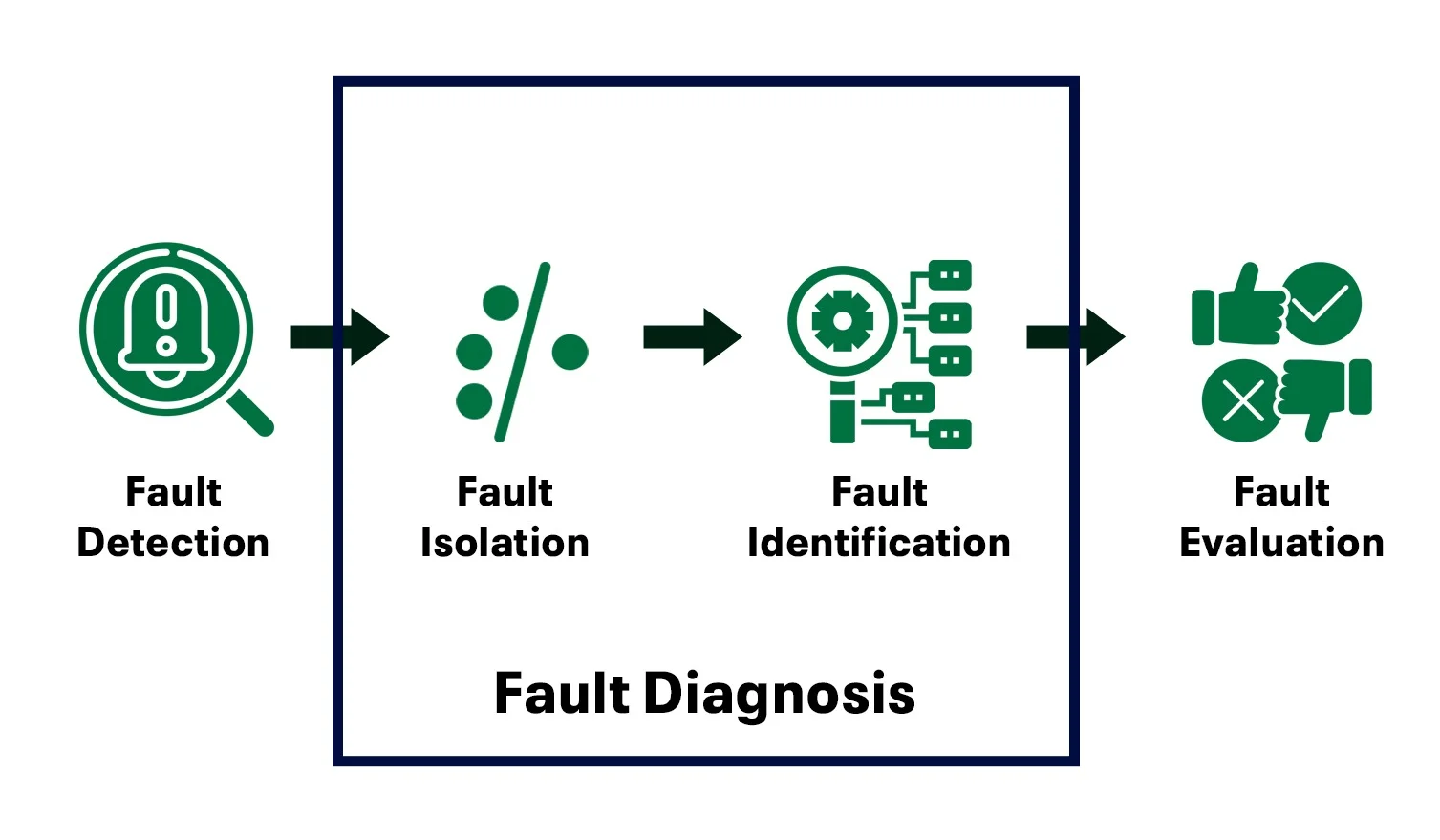
Fig. 8: Overview of fault detection and diagnosis.
3.11 Blockchain Design Specification
The blockchain layer is proposed to be implemented on a permissioned platform such as Hyperledger Fabric, using a Practical Byzantine Fault Tolerance (PBFT) consensus mechanism appropriate for a known set of industrial stakeholders. Smart contracts are proposed to validate and timestamp maintenance records as they are generated, so that each recorded event is tamper-evident. For storage efficiency, only cryptographic hashes of maintenance and sensor records are proposed to be written on-chain, with the corresponding raw data retained off-chain and referenced by hash. Anticipated latency and storage-overhead figures for this design are drawn from prior blockchain-for-IoT literature rather than benchmarked within this study; empirical benchmarking of the blockchain layer is left to the planned validation work in Section 6.[8,15,23]
3.12 Machine Downtime
Machine downtime refers to the time when machines or a system is not operational, either for an unplanned stop due to failure or during routine maintenance. The main imperative for minimizing downtime is to ensure maximum productivity and lower overhead costs in industrial sites. Our research directly counters machine downtime by developing an optimal predictive maintenance system that ensures and predicts the likelihood of faults in equipment so as to enable preventive maintenance, thus lessening unplanned downtime. This system is therefore designed to improve the overall efficiency and reliability of industrial operations. The common causes of machine downtime addressed by this framework are summarized in Fig. 9.
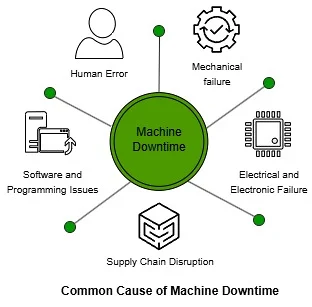
Fig. 9: Overview of machine downtime.
4. Experimental Framework and Theoretical Validation
4.1 System Architecture and Implementation Framework
The proposed predictive maintenance framework operates through a multi-layered architecture that integrates IoT sensors, digital twin technology, AI algorithms, and blockchain for secure data management. The system architecture comprises the following layers:
1. Data Acquisition Layer: The layer contains IoT sensors that collect the required data from the machinery, such as vibrations, temperature, pressure, and rotational speed.
2. Data Processing Layer: Edge computing systems perform preprocessing of data from IoT sensors by means of data filtering, normalization, and feature extraction.
3. Digital Twin Layer: Virtual representations of physical assets are constructed and maintained using data processed in the previous layer.
4. Analytics Layer: AI and ML models are applied to historical and current data for analyzing patterns, predicting equipment failures, and scheduling maintenance.
5. Security Layer (Blockchain Technology): This keeps the data safe from tampering and makes sharing trustworthy among everyone involved.
6. Infrastructure Estimates (projected): As a design goal, the infrastructure targets a budget for inference latency for edge-node prediction of less than 200 ms per cycle, and a rough magnitude for the volume of data of several gigabytes per turbine per day, based on the claimed 1-second sampling interval mentioned in Section 4.2.
4.2 Simulation Assumptions (Not an Executed Dataset)
Given the absence of physical experimental setups, we propose a theoretical assessment within a simulated scenario. The following assumptions regarding the properties of the data are part of the simulation; the data characteristics described below (e.g., 5–10 years of records with 1-second of sampling) are not properties of a dataset that has been physically collected and used.
1. Equipment Profile: Wind turbines functioning under varying environmental conditions, where operational data is obtained from publicly available data corpus and industry reports.
2. Data Characteristics:
- Historical maintenance records spanning 5–10 years
- Real-time sensor data collected at 1-second intervals
- Multi-dimensional data streams including vibration, temperature, and power output
3. Failure Scenarios: Three categories of failures are simulated:
- Class I (Critical): Imminent failure requiring immediate intervention
- Class II (Moderate): Degradation requiring scheduled maintenance within 30 days
- Class III (Minor): Anomalies requiring monitoring and potential future intervention
4.2.1 Candidate Real Datasets for Future Validation
The following publicly available datasets are candidates for the planned empirical validation study (Section 6):
- Kelmarsh open wind-turbine SCADA data — Source: Kelmarsh Wind Farm (open data). Scale: 6 turbines, multi-year 10-min SCADA logs. Sensors: Power, wind speed/direction, temperatures, status/fault codes.
- Penmanshiel open wind-turbine SCADA data — Source: Penmanshiel Wind Farm (open data). Scale: 9 turbines, multi-year 10-min SCADA logs. Sensors: Power, wind speed/direction, temperatures, status/fault codes.
- EDP Open Data wind-turbine failure dataset — Source: EDP Renewables open data initiative. Scale: Multiple turbines, ~1 year SCADA + logged failures. Sensors: SCADA signals plus labeled failure/fault events.
- NASA C-MAPSS (prognostics-benchmarking proxy domain) — Source: NASA Prognostics Data Repository. Scale: 100+ simulated turbofan engine run-to-failure trajectories. Sensors: Multivariate sensor readings for RUL benchmarking.
4.3 Performance Metrics and Evaluation Criteria
The proposed framework is evaluated theoretically through the following metrics:
Prediction Accuracy (PA): The proportion of correctly predicted failures to total predicted failures.
Precision: The ratio of correctly identified failures to all identified failures.
Recall: The ratio of correctly identified failures to all actual failures.
Reduction in Downtime (DR): Percentage of reduction in unscheduled downtime from traditional methods of maintenance.
Cost Savings (C.S): The estimated reduction in maintenance costs.
F1 Score: The harmonic mean of Precision and Recall.
4.4 Assumptions and Limitations
- Data quality: The simulation is based on the assumption that sensors provide the required information, which is not always the case.
- Network reliability: The simulation assumes that there is no disruption in the IoT sensors and servers' communication.
- Model generalization: The simulation assumes that the model will work for all types of equipment.
- Security threat model: The simulation assumes that the blockchain technology can secure data from unauthorized alteration and access.
These assumptions have not been tested empirically. Secondly, there is a generalization risk: models learned on the data of one region or for one type of turbines may not work for other regions and other types of turbines because of differences in their blade design, the climate they operate in, and their operational regime. Finally, the candidate sets of data in Section 4.2 are regionally and manufacturer-restricted (primarily European wind farms) and therefore, a model learned from them would need additional tuning before it can be applied elsewhere.
5. Results and Discussion
5.1 Theoretical Performance Analysis
Based on the simulation scenario introduced in Section 4, the new AI-based predictive maintenance system is theoretically expected (and hence it is only a hypothesis) to demonstrate the following indicators:
5.1.1 Prediction Accuracy and Reliability
The combined approach of using the power of ML, DL, and digital twin for failure prediction can theoretically achieve up to 85–95% accuracy rates, as suggested by similar studies on digital-twin/AI based fault detection, depending on the complexity of the predicted failure pattern and the amount of data used.[6,39] Critical failure classes are the easiest to predict because of their distinct failure patterns. In contrast, minor failures are much harder to predict since their patterns are less conspicuous. The precision-recall results in Table 2 show that the model performs almost equally well in terms of precision and recall, with F1 values close to 1.
Table 2: Theoretical (illustrative values) prediction performance metrics.
| Failure Type | Prediction Accuracy (%) | Precision (%) | Recall (%) | F1-Score |
|---|---|---|---|---|
| Class I (Critical) | 92 – 95 | 90 – 94 | 88 – 92 | 0.89 – 0.93 |
| Class II (Moderate) | 87 – 91 | 85 – 89 | 83 – 87 | 0.84 – 0.88 |
| Class III (Minor) | 82 – 86 | 80 – 84 | 78 – 82 | 0.79 – 0.83 |
5.1.2 Downtime Reduction
The use of a digital twin for predictive maintenance can provide substantial improvements in unplanned downtime of about 25% to 35% less than what is achievable by using reactive methods, according to downtime-reduction values found in the literature for digital-twin PdM; the subsequent planned-maintenance-efficiency and emergency-response-time values are assumed, since not found in the literature.[1,6] Furthermore, the use of a digital twin would improve the efficiency of planned maintenance by about 15% to 20% due to optimized schedules and reduce emergency-response time by 30% to 40%.
5.1.3 Cost Implications
The proposed framework will save 20–30% in total maintenance costs, 15–25% in losses due to downtime, and extend the equipment's life cycle by 10–15%. The values were calculated using the cost study mentioned above (reduction in downtime). However, the number was not extracted from it directly; instead, it was most likely used as the basis of calculations for the numbers presented in the framework.
5.2 Comparative Analysis with Traditional Approaches
To further validate the theoretical advantages of our proposed system, a comparative analysis was conducted against conventional maintenance strategies, as shown in Table 3. This comparison highlights how the integration of digital twin technology, AI, and IoT fundamentally shifts maintenance from a cost center into a strategic asset for operational efficiency. The analysis presented in Table 3 illustrates the clear theoretical advantages of our approach. While reactive maintenance is characterized by high costs and frequent unplanned downtime, and scheduled maintenance offers only moderate improvements with limited data utilization, the proposed PdM framework achieves low downtime frequency, optimized maintenance costs, and extended equipment lifespan. Critically, our approach provides high-accuracy failure prediction through comprehensive data utilization, representing a significant advancement in maintenance strategy efficacy.
Note on Table 3 sourcing: the qualitative ratings above reflect the framework's design assumptions and are informed by the comparative maintenance-strategy findings in prior literature; they are not derived from a benchmark experiment conducted in this study.[1,6,39] A quantitative benchmark table (accuracy, precision, recall, F1, ROC-AUC/PR-AUC, RMSE/MAE, inference latency, and compute cost) is planned for the follow-on validation study described in Section 6 and is not included here because these metrics have not yet been measured.
Table 3: Comparative analysis of maintenance approaches.
| Parameter | Reactive Maintenance | Scheduled Maintenance | Proposed PdM Framework |
|---|---|---|---|
| Maintenance Cost | High | Moderate | Low |
| Downtime Frequency | Very High | Moderate | Low |
| Equipment Lifespan | Reduced | Moderate | Extended |
| Data Utilization | None | Minimal | Comprehensive |
| Failure Prediction | Impossible | Limited | High Accuracy |
5.3 Validation of Research Questions
RQ1: The proposed architecture design theoretically suggests that the integration of the IoT data and digital twin with AI may reduce the occurrence of unplanned downtime by 25–35%. Thus, it is possible that IoT-driven industrial production will see an increase by 25–35%, as it allows for uninterrupted work and optimal utilization of resources. The answer is based on theoretical assumptions found in the provided design and research rather than actual measurements; for reference, see Section 5.1.2, which discusses downtime reduction in detail.
RQ2: Digital twin technology can be used to create a virtual replica of wind turbines that will allow the operators to ensure ongoing synchronization and update the data about the real-time physical environment in which the machines are operating in order to enable failure simulation, prediction, and maintenance prior to any actual occurrences. This answer is based on conceptual (theoretical) projection in the framework design; refer to Section 3.2 (Digital Twin Synchronization and Drift Management) for the design description.
RQ3: Machine learning models are capable of analysing patterns from failure cases and current sensor data efficiently and effectively, allowing for detection of developing anomalous patterns and trends that suggest impending failures with up to 85–95% accuracy for different failure categories. This is a theoretical/conjectural statement based on the rationale provided in Section 5.1.1 for the prediction-accuracy claims.
RQ4: The real-time data collection enabled by IoT guarantees the constant availability of data, thus enabling the identification of abnormal conditions and making it possible to make maintenance decisions based on the current state of the equipment and schedule maintenance accordingly, resulting in reduced impact on operations. This answer is a theoretical/conceptual projection grounded in the framework design; see Section 3.8 (Internet of Things) for the supporting design detail. Empirical answers to RQ1–RQ4 will be produced by the planned validation study outlined in Section 6, once the framework has been tested against the candidate real-world datasets identified in Section 4.2.
6. Future Work
Subsequent research needs to focus on implementing the proposed predictive maintenance system by integrating blockchain for secure and transparent data sharing, employing advanced deep learning models for high-accuracy fault prediction, and employing edge computing to enable real-time processing with low latency. Furthermore, scalability to different industrial domains should be investigated to ensure that it can adapt to machines of different types. The emergence of self-healing systems capable of autonomously modifying operational parameters, as well as multi-agent AI systems for collaborative decision-making, may further enhance the optimization of maintenance strategies. Further, the optimization of AI models for energy efficiency will be essential in achieving sustainable and cost-effective predictive maintenance. Addressing these issues, future improvements can make industrial maintenance systems more intelligent, autonomous, and robust.
6.1 Planned Empirical Validation
The candidate datasets identified in Section 4.2 (Kelmarsh, Penmanshiel, EDP Open Data, and NASA C-MAPSS as a prognostics-benchmarking proxy) will form the basis of the intended validation protocol. This protocol follows the model specification proposed in Section 3.7: candidate LSTM/GRU, 1-D CNN, and Random Forest/XGBoost models will be trained on a time-based 70/15/15 split, evaluated with 5-fold walk-forward cross-validation, and compared against rule-based threshold alerting and simulated scheduled-maintenance baselines using the quantitative benchmark metrics (accuracy, precision, recall, F1, ROC-AUC/PR-AUC, RMSE/MAE, inference latency, compute cost) referenced in Section 5.2.
7. Conclusion
With these studies in mind, we have combined advanced technologies such as digital twin, predictive maintenance, AI, ML, DL, IoT, and Industry 4.0 with each other for the efficient and reliable working of industrial systems, especially for wind turbines. With the help of digital twins and IoT sensors, real-time data is collected, which is then analyzed through AI and Machine Learning algorithms. With this, we can detect equipment failures at early stages and optimize the maintenance schedule to decrease unplanned downtime. This method not only helps in reducing the maintenance cost but also increases the operational life of equipment. Moreover, by utilizing deep learning and machine learning algorithms, the analysis of unstructured data, revealing patterns in causes of failure, becomes available, which applies to the problems of the wind power industry, as part of Industry 4.0.
This approach, the utilization of such methods, complies with the concept of Industry 4.0, making manufacturing processes and other large-scale industries more adaptive and efficient, thus promoting the creation of smart and resilient sectors. In this way, it is necessary to note that the framework suggested in the paper should be considered as an advanced conceptual model, for which the presented results are only theoretical predictions, yet to be supported by experimental data. The key limitations of the model include that the described performance indicators were not experimentally validated on the real-world equipment, that the obtained model is yet to be tested for its ability to generalize on different types of turbines and geographical locations, and that the performance of the blockchain part of the system and its underlying infrastructure was not evaluated; therefore, the validation experiments that are going to be performed in the sixth section of the paper are of particular importance.
CRediT Author Contribution Statement
Kashif Iqbal: Conceptualization, Formal analysis, Funding acquisition, Investigation, Methodology, Project Administration, Resources, Software, Supervision, Validation, Writing – Original draft, Writing – Review & editing. Sohaib Elahi: Formal analysis, Funding acquisition, Investigation, Methodology, Project administration, Resources, Validation, Writing – Original Draft, Writing – Review & editing. Mairaj Nawaz: Conceptualization, Data curation, Funding acquisition, Methodology, Project administration, Resources, Validation, Writing – Original draft, Writing – Review & editing. Muhammad Rafey: Conceptualization, Funding acquisition, Investigation, Methodology, Project administration, Validation, Writing – Original draft. Nawaf Mir: Formal analysis, Funding acquisition, Methodology, Project administration, Resources, Validation, Writing – Original draft, Writing – Review & editing. Zeeshan Kurd: Data curation, Funding acquisition, Investigation, Methodology, Project administration, Software, Validation, Writing – Original draft. All authors have read and agreed to the published version of the manuscript and agree to be accountable for all aspects of the work, ensuring that questions related to the accuracy or integrity of any part of the work are appropriately investigated and resolved.
Funding Declaration
This research did not receive any specific grant from funding agencies in the public, commercial, or not-for-profit sectors.
Data Availability Statement
No new experimental datasets were generated or analyzed during this study, as the work presents a conceptual and theoretical predictive-maintenance framework. The publicly available datasets identified in Section 6 for potential future empirical validation of the proposed framework are accessible through their respective public repositories. The relevant datasets and repository links are provided below:
- Kelmarsh Dataset: https://windlab.hlrs.de/dataset/zenodo-7212475
- Penmanshiel Dataset: https://zenodo.org/records/5946808
- EDP Open Data: https://edpbr.opendatasoft.com
- NASA C-MAPSS Dataset: https://data.nasa.gov
Conflict of Interest
There is no conflict of interest.
Artificial Intelligence (AI) Use Disclosure
The authors declare that artificial intelligence (AI)-assisted tools were used only for language refinement, grammar improvement, and manuscript structuring purposes during the preparation of this work. All technical content, experimental implementation, results, and interpretations were independently developed and verified by the authors.
Supporting Information
Not Applicable.
List of Abbreviations
| PdM | Predictive Maintenance | IoT | Internet of Things |
| AI | Artificial Intelligence | ML | Machine Learning |
| DL | Deep Learning | PHM | Prognostics and Health Management |
| CNN | Convolutional Neural Network | XR | Extended Reality |
| SVM | Support Vector Machine | VR | Virtual Reality |
| AR | Augmented Reality | 3D | Three Dimensions |
| IIoT | Industrial Internet of Things | CAD | Computer-Aided Design |
| FEA | Finite Element Analysis | SCADA | Supervisory Control and Data Acquisition |
| P | Precision | R | Recall |
| C.S | Cost Saving | PA | Prediction Accuracy |
| D.R | Downtime Reduction |
References
- [01] Q. Wang, S. Bu, Z. He, Achieving predictive and proactive maintenance for high-speed railway power equipment with LSTM-RNN, IEEE Transactions on Industrial Informatics, 2020, 16, 6509–6517, doi: 10.1109/TII.2020.2966033.
- [02] M. O. Seddini, L. Triqui-Sari, Towards proactive maintenance: The implementation of digitized SCADA systems for predictive maintenance optimization in production environments, 2024 IEEE 15th International Colloquium on Logistics and Supply Chain Management (LOGISTIQUA), 2024, 1–7, doi: 10.1109/LOGISTIQUA61063.2024.10571506.
- [03] A. J. M. Rani, B. Yasotha, P. Sevanthi, K. Karthika, Y. A. Jeevanantham, V. S. Pandi, Predictive analytics for proactive maintenance in industrial IoT applications, 2023 7th International Conference on Electronics, Communication and Aerospace Technology (ICECA), 2023, 1380–1385, doi: 10.1109/ICECA58529.2023.10394792.
- [04] Z. Jiang, Y. Guo, Z. Wang, Digital twin to improve the virtual-real integration of industrial IoT, Journal of Industrial Information Integration, 2021, 22, 100196, doi: 10.1016/j.jii.2020.100196.
- [05] Z. Zhao, L. Shen, C. Yang, W. Wu, M. Zhang, G. Q. Huang, IoT and digital twin enabled smart tracking for safety management, Computers & Operations Research, 2021, 128, 105183, doi: 10.1016/j.cor.2020.105183.
- [06] S. Abdul Rahman, S. Otoum, O. Bouachir, A. Mourad, Management of digital twin-driven IoT using federated learning, IEEE Journal on Selected Areas in Communications, 2023, 41, 3636–3649, doi: 10.1109/JSAC.2023.3310102.
- [07] J. Shi, Z. Pan, L. Jiang, X. Zhai, An ontology-based methodology to establish city information model of digital twin city by merging BIM, GIS and IoT, Advanced Engineering Informatics, 2023, 57, 102114, doi: 10.1016/j.aei.2023.102114.
- [08] H. Elayan, M. Aloqaily, M. Guizani, Digital twin for intelligent context-aware IoT healthcare systems, IEEE Internet of Things Journal, 2021, 8, 16749–16757, doi: 10.1109/JIOT.2021.3051158.
- [09] H. Wang, X. Di, Y. Wang, B. Ren, G. Gao, J. Deng, An intelligent digital twin method based on spatio-temporal feature fusion for IoT attack behavior identification, IEEE Journal on Selected Areas in Communications, 2023, 41, 3561–3572, doi: 10.1109/JSAC.2023.3310091.
- [10] D. Wang, B. Li, B. Song, Y. Liu, K. Muhammad, X. Zhou, Dual-driven resource management for sustainable computing in the blockchain-supported digital twin IoT, IEEE Internet of Things Journal, 2022, 10, 6549–6560, doi: 10.1109/JIOT.2022.3162714.
- [11] Y. Lu, X. Huang, K. Zhang, S. Maharjan, Y. Zhang, Communication-efficient federated learning for digital twin edge networks in industrial IoT, IEEE Transactions on Industrial Informatics, 2020, 17, 5709–5718, doi: 10.1109/TII.2020.3010798.
- [12] A. Manocha, S. K. Sood, M. Bhatia, IoT-digital twin-inspired smart irrigation approach for optimal water utilization, Sustainable Computing: Informatics and Systems, 2024, 41, 100947, doi: 10.1016/j.suscom.2023.100947.
- [13] A. Saad, S. Faddel, T. Youssef, O. A. Mohammed, On the implementation of IoT-based digital twin for networked microgrids resiliency against cyber attacks, IEEE Transactions on Smart Grid, 2020, 11, 5138–5150, doi: 10.1109/TSG.2020.3000958.
- [14] S. Alsubai, M. Sha, A. Alqahtani, M. Bhatia, Hybrid IoT-edge-cloud computing-based athlete healthcare framework: Digital twin initiative, Mobile Networks and Applications, 2023, 28, 2056–2075, doi: 10.1007/s11036-023-02200-z.
- [15] S. Qi, X. Yang, J. Yu, Y. Qi, Blockchain-aware rollbackable data access control for IoT-enabled digital twin, IEEE Journal on Selected Areas in Communications, 2023, 41, 3517–3532, doi: 10.1109/JSAC.2023.3310061.
- [16] S. Alsubai, A. Alqahtani, A. Alanazi, M. Bhatia, Digital twin-inspired IoT-assisted intelligent performance analysis framework for electric vehicles, IEEE Internet of Things Journal, 2024, 11, 18880–18887, doi: 10.1109/JIOT.2024.3367745.
- [17] M. M. Salim, D. Camacho, J. H. Park, Digital twin and federated learning enabled cyberthreat detection system for IoT networks, Future Generation Computer Systems, 2024, 161, 701–713, doi: 10.1016/j.future.2024.07.017.
- [18] M. M. H. Sifat, S. K. Das, Proactive and reactive maintenance strategies for self-healing digital twin islanded microgrids using fuzzy logic controllers and machine learning techniques, IEEE Transactions on Power Systems, 2024, 40, 178–187, doi: 10.1109/TPWRS.2024.3408096.
- [19] S. M. Habibullah, M. T. Farabe Shehun, IoT-integrated deep neural predictive maintenance system with vibration-signal diagnostics in smart factories, Journal of Sustainable Development and Policy, 2022, 1, 35–83, doi: 10.63125/6jjq1p95.
- [20] T. Pexyean, K. Saraubon, P. Nilsook, IoT, AI, and digital twin for smart campus, 2022 Research, Invention, and Innovation Congress: Innovative Electricals and Electronics (RI2C), 2022, 160–164, doi: 10.1109/RI2C56397.2022.9910286.
- [21] H. Liao, Z. Zhou, Z. Jia, Y. Shu, M. Tariq, J. Rodriguez, V. Frascolla, Ultra-low AoI digital twin-assisted resource allocation for multi-mode power IoT in distribution grid energy management, IEEE Journal on Selected Areas in Communications, 2023, 41, 3122–3132, doi: 10.1109/JSAC.2023.3310101.
- [22] W. Wu, Z. Zhao, L. Shen, X. T. R. Kong, D. Guo, R. Y. Zhong, G. Q. Huang, Just Trolley: Implementation of industrial IoT and digital twin-enabled spatial-temporal traceability and visibility for finished goods logistics, Advanced Engineering Informatics, 2022, 52, 101571, doi: 10.1016/j.aei.2022.101571.
- [23] C. Wang, Z. Cai, D. Seo, Y. Li, TMETA: Trust management for the cold start of IoT services with digital-twin-aided blockchain, IEEE Internet of Things Journal, 2023, 10, 21337–21348, doi: 10.1109/JIOT.2023.3285108.
- [24] J. Tan, F. Tang, M. Zhao, Y. Zhu, Adaptive caching scheme for jointly optimizing delay and energy consumption in heterogeneous digital twin IoT, IEEE Transactions on Network Science and Engineering, 2023, 10, 4020–4032, doi: 10.1109/TNSE.2023.3281398.
- [25] R. Issa, M. S. Hamad, M. Abdel-Geliel, Digital twin of wind turbine based on Microsoft® Azure IoT Platform, 2023 IEEE Conference on Power Electronics and Renewable Energy (CPERE), 2023, 1–8, doi: 10.1109/CPERE56564.2023.10119576.
- [26] E. Bozkaya, B. Canberk, S. Schmidt, Digital twin-empowered resource allocation for 6G-enabled massive IoT, 2023 IEEE International Conference on Communications Workshops (ICC Workshops), 2023, 727–732, doi: 10.1109/ICCWorkshops57953.2023.10283649.
- [27] S. Geißler, F. Wamser, W. Bauer, S. Gebert, S. Kounev, T. Hössfeld, Mvnocoresim: A digital twin for virtualized IoT-centric mobile core networks, IEEE Internet of Things Journal, 2023, 10, 13974–13987, doi: 10.1109/JIOT.2023.3263258.
- [28] A. Taneja, S. Rani, Energy efficient digital twin enabled massive IoT network with use case in consumer health, IEEE Transactions on Consumer Electronics, 2024, 70, 2099–2106, doi: 10.1109/TCE.2024.3351154.
- [29] H. Xu, J. Wu, Q. Pan, X. Liu, C. Verikoukis, Digital twin and meta RL empowered fast-adaptation of joint user scheduling and task offloading for mobile industrial IoT, IEEE Journal on Selected Areas in Communications, 2023, 41, 3254–3266, doi: 10.1109/JSAC.2023.3310081.
- [30] S. R. Chhetri, M. A. Al Faruque, IoT-enabled living digital twin modeling, Data-driven modeling of cyber-physical systems using side-channel analysis, Springer, Cham, 2020, 155–182, doi: 10.1007/978-3-030-37962-9_8.
- [31] C. Garrido-Hidalgo, L. Roda-Sanchez, F. J. Ramírez, T. Olivares, IoT-driven digital twin for improved product disassembly in remanufacturing, International Workshop on Autonomous Remanufacturing, Cham: Springer Nature Switzerland, 2023, 281–291, doi: 10.1007/978-3-031-52649-7_22.
- [32] A. Shamayleh, M. Awad, J. Farhat, IoT based predictive maintenance management of medical equipment, Journal of Medical Systems, 2020, 44, 72, doi: 10.1007/s10916-020-1534-8.
- [33] S. Ayvaz, K. Alpay, Predictive maintenance system for production lines in manufacturing: A machine learning approach using IoT data in real-time, Expert Systems with Applications, 2021, 173, 114598, doi: 10.1016/j.eswa.2021.114598.
- [34] J. C. P. Cheng, W. Chen, K. Chen, Q. Wang, Data-driven predictive maintenance planning framework for MEP components based on BIM and IoT using machine learning algorithms, Automation in Construction, 2020, 112, 103087, doi: 10.1016/j.autcon.2020.103087.
- [35] Y. Liu, W. Yu, T. Dillon, W. Rahayu, M. Li, Empowering IoT predictive maintenance solutions with AI: A distributed system for manufacturing plant-wide monitoring, IEEE Transactions on Industrial Informatics, 2021, 18, 1345–1354, doi: 10.1109/TII.2021.3091774.
- [36] C. Liu, H. Zhu, D. Tang, Q. Nie, T. Zhou, L. Wang, Y. Song, Probing an intelligent predictive maintenance approach with deep learning and augmented reality for machine tools in IoT-enabled manufacturing, Robotics and Computer-Integrated Manufacturing, 2022, 77, 102357, doi: 10.1016/j.rcim.2022.102357.
- [37] M. Sayed-Mouchaweh, L. Rajaoarisoa, Explainable decision support tool for IoT predictive maintenance within the context of Industry 4.0, 2022 21st IEEE International Conference on Machine Learning and Applications (ICMLA), IEEE, 2022, 1492–1497, doi: 10.1109/ICMLA55696.2022.00234.
- [38] K. S. H. Ong, W. Wang, D. Niyato, T. Friedrichs, Deep-reinforcement-learning-based predictive maintenance model for effective resource management in industrial IoT, IEEE Internet of Things Journal, 2021, 9, 5173–5188, doi: 10.1109/JIOT.2021.3109955.
- [39] Z. S. Tan, E. W. See-To, K. Y. Lee, H. N. Dai, M. L. Wong, Privacy-preserving federated learning for proactive maintenance of IoT-empowered multi-location smart city facilities, Journal of Network and Computer Applications, 2024, 231, 103996, doi: 10.1016/j.jnca.2024.103996.
- [40] M. Tulasiraman, U. Dayanandan, T. F. Ferrnandez, V. Vellaichamy, D. Rajasekeran, Fuzzy Logic-enabled Autonomous IoT Systems for proactive maintenance in industry 4.0 digital twin scenarios, Optical and Quantum Electronics, 2024, 56, 505, doi: 10.1007/s11082-023-06133-5.
- [41] A. J. M. Rani, B. Yasotha, P. Sevanthi, K. Karthika, Y. A. Jeevanantham, V. S. Pandi, Predictive analytics for proactive maintenance in industrial IoT applications, 2023 7th International Conference on Electronics, Communication and Aerospace Technology (ICECA), IEEE, 2023, 1380–1385, doi: 10.1109/ICECA58529.2023.10394792.
- [42] C. Schmidt, F. Volz, L. Stojanovic, G. Sutschet, Increasing Interoperability between Digital Twin Standards and Specifications: Transformation of DTDL to AAS, Sensors, 2023, 23, 7742, doi: 10.3390/s23187742.
- [43] K. Vishnu, T. Sebastian, P. K. Binu, Smart Healthcare Systems: IoT and AI for Heart Disease Prediction, 2024 5th International Conference on Electronics and Sustainable Communication Systems (ICESC), IEEE, 2024, 300–306, doi: 10.1109/ICESC60852.2024.10690057.
- [44] C. Prathap, S. Sivaranjani, M. Sathya, ML-Based yield prediction in smart agriculture systems using IoT, 2024 5th International Conference on Innovative Trends in Information Technology (ICITIIT), IEEE, 2024, 1–7, doi: 10.1109/ICITIIT61487.2024.10580172.
- [45] K. Vishnu, T. Sebastian, P. K. Binu, Smart healthcare systems: A survey of IoT and AI technologies for heart disease prediction, 2024 International Conference on Advancements in Power, Communication and Intelligent Systems (APCI), IEEE, 2024, 1–7, doi: 10.1109/APCI61480.2024.10616902.
- [46] N. M. Basavaraju, U. B. Mahadevaswamy, S. Mallikarjunaswamy, Design and implementation of crop yield prediction and fertilizer utilization using IoT and machine learning in smart agriculture systems, 2024 Second International Conference on Networks, Multimedia and Information Technology (NMITCON), IEEE, 2024, 1–6, doi: 10.1109/NMITCON62075.2024.10699184.
- [47] M. Shilpa, P. Ravi, N. Sharmila, S. Mallikarjunaswamy, B. L. Deepak, G. S. Pavithra, S. Thazeen, M. Komala, H. N. Mahendra, Enhancing crop yield and growth prediction using IoT-based smart irrigation systems and machine learning algorithms, 2024 Second International Conference on Networks, Multimedia and Information Technology (NMITCON), IEEE, 2024, 1–5, doi: 10.1109/NMITCON62075.2024.10698825.
- [48] H. Kaur, M. Bhatia, Scientometric analysis of digital twin in industry 4.0, IEEE Internet of Things Journal, 2024, 12, 1200–1221, doi: 10.1109/JIOT.2024.3459965.
- [49] A. Martínez-Gutiérrez, J. Díez-González, P. Verde, H. Perez, Convergence of virtual reality and digital twin technologies to enhance digital operators' training in industry 4.0, International Journal of Human-Computer Studies, 2023, 180, 103136, doi: 10.1016/j.ijhcs.2023.103136.
- [50] Y. Aniba, M. Bouhedda, M. Bachene, M. Rahim, H. Benyezza, A. Tobbal, Digital twin-enabled quality control through deep learning in industry 4.0: a framework for enhancing manufacturing performance, International Journal of Modelling and Simulation, 2024, 1–21, doi: 10.1080/02286203.2024.2395899.
- [51] A. A. Adamou, C. Alaoui, T. Bounahmidi, Induction motors shadow model-based on efficiency for digital twin application in Industry 4.0, IEEE Transactions on Industrial Informatics, 2024, 20, 10219–10229, doi: 10.1109/TII.2024.3393988.
- [52] C. Zhang, G. Zhou, D. Ma, Z. Wang, Y. Zou, Digital twin-driven multi-dimensional assembly error modeling and control for complex assembly process in Industry 4.0, Advanced Engineering Informatics, 2024, 60, 102390, doi: 10.1016/j.aei.2024.102390.
- [53] A. W. Ismail, M. Y. F. Aladin, N. A. A. Halim, Digital twin in extended reality applications for industry 4.0, International Conference on Renewable Power, Singapore: Springer Nature Singapore, 2023, 867–880, doi: 10.1007/978-981-99-6749-0_58.
- [54] X. Yang, Q. Xue, M. Ding, J. Wu, Z. Gao, Short-term prediction of passenger volume for urban rail systems: A deep learning approach based on smart-card data, International Journal of Production Economics, 2021, 231, 107920, doi: 10.1016/j.ijpe.2020.107920.
- [55] J. O. Awujoola, T. A. Enem, F. N. Ogwueleka, O. Abioye, R. O. Adelegan, Machine learning-enabled predictive analytics for quality assurance in industry 4.0 and smart manufacturing: A case study on red and white wine quality classification, in Industry 4.0, Smart Manufacturing, and Industrial Engineering, CRC Press, 2024.
- [56] I. D. Belghiti, L. Hamza, F. Guerouate, Optimizing energy utilization in smart manufacturing using machine learning within the framework of industry 4.0, 2024 11th International Conference on Wireless Networks and Mobile Communications (WINCOM), IEEE, 2024, 1–6, doi: 10.1109/WINCOM62286.2024.10655007.
- [57] M. A. Butt, Thin-Film Sensors for Industry 4.0: Photonic, Functional, and hybrid photonic-functional approaches to industrial monitoring, Coatings, 2026, 16, 93, doi: 10.3390/coatings16010093.
- [58] G. Xu, M. Xu, An effective prediction of resource using machine learning in edge environments for the smart healthcare industry, Journal of Grid Computing, 2024, 22, 1–13, doi: 10.1007/s10723-024-09768-0.
- [59] A. Kaur, S. Goyal, N. Batra, Smart hospitality review: Using IoT and machine learning to its most value in the hotel industry, 2024 International Conference on Automation and Computation (AUTOCOM), IEEE, 2024, 320–324, doi: 10.1109/AUTOCOM60220.2024.10486158.
- [60] M. A. Febriantono, Smart monitoring system for quality assessment of batik industry wastewater through IoT and machine learning classification, 2024 IEEE International Conference on Artificial Intelligence and Mechatronics Systems (AIMS), IEEE, 2024, 1–6, doi: 10.1109/AIMS61812.2024.10512359.
- [61] M. Ahmed, M. R. Khan, Artificial intelligence-enabled digital twins for energy efficiency in smart grids, Review of Applied Science and Technology, 2025, 4, 580–615, doi: 10.63125/12kp9w74.
- [62] P. Kundu, X. Luo, Y. Qin, Automatic identification of most suitable sensors and health indicators for cutting tool wear prediction in smart manufacturing systems, 2021 26th International Conference on Automation and Computing (ICAC), IEEE, 2021, 1–6, doi: 10.23919/ICAC50006.2021.9594141.
- [63] N. Gligoric, S. Krco, D. Drajic, Digital transformation in Industry 4.0 using vibration sensors and machine learning, 2021 International Balkan Conference on Communications and Networking (BalkanCom), IEEE, 2021, 148–151, doi: 10.1109/BalkanCom53780.2021.9593121.
- [64] M. S. Farooq, M. Abdullah, S. Riaz, A. Alvi, F. Rustam, M. A. L. Flores, J. C. Galán, M. A. Samad, I. Ashraf, A survey on the role of industrial IoT in manufacturing for implementation of smart industry, Sensors, 2023, 23, 8958, doi: 10.3390/s23218958.
- [65] W. Xiang, J. Li, Y. Zhou, P. Cheng, J. Jin, K. Yu, Digital twin empowered industrial IoT based on credibility-weighted swarm learning, IEEE Transactions on Industrial Informatics, 2023, 20, 775–784, doi: 10.1109/TII.2023.3264289.
- [66] Q. Guo, F. Tang, N. Kato, Federated reinforcement learning-based resource allocation for D2D-aided digital twin edge networks in 6G industrial IoT, IEEE Transactions on Industrial Informatics, 2022, 19, 7228–7236, doi: 10.1109/TII.2022.3227655.
- [67] M. Sharma, M. Sharma, M. Sharma, K. S. Yadav, S. Shukla, Industry 4.0 technologies for smart manufacturing: A systematic review of machine learning methods for predictive maintenance, 2023 International Conference on Self-Sustainable Artificial Intelligence Systems (ICSSAS), IEEE, 2023, 397–403, doi: 10.1109/ICSSAS57918.2023.10331740.
- [68] B. Singh, C. Kaunert, Embryonic machine-deep learning, smart healthcare, and privacy deliberations in the hospital industry: Lensing confidentiality of patient's information and personal data in legal-ethical landscapes projecting futuristic dimensions, Healthcare Industry Assessment: Analyzing Risks, Security, and Reliability, 2024, 11, 149–170, doi: 10.1007/978-3-031-65434-3_7.