

 Open Access||Review Article
Micronutrient Dynamics in Purple Cauliflower: Physiological Roles, Molecular Regulation, Anthocyanin Accumulation and Future Perspectives - A Critical Review
Dinesh Kumar Meena , Sanjay Kumar, Diksha Sangh Mitra, Ratan Kumar Pal, Sunil Kumar Rawat
Department of Horticulture, School of Agricultural Sciences and Technology, Babasaheb Bhimrao Ambedkar University (A Central University) Vidya Vihar Raebareli Road Lucknow, Uttar Pradesh, 226025, India
Abstract
Purple cauliflower has emerged as a high-value functional vegetable owing to its elevated anthocyanin accumulation, distinct visual appeal and superior antioxidant activity. Mineral nutrition, particularly micronutrients, governs crucial physiological pathways, photosynthetic activity, enzymatic cofactors and structural wall synthesis required for optimal curd formation and secondary metabolite production. Deficiencies in essential micronutrients like boron, zinc, iron, manganese, copper, molybdenum, chlorine and nickel impair vegetative growth, delay curd initiation, induce physiological disorders and severely diminish anthocyanin concentration. Recent progress in functional genomics, transport biology and multi-omics has illuminated the complex molecular networks that dictate micronutrient uptake, cellular homeostasis and metabolic crosstalk. This review provides a comprehensive synthesis of micronutrient dynamics in purple cauliflower. It presents a systematic literature search methodology, details transporter systems (e.g., ZIP, BOR1/BOR4, NRAMP, IRT1, MOT1) and transcriptional networks and delineates the regulatory influence of micronutrients on structural genes in the anthocyanin biosynthetic pathway (PAL, CHS, CHI, F3H, DFR, ANS, UFGT). Furthermore, advanced biofortification models, nano-fertilizer integration, CRISPR/Cas gene editing, AI-assisted precision nutrition and multi-omics frameworks are critically evaluated to establish future strategies for climate-resilient and nutrient-dense crop production.
Keywords
Graphical Abstract
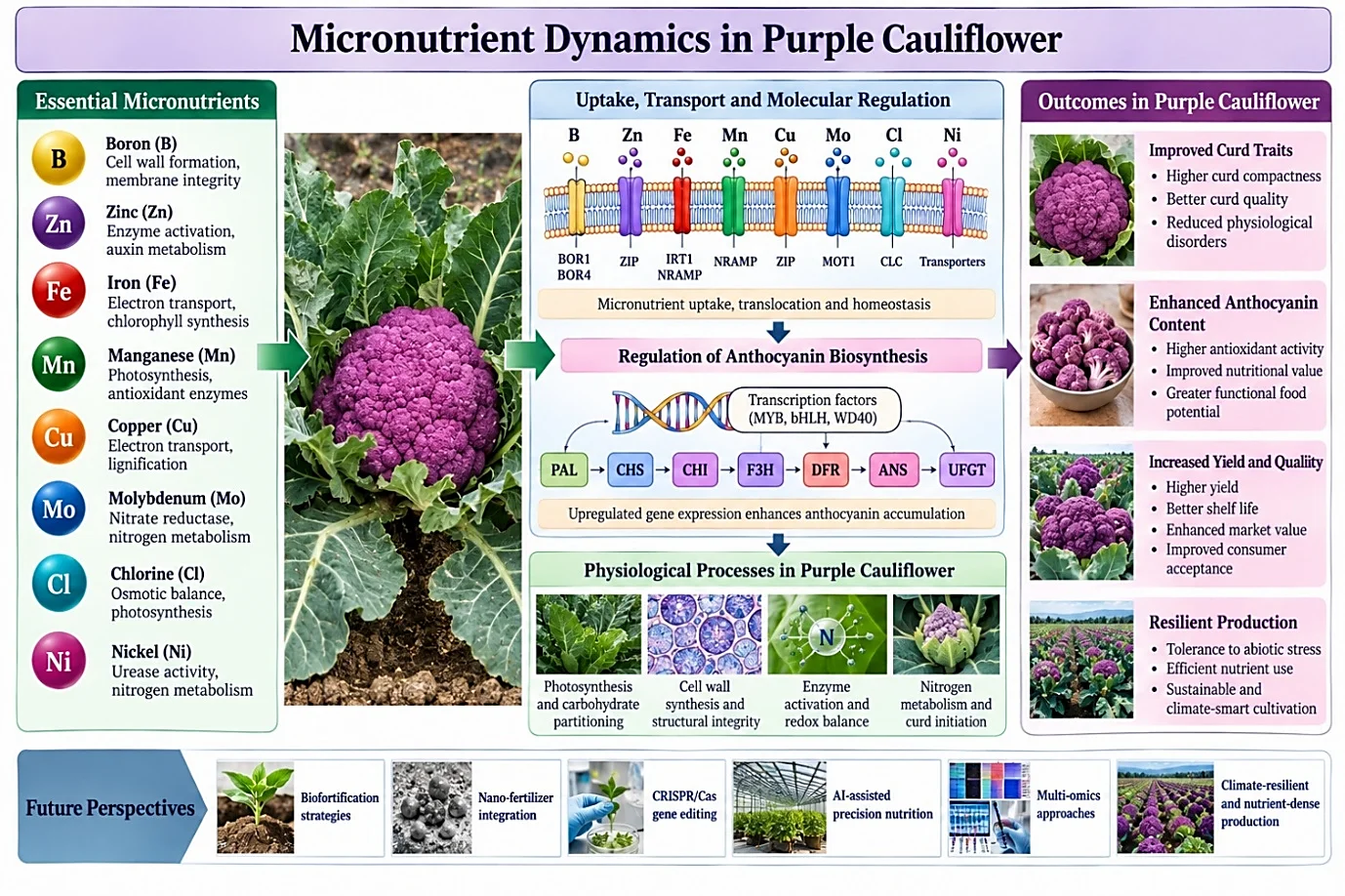
Novelty Statement
This review uniquely synthesizes the molecular mechanisms governing micronutrient homeostasis and its direct regulatory crosstalk with the anthocyanin biosynthetic pathway in purple cauliflower. It comprehensively evaluates the integration of CRISPR/Cas gene editing, nano-fertilizers, and AI-assisted precision nutrition to establish next-generation strategies for climate-resilient, nutrient-dense crop production.
1. Introduction
Purple cauliflower (Brassica oleracea var. botrytis) represents a specialized botanical and nutritional variant within the Brassicaceae family, distinguished primarily by the dense accumulation of anthocyanin pigments in its floral curd tissue.[1] Unlike white or orange cauliflower variants, purple curds synthesize complex cyanidin-3-glucoside and cyanidin-3-sophoroside derivatives, granting them elevated radical-scavenging capacity, anti-inflammatory potential, and significant commercial value as a functional food matrix[2,3] Achieving optimal curd compactness, yield performance, and pigmentation requires precise nutritional management.[4,5] While macronutrients support fundamental vegetative structures, micronutrients-specifically boron (B), zinc (Zn), iron (Fe), manganese (Mn), copper (Cu), molybdenum (Mo), chlorine (Cl) and nickel (Ni) act as irreplaceable enzymatic catalytic cofactors, electron carriers and structural stabilizing agents. Boron contributes to cell-wall formation, membrane integrity, carbohydrate translocation and reproductive development, whereas its deficiency may cause physiological disorders such as curd browning and hollow stem.[6] Molybdenum is essential for nitrogen metabolism as a component of the nitrate reductase enzyme system and is therefore associated with nitrogen use efficiency, vegetative growth and timely curd development. Its deficiency may result in whiptail symptoms and poor curd formation.[7] In purple cauliflower, micronutrient availability directly impacts primary photosynthetic assimilation, carbohydrate partitioning, and secondary metabolic flux toward flavonoid pathways.[8] Insufficient supply of these trace elements causes severe physiological malformations, such as stem hollow core, curd browning, interveinal chlorosis and impaired anthocyanin accumulation.[9] India ranks second globally in vegetable production, particularly cauliflower, one of the key crops grown in the country.[10,11] Nitrogen is important and crucial nutrient as it involves in several physiological processes together with enzyme activity.[12,13] Its deficiency ceases the growth, yield and quality reduces significantly.[14] Phosphorus is essential for a multitude of cellular functions, including photosynthesis, respiration, energy storage and transfer, as well as cell division and enlargement.[15] Potassium plays a key role by maintaining the water balance in the plants. It also increases vigour and disease resistance in plants.[16] Purple colour of cauliflower (Fig. 1) is due to presence of anthocyanins pigments.[17] This pigment is mainly present in the curd of cauliflower. Anthocyanin is a natural antioxidant it helps protect the body from harmful free radicals.[18] Cool climates increase anthocyanin accumulation and deepen the purple colour. It is one of the highest antioxidative activity vegetables because of its high content of anthocyanins, such as glucosinolates, phytochemicals, vitamins, phenolic compounds and fibres, which are principles for digestive system health.[19] Cauliflower can be eaten in raw, cooked and pickled forms.[20] Recent breakthroughs in plant molecular biology have unraveled key membrane-bound transport proteins, signaling modules and transcription factor cascades responsible for micronutrient uptake, xylem transport, vacuolar sequestration and homeostasis.[21] Despite these advancements, literature regarding purple cauliflower often suffers from broad generalizations derived from other Brassica species such as broccoli, cabbage, or white cauliflower, without dissecting the unique metabolic sink demand of anthocyanin-synthesizing curds.[22,23] Therefore, this review critically synthesizes the physiological, biochemical and molecular dimensions of micronutrient regulation in purple cauliflower. It establishes a clear search methodology, details transporter-mediated uptake and genetic regulation of anthocyanins, analyzes agronomic impact and outlines biotechnological frameworks for sustainable crop improvement.
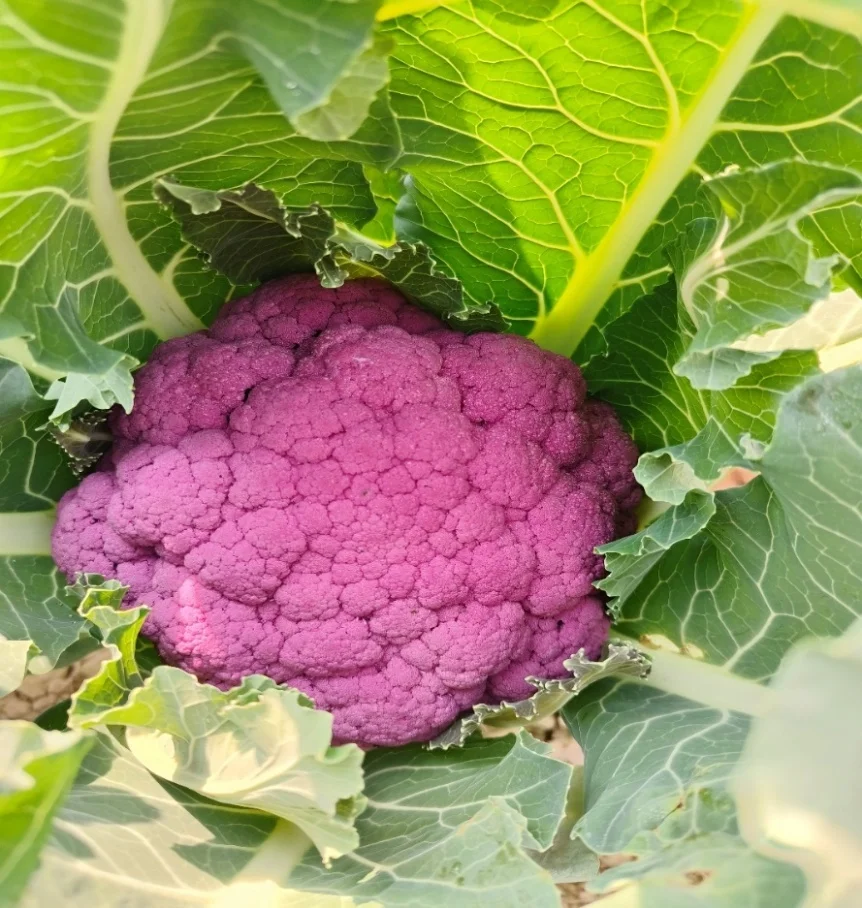
Fig. 1: Curd morphology, compact floral structure and intense anthocyanin pigmentation in purple cauliflower (Brassica oleracea var. botrytis)
1.1 Literature Search and Selection Methodology
To ensure scientific rigor, reproducibility and comprehensive coverage a structured literature selection protocol was executed following PRISMA-informed principles. Electronic searches were performed across Web of Science, Scopus, PubMed and Google Scholar databases covering publications from January 2015 to June 2026. The search strategy utilized targeted Boolean combination phrases: ("purple cauliflower" OR "Brassica oleracea var. botrytis") and ("micronutrients" OR "boron" OR "zinc" OR "iron" OR "molybdenum") and ("anthocyanin" OR "transporter" OR "biofortification" OR "CRISPR" OR "omics"). Inclusion criteria required peer-reviewed experimental studies, mechanistic reviews and genomic reports specifically focused on micronutrient uptake, gene regulation, plant physiology, or biofortification in purple cauliflower or closely related Brassica model systems where biochemical pathways directly overlap. Non-peer-reviewed notes, duplicate records and studies lacking quantitative statistical validation were excluded. A total of 28 relevant scientific articles were systematically reviewed and integrated into this synthesis (Fig. 2).
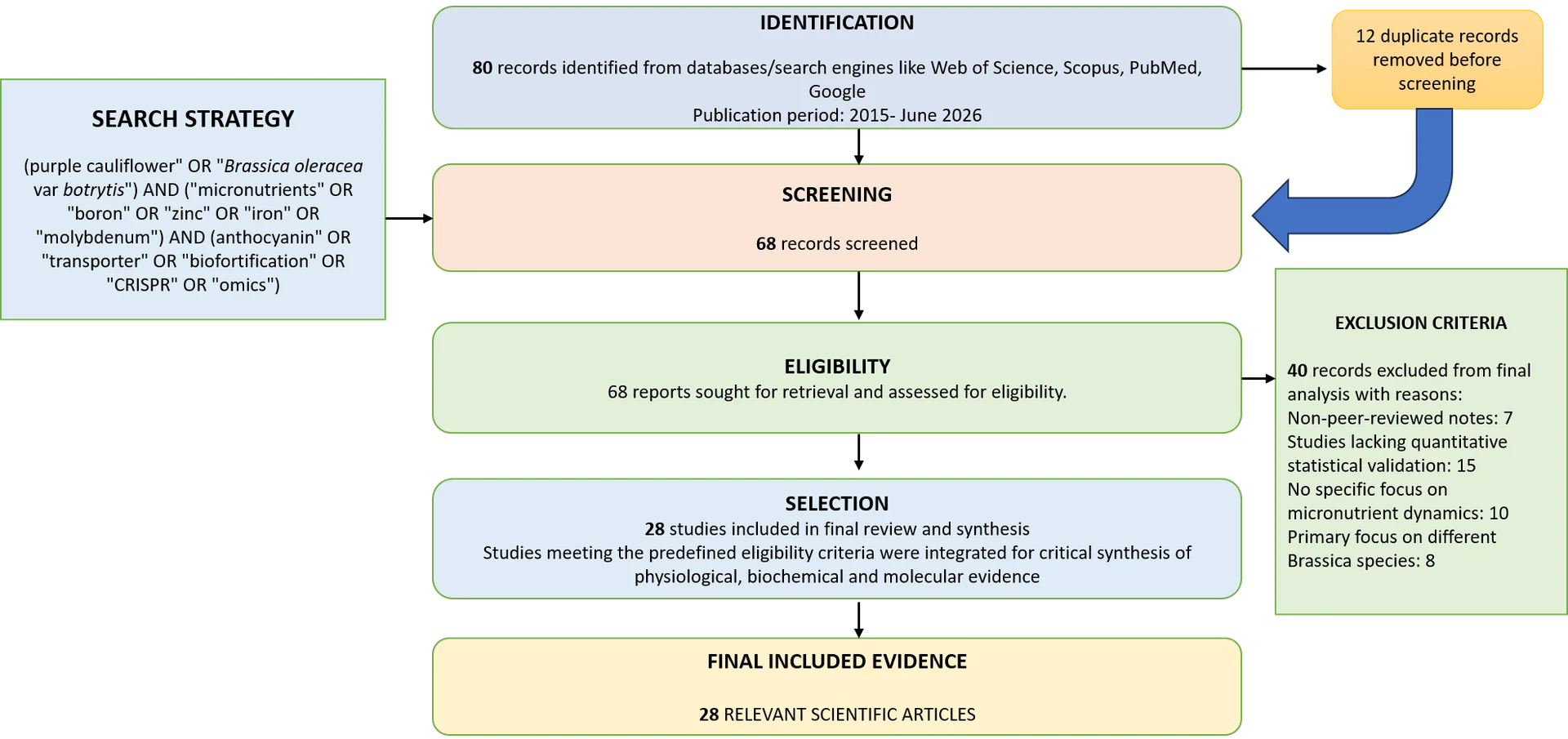
Fig. 2: Prisma literature search and selection process
2. Physiological Functions and Curd Development Dynamics
Micronutrients function interactively within purple cauliflower cells to drive cell division, enzymatic balance and pigment formation. Table 1 summarizes the primary physiological roles, deficiency symptoms and agronomic management strategies for essential micronutrients.
Table 1: Essential Micronutrients: Physiological Functions, Specific Deficiency Pathology and Management in Purple Cauliflower
| Micronutrient | Primary Physiological & Biochemical Role | Specific Deficiency Symptoms/Pathology in Cauliflower | Recommended Management Strategy |
|---|---|---|---|
| Boron (B) | Pectic polysaccharide cross-linking in the cell wall (RG-II), cell wall development, membrane integrity and translocation of sugars towards developing curds | Hollow stem, internal tissue browning, cracking of curd surface, poor curd development and reduced anthocyanin retention | Soil application of borax @ 10-15 kg ha⁻¹ or foliar spray of Solubor @ 0.2% at curd initiation |
| Zinc (Zn) | Involved in auxin (IAA) biosynthesis, carbonic anhydrase activity, enzyme regulation and ribosome structural stability | Disturbed leaf development, interveinal chlorosis, shortened internodes and reduced curd diameter | Foliar application of ZnSO₄ @ 0.5% or Zn-EDTA @ 0.2% during early vegetative growth |
| Iron (Fe) | Essential for electron transport in photosynthesis, chlorophyll formation and functioning of cytochromes and other redox enzymes | Severe interveinal chlorosis, particularly in young leaves, with reduced chlorophyll content and impaired photosynthetic activity | Foliar spray of FeSO₄ @ 0.5% or application of Fe-EDDHA through root-zone treatment, particularly in alkaline soils |
| Manganese (Mn) | Essential component of the oxygen-evolving complex of Photosystem II and an important cofactor of superoxide dismutase (SOD) and other enzymes | Speckled interveinal chlorosis, reduced photosynthetic activity and poor plant development | Foliar application of MnSO₄ @ 0.3%, particularly where soil pH is above 7.2 |
| Copper (Cu) | Involved in plastocyanin-mediated electron transfer, polyphenol oxidase activity, lignin biosynthesis and structural development | Leaf curling, weak stem structure, reduced lignification and impaired reproductive/curd development | Foliar application of CuSO₄ @ 0.1% or appropriate soil application of copper sulphate |
| Molybdenum (Mo) | Essential cofactor of nitrate reductase and other enzymes involved in nitrate metabolism and nitrogen assimilation | "Whiptail" symptoms, narrow and elongated leaves, reduced leaf blade development and stunted curd development | Seed treatment with ammonium molybdate @ 2-3 g kg⁻¹ seed or foliar application of ammonium molybdate @ 0.05% |
2.1 Boron and Zinc Synergism in Curd Morphogenesis
Boron forms borate ester cross-links with rhamnogalacturonan II (RG-II) in primary cell walls, conferring mechanical strength and elasticity to expanding curd tissues.[24] In purple cauliflower, adequate boron prevents vascular breakdown in the central core stem, ensuring uninterrupted flow of carbohydrates and signaling molecules.[25] Simultaneously, zinc activates tryptophan synthase, the direct enzyme required for indole-3-acetic acid (IAA) biosynthesis.[26] Higher IAA concentrations at apical meristems stimulate robust cell expansion and curd branching.
2.2 Iron, Manganese and Photosynthetic Assimilation
Iron and manganese collaboratively maintain the photosynthetic machinery.[27] Manganese drives the light-driven oxidation of water within Photosystem II, while iron constitutes electron-transport chain cytochromes and ferredoxin. Optimal rates of photosynthesis ensure abundant hexose sugar synthesis, which serves dual roles: providing carbon skeletons for structural growth and supplying sugar signaling substrates required to activate downstream anthocyanin biosynthetic pathways.
3. Critical Evidence Comparison: Purple Cauliflower vs. Other Cole Crops
To resolve general ambiguities, present in previous reviews, a comparative synthesis distinguishing purple cauliflower from other cole crops (broccoli, cabbage, white cauliflower) is presented in Table 2. Purple cauliflower exhibits a distinct metabolic sink requirement due to the intense biochemical energy spent on synthesizing secondary phenylpropanoids.[1] Unlike white cauliflower, which directs carbon predominantly into primary cell wall polymers and storage proteins, purple cauliflower channels a significant portion of phenylalanine into anthocyanins.[28] Consequently, trace element deficiencies that restrict primary carbohydrate synthesis exert a more pronounced negative impact on pigment intensity and marketable curd quality in purple cauliflower than in non-pigmented cultivars.
Table 2: Comparative Physiological and Secondary Metabolic Features: Purple Cauliflower vs. Allied Brassicas
| Crop | Predominant Phytochemical Matrix | Primary Micronutrient Requirement | Curd/Head Physiological Vulnerability |
|---|---|---|---|
| Purple Cauliflower | Anthocyanins, particularly cyanidin-3-sophoroside, along with glucosinolates | Higher requirement for B for cell wall development and sugar transport; Zn and Fe support enzyme activity associated with phenylpropanoid metabolism | Anthocyanin pigmentation is sensitive to environmental stress; B deficiency may cause hollow stem and poor curd development |
| White Cauliflower | Glucosinolates, ascorbic acid and relatively low levels of flavonoid pigments | B supports cell wall integrity and helps reduce physiological disorders; Mo is important for nitrogen metabolism and prevention of whiptail | Sensitive to curd browning, poor curd development and loose curd architecture under micronutrient deficiency |
| Broccoli | Sulforaphane, glucoraphanin, lutein, chlorophyll and other antioxidant compounds | Zn and S are important for enzyme activity, glucosinolate metabolism and antioxidant defence | High post-harvest susceptibility to floret yellowing due to rapid chlorophyll degradation |
| Cabbage | Aliphatic glucosinolates, polyphenols and other antioxidant compounds | Ca and B are important for cell wall strength, membrane stability and prevention of physiological disorders | Susceptible to head splitting and internal tip burn, particularly under irregular moisture availability and inadequate B supply |
4. Molecular Mechanisms of Micronutrient Homeostasis and Anthocyanin Regulation
Micronutrient uptake, intracellular transport, and homeostatic signaling are strictly controlled by specialized membrane transport proteins and transcriptional networks.[29]
4.1 Micronutrient Transport Gene Families
Zinc Transport (ZIP Family): Members of the ZRT/IRT-like Protein (ZIP) gene family regulate cellular zinc influx across root plasma membranes. Transporters like ZIP1, ZIP3 and ZIP4 mediate zinc uptake from the rhizosphere, while heavy metal ATPases (HMA2 and HMA4) load zinc into root xylem vessels for long-distance transport to developing purple curds.
Boron Transport (BOR1 and BOR4): Boron uptake occurs passively as boric acid under sufficiency, but under limiting conditions, active efflux transporters BOR1 and BOR4 are upregulated.[30] BOR1 mediates xylem loading under low boron, ensuring steady transport to active floral sinks.
Iron Transport (IRT1, NRAMP, and Ferritin): Strategy I iron acquisition relies on IRT1 (Iron-Regulated Transporter 1) for primary root influx following ferric reduction by ferric reductase oxidoreductase (FRO2).[27] Transporters from the NRAMP family (NRAMP1, NRAMP3) regulate vacuolar iron mobilization, while intracellular ferritin genes (Fer1, Fer2) sequester excess iron to avoid oxidative Fenton reactions.
Molybdenum Transport (MOT1): Molybdate transporter 1 (MOT1) selectively mediates high-affinity molybdate uptake across root cells, supplying essential Mo for nitrate reductase assembly.
4.2 Genetic Regulation of the Anthocyanin Biosynthetic Pathway
The deep purple coloration of the curds is synthesized through the phenylpropanoid pathway via sequential enzymatic steps catalyzed by structural genes: Phenylalanine Ammonia-Lyase (PAL) → Chalcone Synthase (CHS) → Chalcone Isomerase (CHI) → Flavanone 3-Hydroxylase (F3H) → Dihydroflavonol 4-Reductase (DFR) → Anthocyanidin Synthase (ANS) → UDP-Glucose: Flavonoid 3-O-Glucosyltransferase (UFGT). Expression of these structural genes is coordinated at the transcriptional level by the MBW ternary complex, composed of R2R3-MYB, basic Helix-Loop-Helix (bHLH) and WD40 repeat proteins.[31] Micronutrients directly regulate this genetic pathway through multiple mechanisms:
- Zinc acts as a structural stabilizer for C2H2 zinc-finger transcription factors that activate MYB gene expression.
- Iron acts as an essential prosthetic group for F3H and ANS (2-oxoglutarate-dependent dioxygenases), directly controlling enzymatic conversion rates.
- Boron availability facilitates the translocation of sucrose, which acts as a signaling ligand upregulating CHS and DFR gene transcripts through sugar-responsive cis-regulatory elements.
5. Agronomic Impact on Growth, Yield and Nutritional Quality
Targeted micronutrient supplementation consistently enhances both physical biomass and secondary metabolite composition in field trials.[26, 32-34]
5.1 Vegetative Growth and Curd Yield Dynamics
Foliar applications combining zinc sulphate (0.5%) and borax (0.2%) significantly increase leaf area index, plant biomass and final curd yield.[5] Dual application of boron and molybdenum accelerates curd initiation while preventing physiological disorders like curd browning and hollow stem formation, increasing overall marketable yield by up to 28-35%.[8]
5.2 Nutritional Enhancement and Anthocyanin Content
Balanced micronutrient management exerts a direct positive effect on curd antioxidant capacity.[10,35] Adequate zinc and iron supply increases total phenolic content, ascorbic acid levels, and cyanidin derivative concentration. Combined soil-foliar fertilization schedules ensure uniform floret coloration, prevent thermal bleaching prior to harvest and extend post-harvest.
6. Biofortification Strategies in Purple Cauliflower
Micronutrient biofortification strategies in purple cauliflower combine agronomy, breeding, and modern biotechnology to tackle dietary micronutrient deficiencies in humans.
6.1 Agronomic Biofortification
Soil and foliar enrichment using chelated micronutrients (e.g., Zn-EDTA, Fe-EDDHA) or mineral salts provides a rapid, cost-effective method to elevate edible tissue mineral concentration.[4] Foliar sprays applied during the early curd initiation stage bypass root uptake barriers and soil fixation constraints, enhancing Zn and Fe levels directly within edible florets.
6.2 Genetic and Biotechnological Biofortification
Leveraging molecular markers and genomic selection accelerates the breeding of purple cauliflower lines with inherently higher root transporter expression. Furthermore, transgenic over-expression of BOR1, IRT1, or ZIP transporters under tissue-specific promoters offers a direct pathway to develop high-efficiency biofortified cultivars.
7. Emerging Research Directions and Future Perspectives
To transform purple cauliflower production into a highly sustainable, climate-resilient system, future research must incorporate key technological advances:
CRISPR/Cas Genome Editing: Precision knock-out or promoter editing of negative regulatory genes (e.g., thermal-sensitive repressors of MBW complex) or enhancement of transporter expression (e.g., BOR1, ZIP4) to optimize nutrient uptake and pigmentation under environmental stress.[31]
Multi-Omics Integration: Coupling transcriptomics, metabolomics, proteomics, and ionomics to map full-scale regulatory networks, identifying metabolic bottlenecks in nutrient utilization and anthocyanin synthesis.
AI-Assisted Precision Nutrient Management: Integrating multi-spectral drone imagery, IoT soil sensors, and machine learning models to dynamically calculate real-time crop micronutrient deficiencies and execute precision variable-rate foliar applications.[36]
Nanotechnology & Nano-Fertilizers: Developing controlled-release nano-micronutrients (e.g., nano-ZnO, nano-Fe₂O₃) to maximize foliar absorption efficiency, reduce environmental runoff, and prevent soil toxicity.
8. Conclusion
Micronutrients play fundamental physiological, biochemical and molecular roles in governing growth, yield and anthocyanin biosynthesis in purple cauliflower. Strategic management of boron, zinc, iron, manganese, copper and molybdenum prevents severe developmental disorders and elevates the nutritional value of this functional crop. Incorporating multi-omics frameworks, CRISPR-based genetic editing, nano-fertilizers and AI-driven precision agriculture will be instrumental in developing nutrient-efficient, climate-resilient purple cauliflower cultivars to meet future agricultural and nutritional demands.
Acknowledgements
The authors express their gratitude to the Department of Horticulture, School of Agricultural Sciences and Technology Babasaheb Bhimrao Ambedkar University, Lucknow, India, for providing the necessary field and laboratory facilities to conduct this research synthesis.
Funding Declaration
This research did not receive any specific grant from funding agencies in the public, commercial, or not-for-profit sectors.
Data Availability Statement
The datasets generated and/or analyzed during the current study that support the findings are available from the corresponding author upon reasonable request.
Conflict of Interest
There is no conflict of interest.
Artificial Intelligence (AI) Use Disclosure
The authors declare that artificial intelligence (AI)-assisted tools were used only for language refinement, grammar improvement, and manuscript structuring purposes during the preparation of this work. All technical content, experimental implementation, results, and interpretations were independently developed and verified by the authors.
Supporting Information
Not applicable.
References
- [1] S. Singh, P. Kalia, R. K. Meena, M. Mangal, S. Islam, S. Saha, B.S. Tomar, Genetics and expression analysis of anthocyanin accumulation in curd portion of Sicilian purple to facilitate biofortification of Indian cauliflower, Frontiers in plant science, 2020, 10, 1766, doi: 10.3389/fpls.2019.01766
- [2] A. E. Kaiser, M. Baniasadi, D. Giansiracusa, M. Giansiracusa, M. Garcia, Z. Fryda, A. Bishayee, Sulforaphane: A broccoli bioactive phytocompound with cancer-preventive potential, Cancers, 2021, 13, 4796, doi: 10.3390/cancers13194796
- [3] M. S. Kataki, A. Rajkumari, B. B. Kakoti, Functional foods and nutraceuticals: An overview of the clinical outcomes and evidence-based archive, CRC Press, Nanotechnology, 2019, 373-400.
- [4] M. R. Islam, T. S. Hoque, R. N. Khan, S. Farzana, M. Ahmed, N. Khodabakhshloo, Influence of different integrated nutrient management strategies on growth, yield and nutritional qualities of cauliflower, Agricultural Research, 2021, 10, 656-664, doi: 10.1007/s40003-020-00527-7
- [5] R. Rathore, M. L. Meghwal, O. P. Regar, G. Sahu, Influence of foliar spray of micronutrients on growth and yield of cauliflower (Brassica oleracea var. botrytis L.), Journal of Advances in Biology & Biotechnology, 2025, 28, 967-974, doi: 10.9734/jabb/2025/v28i72613
- [6] S. H. Raza, A. Shahzadi, M. Iqbal, F. Shafiq, A. Mahmood, S. Anwar, M. Ashraf, Foliar application of nano-zinc oxide crystals improved zinc biofortification in cauliflower (Brassica oleracea L. var. botrytis), Applied Nanoscience, 2022, 12, 1803-1813, doi: 10.1007/s13204-022-02455-0
- [7] S. K. Singh, D. K. Singh, U. Singh, Effect of integrated nutrient management on growth, yield and quality parameters of cauliflower, Vegetable Science, 2023, 50, 338-342, doi: 10.61180/vegsci.2023.v50.i2.11
- [8] V. V. Kumar, E. Ramesh, V. Triveni, B. Dash, Enhancement of growth and yield of valentena (purple cauliflower) through different micronutrient optimization, Environment and Ecology, 2024, 42, 1369-1374, doi: 10.60151/envec/SPMC5561
- [9] B. Jagadeesh, S. K. Maurya, P. Hemalatha, A. Lingam, Diseases and disorders of cole crops (Stem Brassicas) and their management, Diseases of horticultural crops: Diagnosis and management, Apple Academic Press, 2022, 2, 79-129.
- [10] C. Mohan, D. K. Srivastva, R. L. Verma, V. Kumar, V. Singh, S. Chaudhary, P. N. Saini, Current status, challenges and future prospects of vegetable seed system in India, Journal of AgriSearch, 2021, 8, 188-200, doi: 10.21921/jas.v8i03.1662
- [11] S. S. Dey, R. Bhatia, K. Sharma, I. Bhardwaj, C. D. Pandey, C. Parkash, R. Kumar, Frequent introgression of European cauliflowers in the present day cultivated Indian cauliflowers and role of Indian genotypes in the evolution of tropical cauliflower, Euphytica. 2019, 215, 23, doi: 10.1007/s10681-019-2346-0
- [12] H. Kage, C. Alt, H. Stützel, Nitrogen concentration of cauliflower organs as determined by organ size, N supply, and the radiation environment, Plant and Soil, 2002, 246, 201-209, doi: 10.1023/A:1020627723616
- [13] T. M. Neethu, S. M. Tripathi, A. V. Narwade, S. Sreeganesh, Effect of N and P levels on growth and yield parameters of broccoli (Brassica oleracea L. var. italica) under South Gujarat soil conditions, International Journal of Tropical Agriculture, 2015, 33, 913-917.
- [14] V. Sharma, Effect of nutrient management on growth and yield of cauliflower (Brassica oleracea var botrytis) inside low-cost polyhouse, Himachal Journal of Agricultural Research, 2016, 42, 88-92.
- [15] L. Taiz, E. Zeiger, Plant physiology. 4th Edition, Sinauer Associates, Inc., Sunderland, 2006.
- [16] D. K. Das, Nutrient transformation in relation to soil plant system, Kalyani Publication, New Dehli. 2012, 378-463.
- [17] F. A. Ahmed, R. F. Ali, Bioactive compounds and antioxidant activity of fresh and processed white cauliflower, BioMed Research International, 2013, 2013, 367819, doi: 10.1155/2013/367819
- [18] A. Kalisz, A. Sękara, S. Smoleń, A. Grabowska, J. Gil, M. Komorowska, Survey of 17 elements, including rare earth elements, in chilled and non-chilled cauliflower cultivars, Scientific reports, 2019, 9, 5416, doi: 10.1038/s41598-019-41946-z
- [19] A. S. Prasad, Clinical, immunological, anti-inflammatory and antioxidant roles of zinc, Experimental gerontology, 2008, 43, 370-377, doi: 10.1016/j.exger.2007.10.013
- [20] F. Noor, T. Aktar, M. S. Mahomud, M. M. Islam, Impact of processing methods on quality of cauliflower pickle, Journal of Science and Technology, 2014, 12, 48-53.
- [21] S. Cheng, S. Wu, Q. Shao, M. Chen, J. Liu, B. Qiu, H. Zhu, High-throughput phenotypic analysis of plant and curd growth dynamics during the whole growth period of cauliflower based on instance segmentation, Frontiers in Plant Science, 2026, 17, 1836813, doi: 10.3389/fpls.2026.1836813
- [22] D. K. Meena, S. Kumar, V. S. Meena, V. K. Sonkar, N. K. Prajapati, Anthocyanins in Purple Cauliflower: Genetic Mechanism, Biosynthesis and Health Benefits: A Review, Journal of advances in biology & biotechnology, 2025, 28, 562-578, doi: 10.9734/jabb/2025/v28i32115
- [23] T. S. Shinali, Y. Zhang, M. Altaf, A. Nsabiyeze, Z. Han, S. Shi, N. Shang, The valorization of wastes and byproducts from cruciferous vegetables: A review on the potential utilization of cabbage, cauliflower, and broccoli byproducts, Foods, 2024, 13, 1163, doi: 10.3390/foods13081163
- [24] S. Mukherjee, F. H. Rahaman, T. K. Choudhuri, S. Das, K. Nag, Response of cauliflower to different forms of boron and relation to boron availability in red and lateritic soils of West Midnapore district of West Bengal, International Journal of Plant & Soil Science, 2020, 32, 36-41.
- [25] A. S. Atwal, A. Lal, R. Kapoor, S. K. Sandal, R. Sharma, S. Sepehya, P. Kumari, Spatial characterization and geostatistical analysis of soil properties in vegetable cultivated soils of Indora block (Kangra district), Himachal Pradesh, India, Discover Soil, 2026, 3, 116, doi: 10.1007/s44378-026-00271-4
- [26] M. N. H. Sani, E. Tahmina, M. R. Hasan, M. N. Islam, J. Uddain, Growth and yield attributes of cauliflower as influenced by micronutrients and plant spacing, Journal of Agriculture and Ecology Research International, 2018, 16, 1-10, doi: 10.9734/JAERI/2018/44192
- [27] V. K. Verma, H. Rymbai, P. Baiswar, Genetic resources of vegetable crops: a potential source of nutrition and entrepreneurship in North-Eastern Region of India, In Vegetables for nutrition and entrepreneurship, Singapore: Springer Nature Singapore, 2023, 311-338.
- [28] K. Sharma, M. Sharma, D. Devi, A. Gupta, S. Singh, Phytochemicals present in vegetables for health promotion, In Plant metabolites and vegetables as nutraceuticals, Apple Academic Press, 2024, 61-94.
- [29] W. Xiang, Z. Guo, J. Han, Y. Gao, F. Ma, X. Gong, the apple autophagy-related gene MdATG10 improves drought tolerance and water use efficiency in transgenic apple plants, Plant Physiology and Biochemistry, 2024, 206, 108214, doi: 10.1016/j.plaphy.2023.108214
- [30] I. Bhupenchandra, A. Basumatary, A. K. Choudhary, A. Kumar, D. Sarkar, S. K. Chongtham, A. H. Singh, E. L. Devi, S. S. Bora, M. D. Salam, M. R. Sahoo, Elucidating the impact of boron fertilization on soil physico-chemical and biological entities under cauliflower-cowpea-okra cropping system in an eastern Himalayan acidic Inceptisol, Frontiers in Microbiology, 2022, 13, 996220, doi: 10.3389/fmicb.2022.996220
- [31] Y. Yang, T. A. Chaffin, Y. Shao, V. K. Balasubramanian, M. Markillie, H. Mitchell, M. M. Rubio-Wilhelmi, A. H. Ahkami, E. Blumwald, C. Neal Stewart Jr, Novel synthetic inducible promoters controlling gene expression during water-deficit stress with green tissue specificity in transgenic poplar, Plant Biotechnology Journal, 2024, 22, 1596-609, doi: 10.1111/pbi.14289
- [32] N. Buragohain, S. Gogoi, U. Kotoky, D. B. Phookan, P. K. Barua, P. Kalita, Effect of sowing media and variety on seedling root growth and field performance of early cauliflower (Brassica oleracea var. botrytis), Asian Journal of Agricultural Extension, Economics & Sociology, 2022, 40, 245-253, doi: 10.9734/AJAEES/2022/v40i121787
- [33] R. Khatri, S. Adhikari, N. P. Pokharel, S. Adhikari, Y. Khanal, K. P. Thapaliya, B. Ghimire, Evaluating the effect of biofertilizer dosage on growth and yield parameters of cauliflower in Mugu District, Nepal, International Journal of Agriculture, Environment and Food Sciences, 2025, 9, 733-742, doi: 10.31015/2025.3.11
- [34] S. Kaur, Evaluation of different doses of indole-3-butyric acid (IBA) on the rooting, survival and vegetative growth performance of hardwood cuttings of Flordaguard peach (Prunus persica L. Batch), Journal of Applied and Natural Science, 2017, 9, 173-180, doi: 10.31018/jans.v9i1.1167
- [35] A. Yadav, A. Kerketta, S. E. Topno, Effect of Organic Fertilizers on Growth, Yield and Quality of Cauliflower (Brassica oleracea var. Botrytis.), International Journal of Environment and Climate Change, 2022, 12, 1079-1085, doi: 10.9734/IJECC/2022/v12i1131084
- [36] Y. Jung, S. Byun, B. Kim, S. U. Amin, S. Seo, Harnessing synthetic data for enhanced detection of Pine Wilt Disease: An image classification approach, Computers and Electronics in Agriculture, 2024, 218, 108690, doi: 10.1016/j.compag.2024.108690
Publisher Note
Publisher Note: The views, statements, and data in all publications solely belong to the authors and contributors. GR Scholastic is not responsible for any injury resulting from the ideas, methods, or products mentioned. GR Scholastic remains neutral regarding jurisdictional claims in published maps and institutional affiliations.
Open Access
This article is licensed under a Creative Commons Attribution-NonCommercial 4.0 International License, which permits the non-commercial use, sharing, adaptation, distribution and reproduction in any medium or format, as long as appropriate credit to the original author(s) and the source is given by providing a link to the Creative Commons License and changes need to be indicated if there are any. The images or other third-party material in this article are included in the article's Creative Commons License, unless indicated otherwise in a credit line to the material. If material is not included in the article's Creative Commons License and your intended use is not permitted by statutory regulation or exceeds the permitted use, you will need to obtain permission directly from the copyright holder. To view a copy of this License, visit: https://creativecommons.org/licenses/by-nc/4.0/
© The Author(s) 2026