

 Open Access||Research Article
A Digital Examination Seating Allocation System to Enhance Exam Integrity
Department of Computer Science and Information Technology, MIT Art Design and Technology University, Pune, Maharashtra, 412201, India
Abstract
This paper introduces a conceptual framework for a Digital Examination Seating Allocation System aimed at enhancing exam integrity and operational efficiency in academic institutions. Traditional seat allocation processes are often manual, error-prone, and lead to confusion and delays for students before examinations. To address these challenges, we propose a system that enables students to view their assigned seats digitally prior to the start of the exam, mimicking the user experience of online ticketing platforms. This approach ensures fair, randomized seat distribution, minimizes undue advantages, and improves the overall examination environment. The proposed system leverages automation to manage student data, exam schedules, and hall layouts, thereby reducing administrative workload and improving accuracy. Key features include real-time seat mapping, QR code-based seat verification, and pre-exam notifications delivered via SMS or app alerts.
Keywords
Graphical Abstract
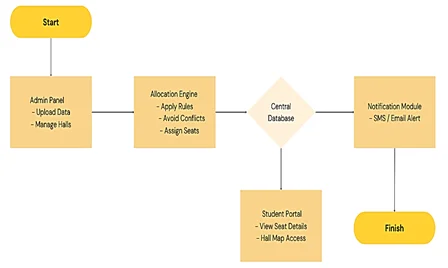
Novelty Statement
A conceptual framework for a digital examination seating allocation system aimed at enhancing exam integrity and operational efficiency in academic institutions.
1. Introduction
In educational institutions, the process of allocating examination seating has traditionally been managed manually. This conventional method not only demands extensive administrative labor but also increases the risk of human error, such as misallocating students to the same seat or incorrect examination rooms. These inaccuracies lead to student confusion, examination delays, and diminished operational efficiency. Furthermore, the manual process lacks the scalability and flexibility needed to manage growing student populations and diverse exam requirements. To address these limitations, this study proposes a Digital Examination Seating Allocation System that automates and optimizes the process of assigning seats to students based on predefined constraints such as course, department, student registration number, and room capacity. Such an automated system helps reduce administrative workload while improving accuracy and fairness in seat distribution.[1] A central goal of the proposed system is to ensure a smooth, hassle-free experience for both students and faculty, particularly during high-stress exam periods. By leveraging technology, the system allows students to view their seating assignments in advance through web or mobile platforms, thereby eliminating the need for manual lookup on-site. This feature significantly reduces exam-day confusion and delays, offering a more streamlined and stress-free experience for examinees.[2,3] Moreover, the system includes real-time seat visualization and intelligent algorithms to ensure that students taking the same course are not seated in proximity a critical measure to curb examination malpractice such as “giraffing” (the act of peeking into others' work).[4]
By integrating algorithms like greedy graph coloring and genetic optimization, the system ensures diverse seating layouts that minimize academic dishonesty while maximizing spatial utilization. Additionally, the proposed system supports advanced features like SMS-based notifications and QR code-based seat verification. For instance, five minutes before the exam, students receive automated messages with their hall and seat details–a concept proven effective in reducing confusion and improving punctuality in similar systems.[5] Several research studies affirm the relevance and success of such systems. An automated seating system helps institutions transition from error-prone, paper-based processes to digital operations, allowing students and faculty to interact with the system seamlessly via desktop or mobile platforms.[6,7] Furthermore, studies have shown that students are more likely to feel confident and perform better when seating confusion is eliminated. In summary, this paper presents a conceptual design and justification for implementing a Digital Examination Seating Allocation System in academic institutions. It explores the challenges of existing manual systems and highlights how a smart, automated, and communication-enabled system can enhance transparency, accuracy, and exam integrity. By combining technical innovation with student-centric design, the proposed system aims to modernize exam administration in a scalable and secure manner.
Despite the widespread digitization of educational processes, many academic institutions still rely on manual methods for exam hall seat allocation. This traditional approach involves significant paperwork, coordination, and administrative overhead, making it labor-intensive and error-prone. Manual seating systems are prone to duplicate seat assignments, uneven distribution, and poor utilization of available space, all of which disrupt the integrity and organization of examination events.
Students frequently encounter challenges in locating their assigned seats, especially in large institutions, leading to confusion, anxiety, and last-minute delays that compromise exam preparedness and fairness.[8] The absence of a centralized, dynamic, and real-time allocation system limits the institution's ability to make quick adjustments during unexpected scenarios, such as student absences or room changes. Furthermore, existing systems offer little to no support for minimizing academic dishonesty, such as "giraffing", where students taking the same exam sit in close proximity, increasing the risk of collaboration or cheating.[9]
Thus, the current seating process fails to address critical factors such as efficiency, transparency, fairness, and security, thereby necessitating the development of an automated, intelligent, and scalable solution that supports both administrative users and students in managing examination logistics effectively. Fig. 1 shows flow of system.
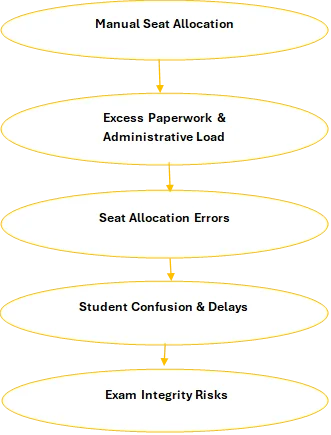
Fig. 1: Problem flow diagram.
2. Methodology
The primary objective of this study is to propose and conceptually design an automated digital system for efficient exam hall seat allocation. The specific objectives include:
- Chandewar et al. and Krishna et al. addresses challenges to design and develop a digital framework that automates the assignment of seats based on criteria such as course, registration number, hall capacity, and subject combination.[1,3]
- Inamdar et al. and Krishna highlighted the need to reduce the administrative burden associated with manual seating arrangements and eliminate the need for excessive paperwork and coordination.[2,3]
- Krishna aimed to minimize human errors such as duplicate seat assignments, uneven distribution, and misplacement of students in incorrect examination halls.[3]
- Hungund et al. aimed to improve transparency and fairness by implementing logic-based and randomized seat distribution algorithms that prevent bias or favoritism.[4]
- Krishna aimed to enhance the student experience by providing a user-friendly platform where students can easily view their seat assignments before entering the examination hall.[3]
- Hungund et al. aimed to facilitate the real-time communication, including pre-exam notifications and visual representation of seating layouts, to minimize confusion and improve punctuality.[4]
- To support future extensibility, allowing the integration of biometric verification, QR code scanning, and invigilator assignment functionalities.
3. Literature review
A variety of research efforts have explored the digital transformation of exam hall seating arrangements, each contributing unique methodologies and tools to address recurring issues such as inefficiency, misallocation, and academic dishonesty.
In the work by, an automated seating arrangement system was developed using algorithmic logic to allocate students based on hall capacity, student registration data, and seating constraints. Their system improved allocation fairness and reduced workload, though it lacked features for real-time communication with students or proximity-based malpractice prevention strategies.[4]
Anjum et al. proposed a system that automates the seating arrangement and exam room allotment for both students and invigilators. Their modular architecture enabled the management of hall creation, student data, and exam schedules. While the system streamlined administrative tasks, it did not incorporate intelligent distribution models like graph coloring or anti-cheating layouts.[5]
Subhashini et al. introduced an online exam hall seating arrangement platform accessible through mobile and web portals. The system allowed students to check their seat assignments using their credentials. Although user-friendly, the system did not integrate AI-based seat mapping, notifications, or spatial fairness mechanisms.[10]
A more advanced solution was proposed by Adetona and Akintoye, who implemented a graph coloring algorithm to avoid seating students with the same subjects in close proximity–thereby directly addressing academic dishonesty. They also integrated a SMS-based alert system (Termii API), enabling real-time seat detail delivery before the exam. However, their system lacked broader administrative modules and scalability across diverse institutions.[11]
Kumar and Saxena analyzed the broader seat allocation problem using multi-list algorithms. Their theoretical model suggested allocation optimization strategies applicable to exam settings, especially where students are distributed across multiple lists or merit criteria.[7]
Abubakar Sadiq et al. proposed a linear congruential generator (LCG) algorithm for seating arrangement. Their focus was on computational fairness and randomness, which helps eliminate seating bias. The study supported algorithmic seat generation, though it did not include user communication or system integration features.[12]
Krishna et al. introduced a seat planning portal with a basic admin-student interface for seat mapping. Their study emphasized simplicity and usability, though it did not address exam security, proximity control, or real-time updates.[3]
Inamdar et al. went a step further by proposing an automated exam and invigilator allocation system, enabling dual-sided logistics management. Their work emphasized automation and duty scheduling but lacked student-side visibility and notification mechanisms.[2]
Savakar and Hosur discussed the use of cloud-based technologies to manage large-scale exam operations. Their model focused on scalability and real-time data access, which are essential in handling dynamic allocation across large institutions.[13]
Gayathri et al. developed a digital seat allocation framework focused on hall capacity, student distribution, and admin configuration. Their system provided structural clarity but lacked notification systems or mobile-ready dashboards.[14]
From this extensive review, it is evident that while many researchers have addressed specific components of digital seat allocation-such as admin workload, seat fairness, or proximity strategies-none fully integrate all critical features into a unified platform. Most systems still lack a combination of real-time student alerts, intelligent anti-cheating algorithms, visual seat mapping, and a fully modular admin dashboard.
4. Conceptual framework
The conceptual framework of the Digital Examination Seating Allocation System is designed to outline the key components, information flow, and overall architecture of the proposed solution. The primary goal is to automate the process of assigning and communicating seat details to students, reduce errors, and improve examination integrity. Fig. 2 and 3 shows conceptual framework and flow of the proposed system, respectively.
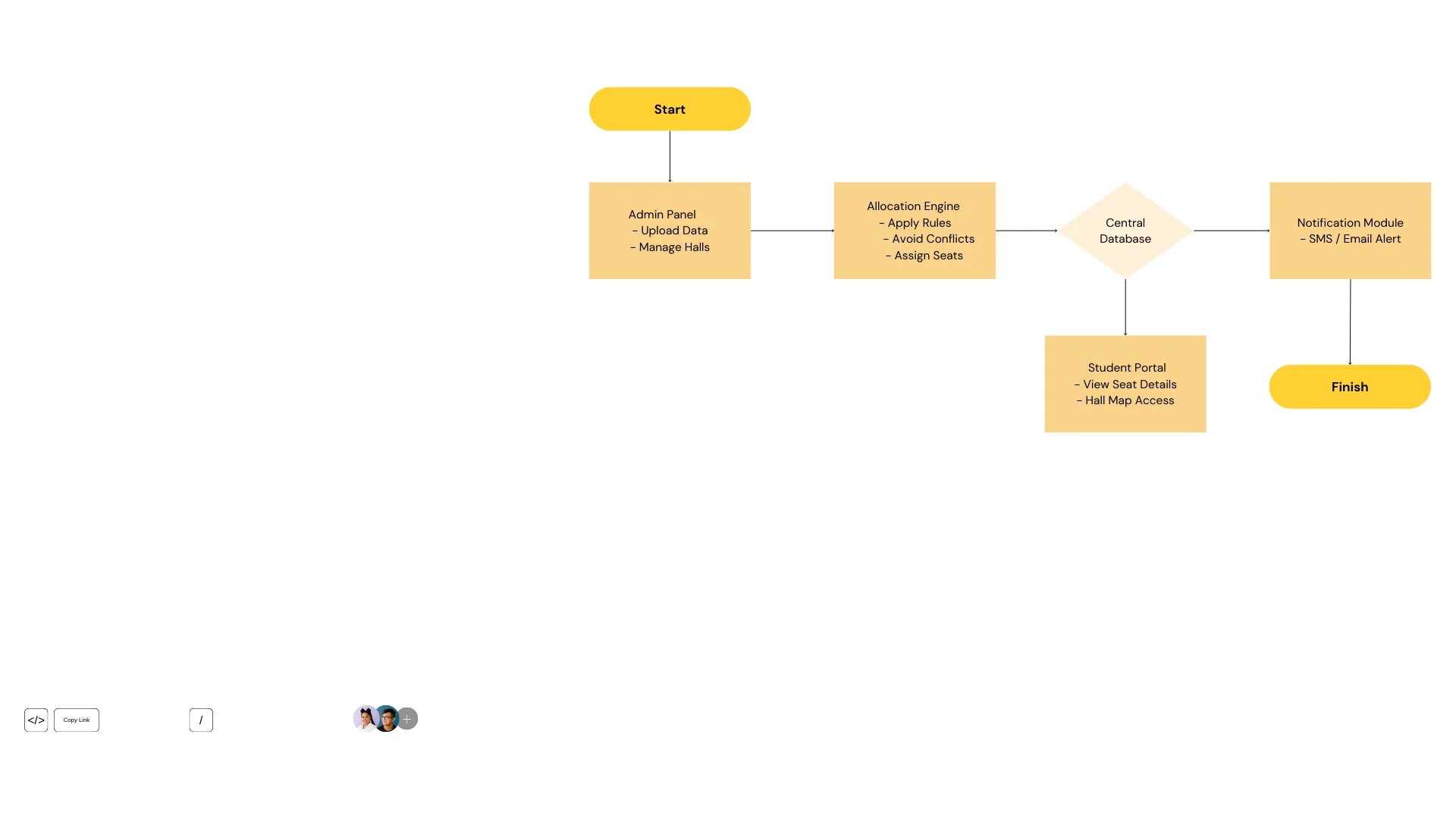
Fig. 2: Conceptual framework of the proposed system.
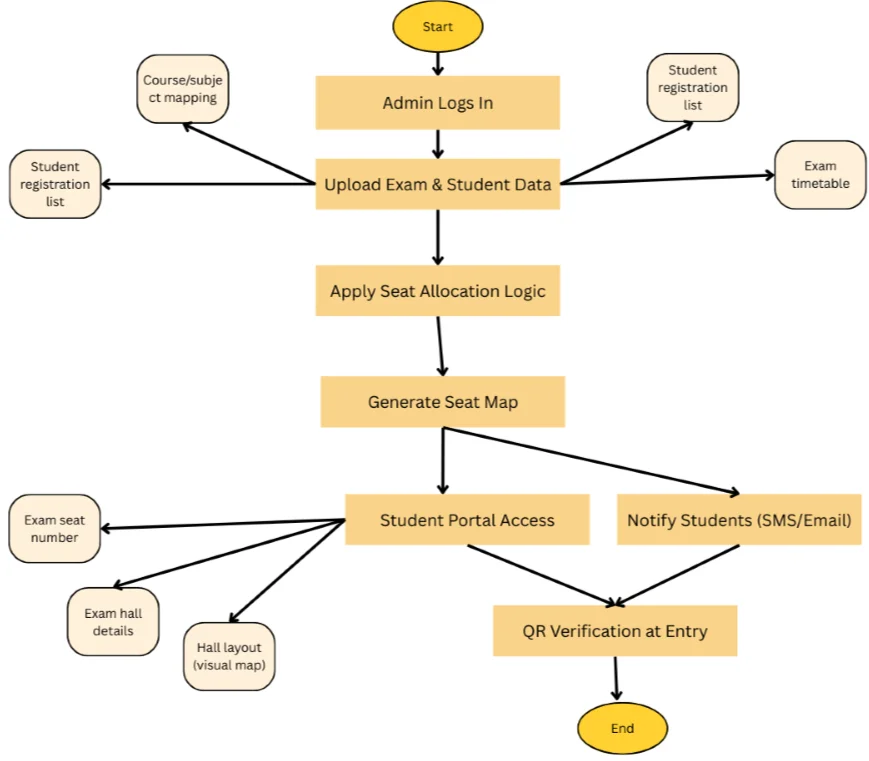
Fig. 3: System flowchart of the digital examination seating allocation system.
Core components of the system:
- Admin Portal
- Uploads exam schedules, student lists, and room details.
- Manages seating rules and hall capacity.
- Allocation Engine
- Uses logic-based algorithms to assign seats based on criteria such as:
- Registration number
- Subject/course
- Room availability
- Anti-cheating constraints (e.g., students with same subject not seated adjacently)
- Uses logic-based algorithms to assign seats based on criteria such as:
- Database System
- Stores student information, exam schedules, seating layouts, and hall maps.
- Handles real-time updates and secure data management.
- Student Portal / Mobile Interface
- Students log in to view their assigned seat and hall.
- Displays seat number, floor map, and real-time instructions.
- Notification Module
- Sends pre-exam alerts (SMS/email/push) with seat and hall details.
- Reduces last-minute confusion and delays.
- (Optional) Verification Layer
- QR code or biometric system for seat validation at entry.
5. Implementation / system design
The implementation of the Digital Examination Seating Allocation System is based on a modular architecture that ensures scalability, accuracy, and ease of use for both administrators and students. The system is divided into six core functional components that interact with each other to automate the exam seat allocation process from data upload to real-time student notifications.
The admin also sets predefined allocation rules and constraints to ensure that no student is assigned the same seat or seated near students from the same course, minimizing the risk of malpractice.
5.1 Admin panel
The system begins with the administrator securely logging into the platform. Through the admin interface, exam controllers or staff members can upload essential data, including:
- Student registration details
- Exam schedules and course mappings
- Examination hall capacity and layout
5.2 Seat allocation engine
Once data is uploaded, the allocation engine processes the input using logic-based algorithms. The allocation algorithm ensures:
- Even distribution of students across halls
- Separation of students with similar subject codes
- Compliance with hall capacity limits
- Optimization of seat usage within room constraints
Advanced allocation methods such as greedy graph coloring or genetic algorithms can be employed to handle conflict resolution and efficient space utilization in large institution.
5.3 Centralized database system
The database serves as the core storage unit for all system activities. It securely stores:
- Student details
- Exam and course information
- Seat numbers
- Seating layouts and hall metadata
- Notification statuses (sent or pending)
This centralized structure ensures quick data retrieval and seamless system updates in real time.
5.4 Student portal interface
Students can access the system via a web or mobile portal to:
- Log in securely using their registration number
- View their seat number, room name, and floor plan
- Download or screenshot their seating info
The user interface is designed to be intuitive, responsive, and accessible across multiple device types (desktop, tablet, and mobile).
5.5 Notification module
To reduce pre-exam confusion and increase punctuality, the system sends automated alerts to students via SMS or email. These alerts are delivered approximately 5–15 minutes before the scheduled examination and contain:
- Seat number
- Hall name
- Start time
- Special instructions (if any)
This notification mechanism ensures that students are well-informed and arrive on time.
6. Expected outcomes
- A reduction in last-minute confusion and seating errors.
- A more structured and fair seating arrangement.
- Improved administrative efficiency and time savings.
- Enhanced exam integrity through transparent and trackable seating processes.
7. Results and discussion
The proposed Digital Examination Seating Allocation System was conceptually designed to enhance exam integrity, minimize human error, and simplify the management of examination logistics. While this paper presents a conceptual model, the expected outcomes can be compared with findings from similar implemented systems in related research.
It shows significant reduction in administrative workload, with automated systems completing seating allocations in minutes compared to the several hours required for manual processes. These systems also improved resource utilization, ensuring full hall capacity usage without overcrowding or double booking.
Another important observation from related implementations is the increased student satisfaction providing real-time access to seat details through a mobile interface drastically reduced confusion and improved punctuality among students. These methods ensured that students with the same subject were not seated adjacent to each other, effectively lowering the risk of academic dishonesty. These results suggest that the proposed system, if implemented, would achieve improvements across multiple dimensions:
- Efficiency
- Fairness
- Security
- User experience
8. Conclusion
This paper presents a conceptual framework and system design for a Digital Examination Seating Allocation System, with the objective of transforming how educational institutions manage exam logistics. The current manual methods are not only time-consuming and error-prone but also susceptible to unfair practices and logistical bottlenecks.
By automating the seating arrangement process, the system aims to:
- Reduce administrative effort,
- Prevent seat duplication and assignment errors,
- Improve transparency and fairness,
- Enhance student readiness through pre-exam notifications, and
- Enable scalable and secure exam hall operations.
The system's modular architecture, incorporating smart algorithms, visual seat mapping, and real-time communication tools, offers a robust and scalable solution for modern educational environments. Insights drawn from previous studies show that similar systems have successfully addressed many challenges associated with manual exam seating and have significantly improved institutional efficiency and student experience.
In conclusion, while this research presents a conceptual model, its implementation has the potential to redefine examination management systems. Future work may focus on prototyping the system, integrating biometric authentication, and evaluating performance across multiple institutions and exam formats.
Funding Declaration
This research did not receive any specific grant from funding agencies in the public, commercial, or not-for-profit sectors.
Data Availability Statement
The datasets generated and/or analyzed during the current study that support the findings are available from the corresponding author upon reasonable request.
Conflict of Interest
There is no conflict of interest.
Artificial Intelligence (AI) Use Disclosure
The authors confirm that there was no use of artificial intelligence (AI)-assisted technology for assisting in the writing or editing of the manuscript and no images were manipulated using AI.
Supporting Information
Not applicable.
References
- [1] D. Chandewar, M. Saha, P. Deshkar, P. Wankhede, S. Hajare, Automatic seating arrangement of university exam, International Journal of Scientific Engineering and Technology, 2017, 3.
- [2] A. Inamdar, A. Gangar, A. Gupta, V. Shrivastava, Automatic exam seating & teacher duty allocation system, In 2018 Second International Conference on Inventive Communication and Computational Technologies (ICICCT), IEEE, 1302-1306.
- [3] S. Krishna, Examination room and seating arrangement system of AU, 2003, Accessed 4 May 2025.
- [4] B. H. Hungund, A. Shaikh, G. Owais, A. S. Ali, P. Dumane, Automated system for management of examination processes, In 2019 International Conference on Nascent Technologies in Engineering (ICNTE), IEEE, 1-6, doi: 10.1109/ICNTE44896.2019.8946030.
- [5] S. Anjum, M. Devi Chodey, M. C. Afzal, Automation of exam hall allotment and seating arrangement, International Journal of Engineering Research & Technology, 2021, 10, 447-452.
- [6] P. Kadarkarai, M. Nikhil, P. Sukumar, E. S. Kumar, G. Muneswar, Automated seating arrangement for conducting examination, In 2025 International Conference on Multi-Agent Systems for Collaborative Intelligence (ICMSCI), IEEE, 2025, 1245-1250, doi: 10.1109/ICMSCI62561.2025.10894025.
- [7] R. K. Singh, S. Saxena, On seat allocation problem with multiple merit lists, arXiv preprint arXiv:2008.05844, 2020, doi: 10.48550/arXiv.2008.05844.
- [8] E. Adeosun, B. Awe, E. Asaolu, The effects of climatic variation on some agricultural crops in ekiti state, In Engineering and Technology: Catalyst for National Survival, Proceedings of the 13th Engineering Forum, School of Engineering, The Federal Polytechnic Ado-Ekiti, 2021, 1-8.
- [9] D. R. Dhotre, S. Makwane, P. Lahase, Automatic exam seating arrangement system, International Research Journal of Engineering and Technology, 2019, 6.
- [10] S. Subhashini, J. Sreerambabu, M. M. Riyaz, Online examination hall seating arrangement, International Journal for Research in Applied Science & Engineering Technology, 2022, 10, 25–30, doi: 10.22214/ijraset.2022.46312.
- [11] S. O. Adetona, F. A. Akintoye, Design and implementation of an examination seating arrangement application to curb examination malpractice, ABUAD Journal of Engineering Research and Development, 2023, 6, 143–156, doi: 10.53982/ajerd.
- [12] K. Abubakar Sadiq, A. Abdulrahman, O. Dada, A. Olajide, Automated students examination seat allocation using linear congruential generator algorithm, International Journal of Computer Trends and Technology, 2021, 69, 23–26, doi: 10.14445/22312803/IJCTT-V69I1P105.
- [13] D. G. Savakar, R. Hosur, Automation of examination system, International Journal of Science and Research, 2013, 4, 1808-1811.
- [14] M. Gayathri, M. S. Sharma, V. B. Sai, Exam hall seating arrangement system, International Journal of Research and Analytical Reviews, 2023, 10, 24–30.
Publisher Note: The views, statements, and data in all publications solely belong to the authors and contributors. GR Scholastic is not responsible for any injury resulting from the ideas, methods, or products mentioned. GR Scholastic remains neutral regarding jurisdictional claims in published maps and institutional affiliations.
Open Access
This article is licensed under a Creative Commons Attribution-NonCommercial 4.0 International License, which permits the non-commercial use, sharing, adaptation, distribution and reproduction in any medium or format, as long as appropriate credit to the original author(s) and the source is given by providing a link to the Creative Commons License and changes need to be indicated if there are any. The images or other third-party material in this article are included in the article's Creative Commons License, unless indicated otherwise in a credit line to the material. If material is not included in the article's Creative Commons License and your intended use is not permitted by statutory regulation or exceeds the permitted use, you will need to obtain permission directly from the copyright holder. To view a copy of this License, visit: https://creativecommons.org/licenses/by-nc/4.0/
© The Author(s) 2025