

 Open Access||Review Article
GCN-GRU for Junction-Level Traffic Flow Prediction: A Systematic Review and Comparative Synthesis with CNN and LSTM/GRU
Anidhya Mandot0, Shilpa Kanthalia0, Arun Vaishnav1 , Manuj Joshi1
1 Faculty of Management Studies, JRN, Rajasthan Vidhyapeeth (Deemed to be University), Udaipur, Rajasthan, 313001, India
2 Faculty of Computing and Informatics, Sir Padampat Singhania University, Udaipur, Rajasthan, 313601, India
Abstract
For contemporary intelligent transportation systems, precise junction-level traffic flow prediction is crucial. Models like Long Short-Term Memory networks (LSTM), Convolutional Neural Networks (CNN), and Gated Recurrent Units (GRU) have been thoroughly researched since deep learning gained popularity. The ability to capture both spatial and temporal dependencies in traffic data has recently been demonstrated by combining Graph Convolutional Networks (GCN) with GRU. This study combines comparative synthesis of CNN, LSTM/GRU, and GCN-GRU approaches with bibliometric mapping to present a systematic literature review (SLR) of recent works on traffic flow prediction. Three viewpoints—keyword co-occurrence, co-authorship networks, and citation impact clusters—were mapped using VOSviewer bibliometric analysis. In comparison to conventional CNN and LSTM/GRU, our synthesis shows that GCN-GRU offers notable gains in processing complex urban traffic junction data. Open issues like scalability, interpretability, and deployment in actual smart city platforms are also noted in the review.
Keywords
Graphical Abstract
Novelty Statement
This systematic review article analyzes existing studies on GCN-GRU-based traffic flow prediction and compares them with CNN and LSTM/GRU models.
1. Introduction
Urban traffic congestion is one of the most pressing challenges of the twenty-first century, impacting quality of life, economic productivity, mobility, and environmental sustainability. [1,2] Accurate traffic flow forecasting has therefore become central to Intelligent Transportation Systems (ITS), particularly at junctions where multiple flows converge and diverge, creating bottlenecks and congestion. [3,4] Junction-level prediction is especially critical since these points concentrate the complexity of road networks and often determine overall traffic dynamics. [5] Traditional models such as regression-based methods, Kalman filters, and ARIMA struggled with the nonlinear and high-dimensional nature of modern traffic data. [6] Foundational AI / General models are shown in Table 1 whereas Table 2 shows Traffic-specific models / Applications. The learning method offered advances through CNNs for spatial feature extraction and RNN variants (LSTM, GRU) for temporal dynamics. [5,7] However, key challenges remain: traffic networks are inherently non-Euclidean, with road segments and intersections forming irregular graphs rather than grids; sensor data is often sparse or missing; and models trained in one domain may not generalize well under shifting traffic patterns. These limitations highlight the need for approaches that jointly capture temporal sequences and network topology while remaining robust to incomplete and heterogeneous data. This gap is filled by the development of Graph Convolutional Networks (GCNs), [8] which allow representation learning on graph-structured data directly. The resulting GCN-GRU hybrid models can concurrently capture temporal dynamics of traffic flow and spatial dependencies across irregular road networks when combined with recurrent architectures like GRU. GCN-GRU is positioned as one of the most promising methods for junction-level traffic prediction by this synthesis. To map the research landscape, synthesize recent advancements, and critically compare GCN-GRU approaches against CNN and LSTM/GRU models, the study performs a Systematic Literature Review (SLR) in conjunction with bibliometric analysis. This review offers a comprehensive view of the current state of research and potential future directions in junction-level traffic prediction by combining quantitative bibliometric mapping with qualitative synthesis. [9]
The development of traffic prediction methods demonstrates a distinct paradigm shift from statistical to deep learning. For short-term prediction, classical models like ARIMA and Kalman filtering provided interpretable answers, but they were unable to keep up with the growing complexity of real-world, multi-source traffic data. Deep learning models have been adopted more quickly as a result of the growth of large-scale traffic sensing infrastructure, which includes GPS, loop detectors, and IoT-enabled vehicle sensors. Although CNN-based models excel at capturing spatial dependencies, they are unable to accurately depict irregular urban road networks due to their reliance on grid-structured inputs. In contrast, LSTM and GRU models are very good at predicting temporal sequences and identifying long-term dependencies in traffic flow, but they are unable to explicitly model the spatial relationships between intersections. By directly learning spatial representations from graph-structured road networks, GCN-based techniques overcome this gap. The GCN-GRU hybrid architecture is specifically designed for junction-level prediction tasks by combining gated recurrent units for temporal sequence modeling with graph convolution for spatial correlation learning. [10] To illustrate this methodological evolution, the review summarizes the comparative strengths and weaknesses of CNN, LSTM/GRU, and GCN-GRU models in traffic flow prediction. This tabular synthesis demonstrates how each model family addresses certain challenges while leaving others unresolved, thereby highlighting the rationale for GCN-GRU hybrid approaches.
Table 1: Foundational AI / General models.
| Year | Authors | Model / Method | Application | Key Contributions & Limitations |
|---|---|---|---|---|
| 1986 | Rumelhart et al. | Backpropagation Neural Network | General AI foundation | Backpropagation was introduced, enabling deep model training, but initially limited to time-series data. [11] |
| 1991 | Elman | Simple Recurrent Network (SRN) | Sequential learning | Early RNN for sequences; struggled with long-term dependencies. [12] |
| 1997 | Hochreiter & Schmidhuber | LSTM | Sequential modeling | Solved vanishing gradient; laid groundwork for time-series prediction, including traffic. [13] |
| 2016 | Goodfellow et al. | Deep Learning (MIT Press) | General | Full DL reference; introduced CNN/LSTM concepts applied later to traffic modeling. [14] |
Table 2: Traffic-specific models / Applications.
| Year | Authors | Model / Method | Application | Key Contributions & Limitations |
|---|---|---|---|---|
| 2003 | Williams & Hoel | Seasonal ARIMA | Traffic forecasting | Easy-to-understand statistical method; poor with nonlinear patterns. [15] |
| 2006 | Zivot & Wang | Multivariate forecasting | Traffic forecasting | Limited for large, nonlinear traffic systems; captured time-series dependencies. [16] |
| 2014 | Bruna et al. | Spectral GCN | Graph learning | Introduced graph convolutions, later adapted to spatiotemporal traffic. [17] |
| 2014 | Johansson et al. | Random Forest + Conformal Prediction | Regression forecasting | Added uncertainty estimation; not optimized for dynamic traffic data. [18] |
| 2015 | Kumar & Vanajakshi | Seasonal ARIMA (limited data) | Short-term traffic prediction | Improved ARIMA, but could not capture spatiotemporal dynamics. [19] |
| 2015 | Chen et al. | SVR + Adaptive GA | Tourist flow prediction | ML showed efficacy; lacked deep spatiotemporal modeling. [20] |
| 2020 | Chen et al. | Deep Learning (IoV) | Traffic flow (IoV) | DL on IoT-based traffic; challenges in real-time deployment. [21] |
| 2020 | Guo & Yuan | Graph Attention Temporal ConvNet | Traffic speed | Early GNN for traffic; combined graph and temporal convolution. [22] |
| 2020 | Li & Xu | ML approaches | Traffic prediction (ITS) | Highlighted importance of deep learning for ITS. [23] |
| 2020 | Meena et al. | ML models | Traffic prediction | Basic ML for traffic; lacked spatiotemporal depth. [24] |
| 2020 | Manibardo et al. | Online Learning | Congestion prediction | Adaptive models less accurate than DL. [25] |
| 2021 | Shu et al. | Improved GRU | Short-term prediction | Enhanced GRU; lacked graph structure. [26] |
| 2021 | Tang et al. | Attention-LSTM + GA | License plate data | High accuracy; computationally heavy. [27] |
| 2021 | Wang et al. | LSTM Encoder–Decoder | Long-term traffic | Strong temporal modeling; no explicit spatial learning. [28] |
| 2021 | Xing et al. | Dynamic GCN | Point cloud mining | Extended GCN to dynamic graphs; relevant for spatial learning but not traffic-specific. [29] |
| 2022 | Zafar et al. | LSTM-GRU Hybrid | Urban speed prediction | Integrated heterogeneous sources; lacked graph structure. [30] |
| 2022 | Zheng et al. | GCN-GAN | Traffic flow prediction | Computationally intensive; GCN+GAN Hybrid. [31] |
| 2022 | Yin et al. | Survey of DL in Traffic | Review | Spatiotemporal hybrid taxonomy for traffic. [32] |
| 2022 | Modi et al. | ML algorithms review | Traffic management | Focused on real-time traffic management. [33] |
| 2023 | Xing et al. | Dynamic GCN (chemical reactor) | Point cloud | Method applicable to traffic; geometric feature learning. [34] |
| 2025 | Singh et al. | CNN-GRU-LSTM hybrid | Traffic flow | Combines spatial and temporal models; trend toward complex approaches. [35] |
| 2025 | Fang et al. | STPFormer | Traffic dynamics | Integrates temporal encoding, spatial sequence learning, graph matching, and attention; strong generalization. [36] |
| 2025 | Wu et al. | SFADNet | Traffic flow | Fused graph with cross-attention; outperforms state-of-the-art on large datasets. [37] |
2. Methodology
This systematic review article analyzes existing studies on GCN-GRU-based traffic flow prediction and compares them with CNN and LSTM/GRU models. To ensure methodological transparency and reproducibility, this review adheres to the PRISMA (Preferred Reporting Items for Systematic Reviews and Meta-Analyses) framework. Using keyword combinations like ‘traffic flow prediction,’ ‘junction-level traffic,’ ‘GCN,’ ‘GRU,’ ‘CNN,’ and ‘LSTM,’ extensive searches were carried out in Web of Science, Scopus, and IEEE Xplore. A total of 432 studies published between 2017 and 2025 were found in the first search. 87 papers were kept for the final synthesis after duplicates were eliminated and relevance was checked using keywords, abstracts, and titles. [38] In parallel, bibliometric mapping was carried out to examine citation clusters, co-authorship patterns, and keyword co-occurrence using VOSviewer. A thorough grasp of the research landscape is ensured by this dual approach, which combines quantitative breadth and qualitative depth through systematic literature synthesis backed by bibliometric analysis. Additionally, Lens.org’s dataset-level statistics, which included 3,846 scholarly works with over 97,000 citations, 315 works cited by patents, and 579 citing patents, validated the scope and significance of this field of study. This highlights the field’s industrial and applied significance in addition to its academic maturity. [39]
2.1 Systematic Review Approach
The PRISMA (Preferred Reporting Items for Systematic Reviews and Meta-Analyses) framework is followed in this review, guaranteeing methodological rigor, reproducibility, and transparency. Web of Science, Scopus, and IEEE Xplore were the databases that were searched. Keywords like ‘traffic flow prediction,’ ‘junction-level traffic,’ ‘GCN,’ ‘GRU,’ ‘CNN,’ and ‘LSTM’ were combined in the search strategy.
The screening procedure: 432 studies (2017–2024) were initially retrieved. 87 papers were kept for synthesis after duplicates were eliminated and titles, abstracts, and keywords were screened. [40]
2.2 Bibliometric Mapping and Data Insights
Bibliometric analysis tool: VOSviewer. Dimensions analyzed: co-authorship patterns, keyword co-occurrence, citation clusters.
Dataset-level statistics (Lens.org): 3,846 scholarly works retrieved; 97,000+ total citations; 315 works cited by patents; 579 citing patents, highlighting industrial adoption.
Significance: Confirms both academic maturity and practical relevance of junction-level traffic prediction research. [41]
2.3 Threats to Validity
This study may be affected by selection bias, as the datasets used for evaluation may not fully represent all traffic conditions or geographic regions. Dataset coverage is another potential limitation, since the chosen datasets may not include variations across different times, seasons, or unusual traffic events. These factors could limit the generalizability of the proposed model to other traffic environments. Future work should include more diverse datasets to address these threats and strengthen the validity of the findings. [42]
2.4 Research Questions
Recent advances in deep learning have significantly transformed junction-level traffic flow prediction, evolving from traditional time-series models to sophisticated spatiotemporal architectures. In this context, GCN-GRU hybrid models have emerged as a powerful alternative to standalone CNN or LSTM/GRU approaches by jointly capturing spatial dependencies and temporal dynamics. Bibliometric analysis reveals evolving trends in authorship, prevalent keywords, and citation patterns, reflecting the growing interest in enhanced and attention-based models. Despite these advances, research gaps remain in model generalization, explainability, and real-time deployment, pointing to promising future directions for further exploration. [43,44]
3. Results of Bibliometric Analysis
3.1 Co-authorship Network
The co-authorship analysis shows that Chinese and U.S. institutions have made the most contributions to the field of GCN-based traffic prediction. There are many strong national research clusters, but there are not many international collaborations. This means that there needs to be more cross-continental engagement and data sharing. This kind of collaboration would make it easier to use models in different cities. Keyword co-occurrence network visualization is shown in Fig. 1.
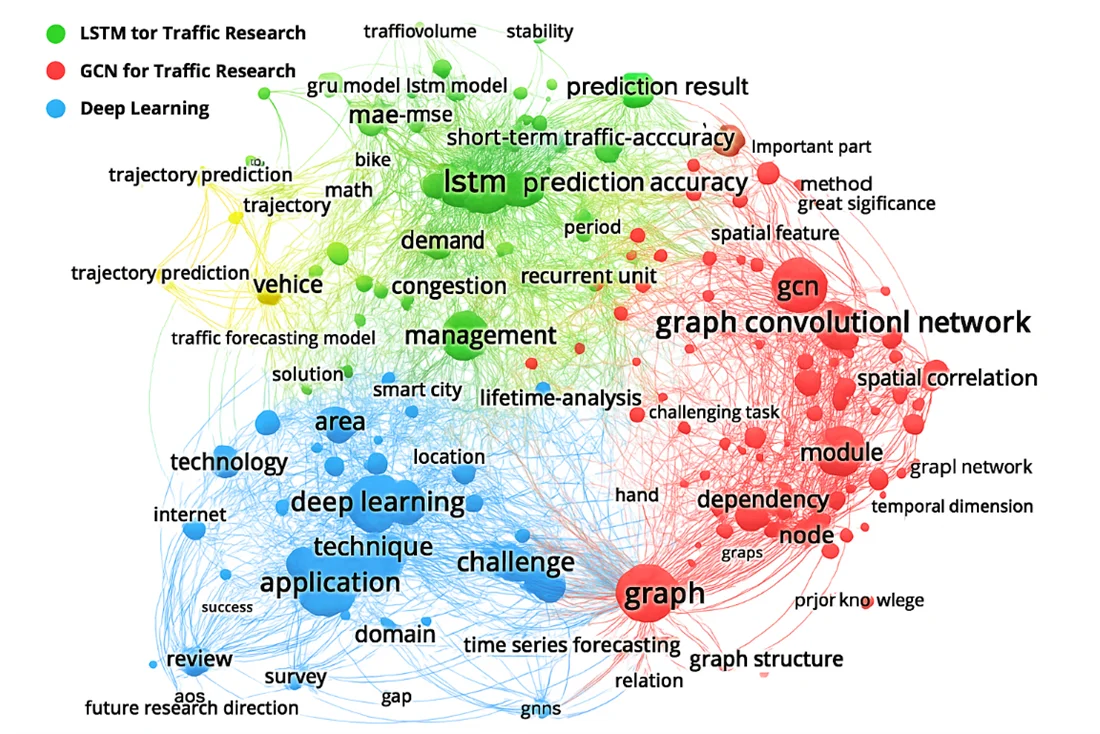
Fig. 1: Keyword co-occurrence network visualization.
While the co-occurrence network highlights thematic concentrations and methodological trends, the underlying co-authorship patterns reveal relatively weak international linkages. This limited cross-regional collaboration may restrict access to diverse traffic datasets, which are essential for validating models across different urban contexts. Without stronger dataset sharing and global cooperation, the transferability of traffic prediction models across cities remains constrained, potentially reducing their effectiveness in heterogeneous real-world environments.
3.2 Keyword Co-occurrence Map
The keyword co-occurrence mapping shows three main research groups:
- Cluster 1: GCN, graph neural networks, and modeling of space and time.
- Group 2: LSTM, GRU, and predicting time series.
- Cluster 3: CNN, modeling based on images, and a grid-based representation.
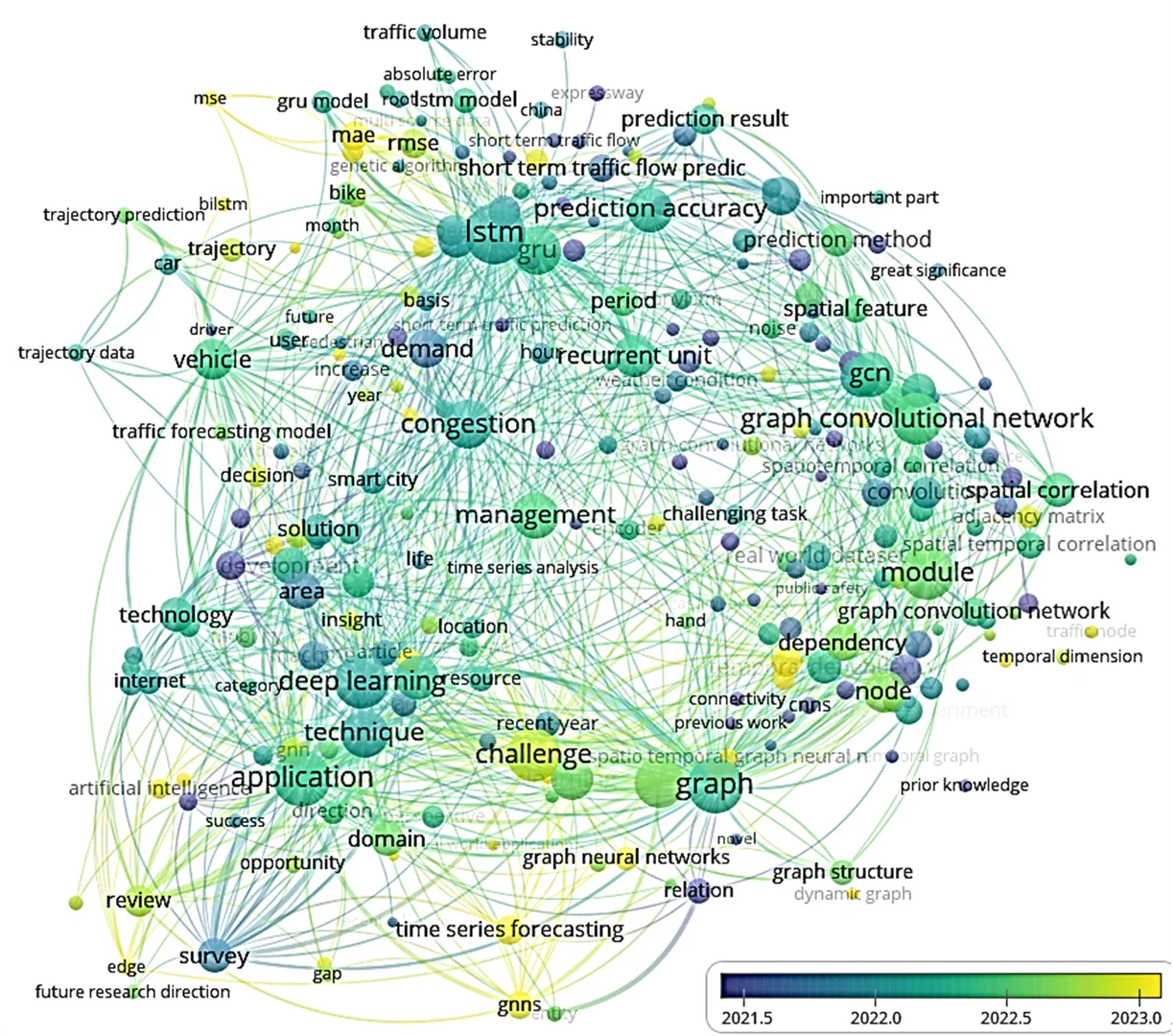
This shows that there has been a big change from CNN and RNN models to graph-based architectures. The increasing popularity of GCN-GRU keywords is a clear sign that this model is becoming the best way to predict junction levels. Fig. 2 shows the keyword co-occurrence overlay visualization, highlighting how research emphasis has shifted from broader themes such as ‘deep learning,’ ‘application,’ and ‘survey’ toward more recent and specialized topics like ‘graph convolutional network (GCN),’ ‘dependency,’ and ‘spatial correlation’ between 2021 and 2023. This progression reflects the field’s movement from general methodological foundations to advanced modeling of non-Euclidean traffic structures. However, the fragmented distribution of keywords across clusters also indicates limited cross-regional integration, reinforcing the finding from co-authorship analysis that weak international collaboration may hinder dataset sharing and reduce the transferability of models across diverse urban contexts.
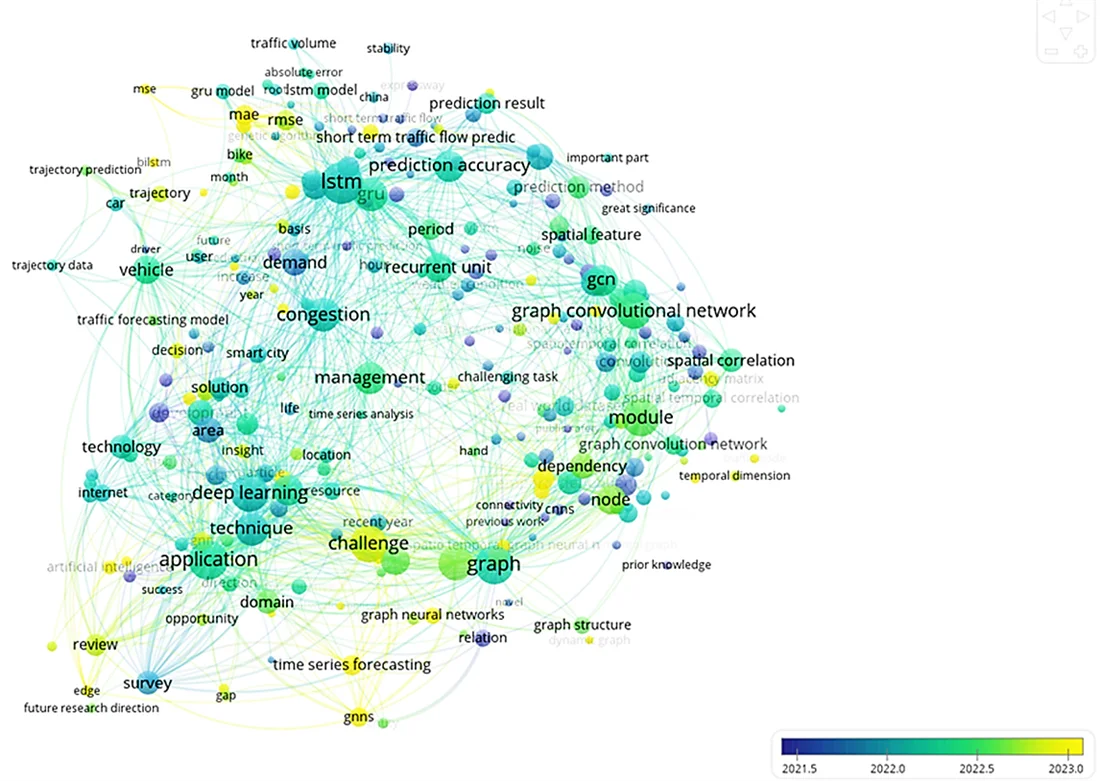
Fig. 2: Keyword co-occurrence overlay visualization.
3.3 Citation Clusters
Citation analysis identifies seminal GCN-based models like DCRNN and ST-GCN as central nodes, which are heavily cited in later research. Recent studies that combine GCN with GRU show an increase in citation momentum, which shows that more people are recognizing their predictive power. In contrast, models that only use CNN and LSTM show fewer citations, which means they are becoming less important in cutting-edge traffic prediction research.
Fig. 3 presents the keyword density visualization, where brighter areas highlight the most frequently cited and co-occurring terms such as ‘graph convolutional network (GCN),’ ‘graph,’ ‘deep learning,’ and ‘application.’ These dense regions indicate the dominant methodological focus of recent research, with strong emphasis on graph-based modeling and spatiotemporal dependencies. However, the density remains uneven across clusters, reflecting the influence of a limited number of research hubs. Combined with the weak international linkages observed in co-authorship networks, this suggests barriers to dataset sharing and knowledge transfer across regions, potentially constraining the generalizability of models to cities with different traffic infrastructures and mobility patterns.
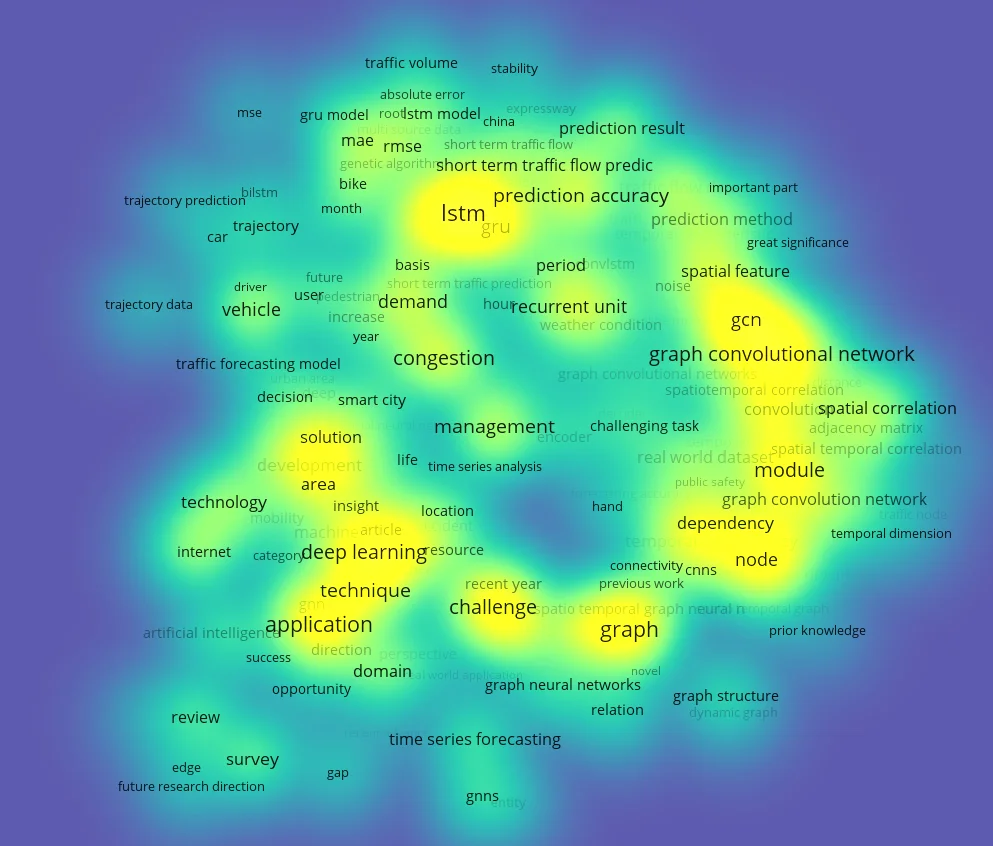
Fig. 3: Keyword density visualization. *(Node Size: Frequency of Keywords | Edge Thickness: Co-occurrence Strength | Color Gradient (Blue→Yellow): Year (2021→2023)).
4. Comparative Analysis of CNN, LSTM/GRU, and GCN-GRU
When it comes to junction-level traffic prediction tasks, the comparative evidence clearly favours GCN-GRU models. Although CNNs are good at modeling spatial features, their ability to do so is constrained by the presumption of Euclidean grid structures. Road network topology is not explicitly taken into account by LSTM and GRU, despite their superiority at capturing sequential dependencies. By combining the advantages of both paradigms, GCN-GRU hybrids achieve improved accuracy and reduced RMSE on benchmark datasets like METR-LA and PEMS-BAY. Importantly, because graph-based representations enable information to spread among connected nodes, GCN-GRU exhibits resilience against missing data and sensor failure. GCN-GRU is a strong option for scalable, practical ITS deployment because of these benefits. Analysis of CNN, LSTM/GRU, and GCN-GRU is shown in Table 3.
Table 3: Analysis of CNN, LSTM/GRU, and GCN-GRU.
| Model | Strengths | Limitations | Suitability for Junction-Level Prediction |
|---|---|---|---|
| CNN | Effective with grid-based traffic data, it captures spatial features. | Limited for dynamic junctions and weak at temporal dependencies | Moderate |
| LSTM/GRU | Strong sequence modeling and exceptional long-term temporal dependency | Not good at finding spatial correlations; uses a lot of computing power | Moderate |
| GCN-GRU | Combines temporal (sequence) and spatial (graph) learning; it is scalable to intricate road networks. | Needs big labeled datasets; hard to understand | High |
(*Detailed benchmark results are shown in Table 4; values may vary due to differences in datasets, traffic conditions, and evaluation protocols.)
Table 4: Benchmarking of traffic prediction models.
| Model / Method | RMSE Range | MAE Range | Caveats |
|---|---|---|---|
| Seasonal ARIMA | 15–25 | 10–18 | Limited to linear patterns; poor for nonlinear dynamics |
| LSTM | 10–18 | 7–12 | Strong temporal modeling, lacks explicit spatial awareness |
| GCN-based models | 9–16 | 6–11 | Strong spatial modeling, needs robust graphs |
| CNN-GRU-LSTM hybrid | 7–13 | 5–9 | Strong spatiotemporal modeling, computationally heavier |
| STPFormer | 6–12 | 4–8 | Excellent generalization, complex architecture |
| SFADNet | 5–11 | 4–7 | Robust across datasets, requires cross-attention fusion |
(*Researcher-Generated Comparative Performance of Traffic Flow Prediction Models)
5. Discussion and Research Gaps
The review indicates a number of important research gaps. First, even though GCN-GRU models perform better than their predecessors, model interpretability is still a major problem. The majority of GCN-GRU architectures operate as opaque black boxes, despite the fact that transportation authorities need clear and understandable models to inform operational choices. Second, there are still problems with computational scalability because accurate yet lightweight models are needed for real-time deployment in big urban networks. Third, there are questions regarding generalizability to developing nations with distinct traffic dynamics due to the dependence on datasets from a small number of regions (most notably China and the U.S.). The integration of multi-modal data sources represents another gap. Current models frequently only use data on traffic flow or speed, but weather, ride-sharing, and event data could all be added to improve junction-level prediction. The synergy of GCN-GRU with edge computing or federated learning, which are essential for real-time ITS applications under data privacy constraints, has only been briefly examined in a few studies. Explainability techniques such as SHAP (SHapley Additive Explanations) and LIME (Local Interpretable Model-agnostic Explanations) can identify the relative importance of spatiotemporal features in traffic prediction. Their deployment enhances model transparency, improves trust among end-users, and assists in diagnosing model failures. In real-world traffic systems, such explainability methods support informed decision-making, regulatory compliance, and system debugging.
6. Conclusion and Future Scope
GCN-GRU hybrids have emerged as the cutting-edge paradigm for junction-level traffic flow prediction, as evidenced by this comprehensive literature review and bibliometric mapping. Although it sacrifices interpretability and computational efficiency, GCN-GRU is more adaptive to irregular road networks and multi-junction interactions than CNN and LSTM/GRU. Expanding cross-regional studies, facilitating scalable real-time deployment, and improving model interpretability should be the main goals of future research. A promising area is the combination of GCN-GRU with edge computing frameworks, reinforcement learning, and attention mechanisms. Incorporating these models into smart city infrastructures can also lead to better urban mobility, less environmental impact, and proactive congestion management. In conclusion, the evidence clearly indicates that GCN-GRU represents the next step forward for intelligent transportation systems, providing a route to more precise, reliable, and scalable solutions for future cities, even though CNN and LSTM/GRU established the groundwork for deep learning in traffic prediction.
Funding Declaration
This research did not receive any specific grant from funding agencies in the public, commercial, or not-for-profit sectors.
Data Availability Statement
The datasets generated and/or analyzed during the current study that support the findings are available from the corresponding author upon reasonable request.
Conflict of Interest
There is no conflict of interest.
Artificial Intelligence (AI) Use Disclosure
The authors declare that artificial intelligence (AI)-assisted tools were used only for language refinement, grammar improvement, and manuscript structuring purposes during the preparation of this work. All technical content, experimental implementation, results, and interpretations were independently developed and verified by the authors.
Supporting Information
Not applicable.
References
- [1] A. Choudhary, S. Gokhale, P. Kumar, C. Pradhan, S. S. Kumar, Urban traffic congestion: its causes-consequences-mitigation, Research Journal of Chemistry and Environment, 2022, 26, 164–176, doi: 10.25303/2612rjce1640176.
- [2] N. Tsalikidis, A. Mystakidis, P. Koukaras, M. Ivaškevičius, L. Morkūnaitė, D. Ioannidis, P. A. Fokaides, C. Tjortjis, D. Tzovaras, Urban traffic congestion prediction: a multi-step approach utilizing sensor data and weather information, Smart Cities, 2024, 7, 233–253, doi: 10.3390/smartcities7010010.
- [3] L. Peng, X. Liao, T. Li, X. Guo, X. Wang, An overview based on the overall architecture of traffic forecasting, Data Science and Engineering, 2024, 9, 341–359, doi: 10.1007/s41019-024-00246-x.
- [4] S. A. Sayed, Y. Abdel-Hamid, H. A. Hefny, Artificial intelligence-based traffic flow prediction: a comprehensive review, Journal of Electrical Systems and Information Technology, 2023, 10, 13, doi: 10.1186/s43067-023-00081-6.
- [5] V. Singh, S. K. Sahana, V. Bhattacharjee, A novel CNN-GRU-LSTM based deep learning model for accurate traffic prediction, Discover Computing, 2025, 28, 38, doi: 10.1007/s10791-025-09526-0.
- [6] D. A. Tedjopurnomo, Z. Bao, B. Zheng, F. M. Choudhury, A. K. Qin, A survey on modern deep neural network for traffic prediction: trends, methods and challenges, IEEE Transactions on Knowledge and Data Engineering, 2022, 34, 1544–1561, doi: 10.1109/TKDE.2020.3001195.
- [7] Y-T. Chen, A. Liu, C. Li, S. Li, X. Yang, Traffic flow prediction based on spatial-temporal multi factor fusion graph convolutional networks, Scientific Reports, 2025, 15, 12612, doi: 10.1038/s41598-025-96801-1.
- [8] Z. Jiang, X. Zhang, Dual-view graph convolutional neural networks for urban traffic congestion level prediction, 2025 5th International Conference on Neural Networks, Information and Communication Engineering (NNICE), Guangzhou, China, 2025, 1913–1916, doi: 10.1109/NNICE64954.2025.11064327.
- [9] Y. Li, R. Yu, C. Shahabi, Y. Liu, Diffusion convolutional recurrent neural network: Data-driven traffic forecasting, International Conference on Learning Representations (ICLR), 2018.
- [10] J. Wang, H. Guo, W. Lin, X. Zhou, Region-level traffic prediction based on temporal multi-spatial dependence graph convolutional network from GPS data (TmS-GCN), Remote Sensing, 2022, 14, 303, doi: 10.3390/rs14020303.
- [11] D. Rumelhart, G. Hinton, R. Williams, Learning representations by back-propagating errors, Nature, 1986, 323, 533–536, doi: 10.1038/323533a0.
- [12] J. Elman, Distributed representations, simple recurrent networks, and grammatical structure, Machine Learning, 1991, 7, 195–225, doi: 10.1007/BF00114844.
- [13] S. Hochreiter, J. Schmidhuber, Long short-term memory, Neural Computation, 1997, 9, 1735–1780, doi: 10.1162/neco.1997.9.8.1735.
- [14] I. Goodfellow, Y. Bengio, A. Courville, Deep Learning, Cambridge, MA: MIT Press, 2016.
- [15] B. Williams, L. Hoel, Modeling and forecasting vehicular traffic flow as a seasonal ARIMA process: theoretical basis and empirical results, Journal of Transportation Engineering, 2003, 129, 664–672, doi: 10.1061/(ASCE)0733-947X(2005)131:6(408).
- [16] E. Zivot, J. Wang, Vector autoregressive models for multivariate time series, In Modeling Financial Time Series with S-Plus, New York: Springer, 2006, 385–429, doi: 10.1007/978-0-387-21763-5_11.
- [17] J. Bruna, W. Zaremba, A. Szlam, Y. LeCun, Spectral networks and locally connected networks on graphs, In Proceedings of ICLR, 2014.
- [18] U. Johansson, H. Boström, T. Löfström, H. Linusson, Regression conformal prediction with random forests, Machine Learning, 2014, 97, 155–176, doi: 10.1007/s10994-014-5453-0.
- [19] S. V. Kumar, L. Vanajakshi, Short-term traffic flow prediction using seasonal ARIMA model with limited input data, European Transport Research Review, 2015, 7, 1–9, doi: 10.1007/s12544-015-0170-8.
- [20] R. Chen, C. Liang, W. Hong, D. Gu, Forecasting holiday daily tourist flow based on seasonal support vector regression with adaptive genetic algorithm, Applied Soft Computing, 2015, 26, 435–443, doi: 10.1016/j.asoc.2014.10.022.
- [21] C. Chen, Z. Liu, S. Wan, J. Luan, Q. Pei, Traffic flow prediction based on deep learning in Internet of vehicles, IEEE Transactions on Intelligent Transportation Systems, 2020, 22, 3776–3789, doi: 10.1109/TITS.2020.3025856.
- [22] G. Guo, W. Yuan, Short-term traffic speed forecasting based on graph attention temporal convolutional networks, Neurocomputing, 2020, 410, 387–393, doi: 10.1016/j.neucom.2020.06.001.
- [23] C. Li, P. Xu, Application on traffic flow prediction of machine learning in intelligent transportation, Neural Computing and Applications, 2020, 33, 613–624, doi: 10.1007/s00521-020-05002-6.
- [24] G. Meena, D. Sharma, M. Mahrishi, Traffic prediction for intelligent transportation system using machine learning, In 3rd International Conference on Emerging Technologies in Computer Engineering (ICETCE), 2020, 145–148, doi: 10.1109/ICETCE48199.2020.9091758.
- [25] E. L. Manibardo, I. Laña, J. L. Lobo, J. Del Ser, New perspectives on the use of online learning for congestion level prediction over traffic data, In IJCNN, 2020, 1–8, doi: 10.1109/IJCNN48605.2020.9207661.
- [26] W. Shu, K. Cai, N. N. Xiong, A short-term traffic flow prediction model based on an improved gate recurrent unit neural network, IEEE Transactions on Intelligent Transportation Systems, 2021, 23, 16654–16665, doi: 10.1109/TITS.2021.3094659.
- [27] J. Tang, J. Zeng, Y. Wang, H. Yuan, F. Liu, H. Huang, Traffic flow prediction on urban road network based on license plate recognition data: Combining attention-LSTM with genetic algorithm, Transportmetrica A: Transport Science, 2020, 17, 1217–1243, doi: 10.1080/23249935.2020.1845250.
- [28] Z. Wang, X. Su, Z. Ding, Long-term traffic prediction based on LSTM encoder-decoder architecture, IEEE Transactions on Intelligent Transportation Systems, 2021, 22, 6561–6571, doi: 10.1109/TITS.2020.2995546.
- [29] Z. Xing, S. Zhao, W. Guo, X. Guo, Geometric feature extraction of point cloud of chemical reactor based on dynamic graph convolution neural network, ACS Omega, 2021, 6, 21410–21424, doi: 10.1021/acsomega.1c02213.
- [30] N. Zafar, I. U. Haq, J. U. R. Chughtai, O. Shafiq, Applying hybrid LSTM-GRU model based on heterogeneous data sources for traffic speed prediction in urban areas, Sensors, 2022, 22, 3348, doi: 10.3390/s22093348.
- [31] H. Zheng, X. Li, Y. Li, Z. Yan, T. Li, GCN-GAN: Integrating graph convolutional network and generative adversarial network for traffic flow prediction, IEEE Access, 2022, 10, 94051–94062, doi: 10.1109/ACCESS.2022.3204036.
- [32] X. Yin, G. Wu, J. Wei, Y. Shen, H. Qi, B. Yin, Deep learning on traffic prediction: methods, analysis, and future directions, IEEE Transactions on Intelligent Transportation Systems, 2022, 23, 4927–4943, doi: 10.1109/TITS.2021.3054840.
- [33] Y. Modi, R. Teli, A. Mehta, K. Shah, M. Shah, A comprehensive review on intelligent traffic management using machine learning algorithms, Innovative Infrastructure Solutions, 2022, 7, 128, doi: 10.1007/s41062-021-00718-3.
- [34] Z. Xing, S. Zhao, W. Guo, X. Guo, S. Wang, M. Li, H. He, Analyzing point cloud of coal mining process in much dust environment based on dynamic graph convolution neural network, Environmental Science and Pollution Research, 2023, 30, 4044–4061, doi: 10.1007/s11356-022-22490-2.
- [35] V. Singh, S. K. Sahana, V. Bhattacharjee, A novel CNN-GRU-LSTM based deep learning model for accurate traffic prediction, Discover Computing, 2025, 28, 38, doi: 10.1007/s10791-025-09526-0.
- [36] J. Fang, Z. Shao, S. T. B. Choy, J. Gao, STPFormer: A state-of-the-art pattern-aware spatio-temporal transformer for traffic forecasting, 2025, arXiv:2508.13433.
- [37] M. Wu, W. Weng, J. Li, Y. Lin, J. Chen, D. Seng, SFADNet: Spatio-temporal fused graph based on attention decoupling network for traffic prediction, 2025, arXiv:2501.04060.
- [38] PRISMA, 2021, PRISMA 2020 statement and checklist. Accessed 8 October 2025, https://www.prisma-statement.org/prisma-2020-statement.
- [39] VOSviewer, 2025, VOSviewer – Visualizing scientific landscapes. Leiden University’s Centre for Science and Technology Studies (CWTS). Accessed 8 October 2025, https://www.vosviewer.com.
- [40] M. Attioui, A. Boudiaf, A. Bouzid, Congestion forecasting using machine learning: A systematic review, 2010–2024, Infrastructures, 2025, 10, 76, doi: 10.3390/futuretransp5030076.
- [41] U. Jilani, M. Asif, I. Yousuf, M. Rashid, S. Shams, P. Otero, A systematic review on urban road traffic congestion, Wireless Personal Communications, 2023, 133, 1019–1041, doi: 10.1007/s11277-023-10700-0.
- [42] M. Hassan, A. Tariq, S. U. Rehman, M. Ahmed, Big data applications in intelligent transport systems: A bibliometric analysis and review, Discover Internet of Things, 2025, 2, 49, doi: 10.1007/s44290-025-00205-z.
- [43] N. J. Van Eck, L. Waltman, Software survey: VOSviewer, a computer program for bibliometric mapping, Scientometrics, 2010, 84, 523–538, doi: 10.1007/s11192-009-0146-3.
- [44] J. Zhou, X. Chen, Y. Liu, A bibliometric analysis and methodological overview of transportation research trends, Transportation Research Part A: Policy and Practice, 2024, 185, 103013, doi: 10.1007/s11192-009-0146-3.