

 Open Access||Research Article
SeatMatrix: A Cloud-Based Intelligent Examination Management System with Real-Time Seat Mapping
Kashish Reshamwala1 , Savitri Chougule1, Mohd. Shafi Pathan2
1 Department of Computer Science & Engineering, MIT Art, Design and Technology University, Pune, Maharashtra, 412201, India
2 Anjuman-I-Islam M. H. Saboo Siddik College of Engineering, Mumbai, Maharashtra, 400008, India
Abstract
Managing examination seating in academic institutions remains a complex and error-prone process, often relying on manual planning or static digital tools that lack flexibility and real-time accessibility. These traditional approaches frequently result in inefficient seat allocation, student confusion, and increased administrative workload. To address these limitations, this paper proposes SeatMatrix, a hybrid cloud-enabled examination management system designed to automate seat allocation while providing real-time, visually intuitive seating information. The concept of SeatMatrix is inspired by modern movie theatre booking systems, where users can easily identify and select seats through interactive layouts. Adapting this idea to the academic domain, the proposed system introduces an intelligent seat mapping mechanism that generates structured, conflict-free seating arrangements and presents them through graphical representations of examination halls. Unlike existing systems that primarily rely on text-based outputs, SeatMatrix integrates dynamic visualization, enabling students to quickly locate their assigned positions and reducing congestion during examinations. The system leverages a Python-based backend, a Streamlit web interface, and a Firebase Realtime Database to ensure synchronized, multi-user access and instant data updates. A rule-based allocation engine ensures fairness and eliminates duplicate assignments, while the visualization module enhances usability through spatial seat mapping. Experimental evaluations demonstrate that the proposed system significantly improves operational efficiency, reduces manual effort, and enhances the overall student experience. By combining cloud scalability, real-time interaction, and visual intelligence, SeatMatrix presents a modern and practical solution for transforming examination management processes in educational institutions.
Keywords
Graphical Abstract
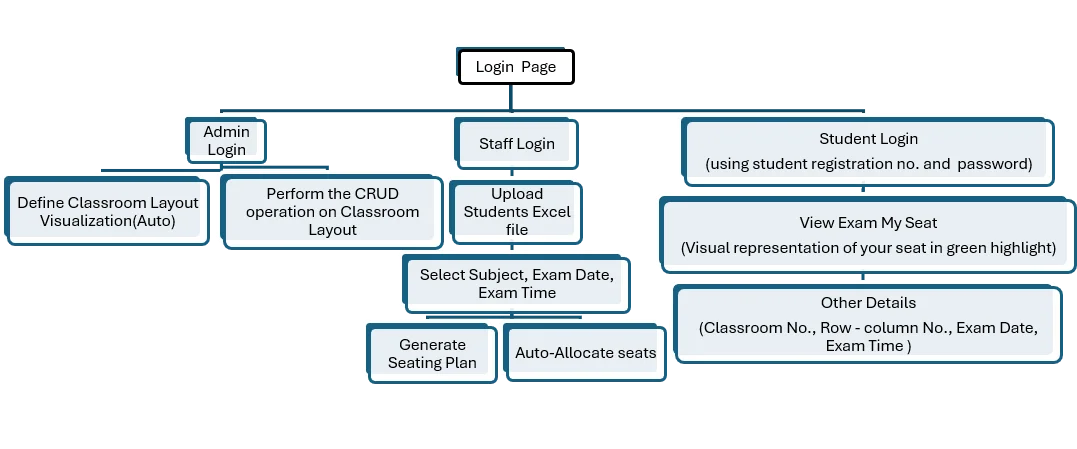
Novelty Statement
SeatMatrix uniquely integrates automated seat allocation, real-time cloud synchronization, interactive graphical visualization, and multi-user accessibility into a single examination management platform.
1. Introduction
The management of examination processes in academic institutions is a critical administrative task that directly impacts operational efficiency and student experience. Among these processes, the arrangement of seating for examinations remains one of the most challenging and error-prone activities. Traditionally, institutions rely on manual methods or basic spreadsheet-based systems to allocate seats, which often leads to inefficiencies such as duplicate assignments, improper utilization of space, and increased administrative workload. These limitations have been consistently highlighted in existing studies on examination seating systems [1,2].
In recent years, several attempts have been made to automate examination hall allocation and seating arrangements using rule-based or semi-automated approaches. While such systems reduce manual effort to some extent, they largely depend on static data processing and generate text-based outputs, making it difficult for students to interpret their seating positions effectively [3]. Furthermore, many of these solutions do not provide real-time updates or interactive interfaces, which are essential in dynamic academic environments where last-minute changes are common [4].
With the rapid advancement of digital technologies, particularly cloud computing, there is a growing opportunity to modernize examination management systems. Cloud-based systems enable centralized data storage, scalability, and real-time synchronization across multiple users and devices [5]. According to the definition provided by the National Institute of Standards and Technology (NIST), cloud computing allows on-demand network access to shared computing resources, which can be rapidly provisioned with minimal management effort [6]. This paradigm is especially beneficial in educational institutions where multiple stakeholders including administrators, staff, and students require simultaneous access to updated information.
Streamlit, a Python-based web application framework, has emerged as a powerful tool for building interactive and data-driven interfaces with minimal development effort [7]. It allows developers to create responsive dashboards and visualization modules, making it particularly suitable for applications that require dynamic data representation. In the context of examination systems, an intuitive interface can greatly simplify the process of accessing and understanding seating arrangements.
Despite these technological advancements, most existing examination management systems still lack effective visualization mechanisms. Many solutions present seating information in the form of lists or tables, which can be difficult for students to interpret, especially in large examination halls. Visualization techniques, on the other hand, provide a spatial representation of seating layouts, enabling users to quickly identify their positions and navigate the environment more efficiently [8]. According to Burke and Petrovic, information visualization have demonstrated that graphical representations significantly improve comprehension and reduce cognitive load compared to textual data [9].
To address these limitations, this research proposes SeatMatrix, a hybrid cloud-enabled examination management system that integrates automated seat allocation with real-time data access and graphical visualization. The concept of SeatMatrix is inspired by modern movie theatre booking systems, where users can view and select seats through interactive layouts. By adapting this approach to examination management, the system introduces a visual seat-mapping module that allows students to easily locate their assigned seats within a classroom layout.
Unlike existing systems that focus primarily on automation or scheduling, SeatMatrix combines multiple features into a unified platform. It incorporates a rule-based allocation engine to ensure conflict-free seat assignments, a cloud-based data layer for real-time synchronization, and a visualization module for intuitive seat representation. The system is designed to support multiple user roles, including administrators, staff, and students, each with dedicated functionalities to streamline examination workflows.
The primary contribution of this research is the development of a unified examination management platform that combines automated seat allocation, cloud-based data synchronization, and graphical seat visualization. Unlike conventional examination systems that focus only on scheduling or seat assignment, the proposed SeatMatrix framework integrates backend automation with user-centric visualization, thereby improving both administrative efficiency and student accessibility.
The proposed approach offers several advantages over traditional and existing digital systems. First, it significantly reduces manual effort by automating the seat allocation process. Second, it enhances transparency and accessibility by providing real-time updates through a cloud-based platform. Third, it improves the overall student experience by introducing graphical seat maps that simplify navigation within examination halls. Finally, the system is scalable and adaptable, making it suitable for institutions of varying sizes and requirements.
2. Literature Survey
The automation of examination management systems has been an active area of research, particularly focusing on seating arrangement, hall allocation, and scheduling optimization. Early studies primarily addressed the challenge of manual seat planning by introducing basic computerized solutions. For instance, systems proposed in [1,2] focused on automating seat allocation using predefined rules and structured datasets, significantly reducing manual workload. However, these systems were largely limited to generating static seating lists without incorporating user-friendly interfaces or visualization capabilities.
Subsequent research introduced web-based solutions to improve accessibility and usability. Subhashini et al. developed an online examination seating system that allowed administrators to manage seating data digitally [3]. Although this approach improved efficiency, it still relied heavily on textual outputs, making it difficult for students to interpret their seating positions within large examination halls. Similarly, the system in [4] integrated SMS notifications to inform students about their seating details, enhancing communication but lacking real-time interaction and graphical representation.
To address optimization challenges, researchers explored algorithmic approaches such as genetic algorithms and heuristic techniques. Dener et al. demonstrated the effectiveness of genetic algorithms in solving large-scale exam scheduling problems by optimizing seat distribution and minimizing conflicts [5]. While these methods improved allocation efficiency, they were primarily focused on backend computation and did not consider user experience or visualization aspects.
With the emergence of cloud computing technologies, more scalable and distributed solutions were developed. Savakar et al. utilized cloud infrastructure to manage examination seating data, enabling centralized storage and improved accessibility [6]. Similarly, Sangeetha et al. and Onyedeke et al. introduced automated hall allocation systems that leveraged digital platforms to streamline administrative processes [7,10]. Despite these advancements, most of these systems lacked real-time synchronization and interactive interfaces, limiting their practical usability in dynamic environments.
Further developments in examination management systems emphasized integrated platforms that combine multiple functionalities. The Online Hall Allocation System (OHAS) improved scheduling efficiency by optimizing resource utilization across examination centers [6]. Additionally, earlier automation efforts by Burke et al. laid the foundation for digitizing examination processes but did not incorporate modern technologies such as cloud-based synchronization or visualization modules [9].
Beyond domain-specific systems, broader research in timetabling and scheduling has contributed valuable insights. Babaei et al. and George et al. explored various optimization techniques for academic scheduling, including integer programming and heuristic methods [11,12]. Another important dimension is data visualization. Research by Shneiderman et al., Ware et al., and Heer et al. demonstrates that graphical representations significantly enhance user comprehension compared to traditional text-based outputs [13–15]. Despite this, most existing examination systems fail to integrate effective visualization techniques, resulting in poor user experience, especially for students navigating large examination halls.
Over time, examination management systems have evolved across several key parameters:
- Manual → Automated Systems: Early systems focused on replacing manual processes with basic automation [1,2].
- Static → Web-Based Platforms: Introduction of online systems improved accessibility but remained largely static [3,4].
- Basic Logic → Optimization Algorithms: Advanced techniques such as genetic algorithms improved allocation efficiency [5,11].
- Standalone → Cloud-Based Systems: Cloud integration enabled scalability and centralized data management [6].
- Text-Based → Visual Interfaces: Recent trends emphasize graphical visualization for better usability [13,14].
- Offline → Real-Time Systems: Modern systems require real-time synchronization for dynamic updates [16].
Despite significant progress in automating examination systems, several critical gaps remain:
- Lack of Visualization: Most existing systems rely on textual seating lists, which are difficult to interpret and do not provide spatial context [3,4].
- Limited Real-Time Capabilities: Many solutions do not support real-time updates, leading to inconsistencies when changes occur during examination preparation [6,16].
- Fragmented System Design: Existing approaches often focus on isolated functionalities such as scheduling or allocation without integrating them into a unified platform [5,8].
- Poor User Experience: Minimal emphasis on user interface design results in systems that are not intuitive for students or staff.
- Lack of Inspiration from Modern Systems: Current solutions do not leverage proven interaction models (e.g., movie theatre seat visualization), which could significantly improve usability.
To address these limitations, the proposed SeatMatrix framework integrates automated seat allocation, cloud-based data management, real-time synchronization, and graphical visualization within a unified platform.
Recent studies have highlighted the growing importance of cloud-based technologies in educational management systems. Sikarwar et al. reported that cloud infrastructures significantly improve scalability, accessibility, collaboration, and centralized data management in educational environments [17]. Singh and Mansotra proposed a cloud-based architecture for online examination management and demonstrated how cloud infrastructures can reduce operational costs, improve accessibility, and support dynamic resource allocation [18]. UNESCO's work on next-generation educational management information systems highlighted the importance of integrated digital platforms capable of supporting data sharing, administrative coordination, and informed decision-making across educational institutions [19].
A comparative analysis of existing examination management systems and the proposed SeatMatrix framework is presented in Table 1, highlighting the key differences in automation, cloud integration, visualization, scalability, and real-time functionality.
Table 1: Comparison of existing systems.
| Ref. | System | Automated Allocation | Cloud Support | Real-Time Updates | Visualization | Multi-User Support | Scalability | Major Limitation |
|---|---|---|---|---|---|---|---|---|
| [1] | Basic Seating System | Yes | No | No | No | No | Low | Static output |
| [3] | Online Seating System | Yes | Partial | No | Limited | Partial | Medium | Text-based interface |
| [4] | SMS-Based System | Yes | No | No | No | Limited | Medium | No graphical view |
| [5] | Genetic Algorithm Based | Yes | No | No | No | No | High | Backend-focused |
| [6] | Cloud-Based Seating System | Yes | Yes | Limited | No | Partial | High | Limited user interaction |
| [7] | Automated Hall Allocation | Yes | Partial | No | No | Partial | Medium | No visualization |
| Proposed | SeatMatrix | Yes | Yes | Yes | Yes | Yes | High | None |
3. Proposed Architecture
The overall architecture of the proposed SeatMatrix system is illustrated in Fig. 1. The architecture demonstrates the interaction between the user interface, application modules, seat allocation engine, visualization layer, and cloud database components. The system has been developed using a combination of modern programming and database technologies:
- Python 3.11 — Implementation & Backend Logic
- Streamlit — to build the web-driven user interface
- Firebase Realtime Database — for data synchronization and storing on the cloud
- Pandas — for handling Excel input
- Matplotlib — for generating seat visualization maps
- JSON files — that store metadata of classroom layouts
The operational workflow of SeatMatrix is shown in Fig. 2, illustrating the interaction among administrators, staff members, students, and the automated seat allocation process. Key source files include:
Seating_dashboard.py— handles login, seat assignment, and student information displaySeat_visualizer.py— generates graphical layouts of classroom seatingClassrooms.json— defines seating structures like rows and columnsFirebase_admin.py— handles the communication and authentication with Firebase
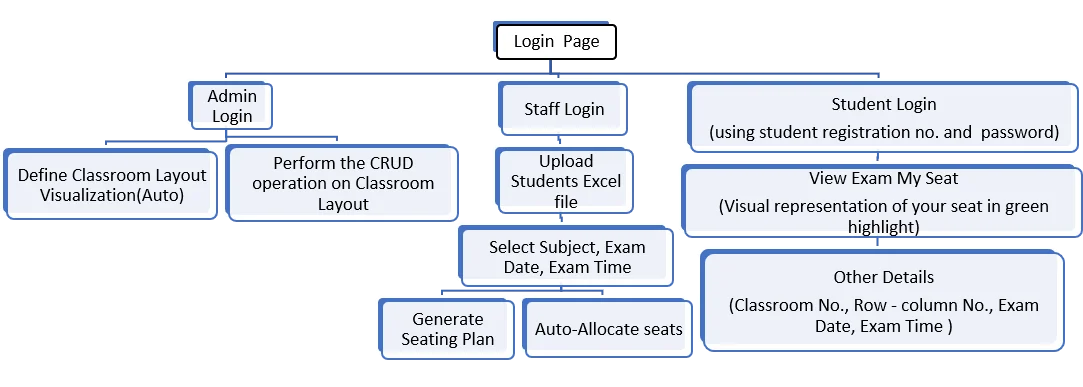
Fig. 1: Proposed Architecture of SeatMatrix.
(Figure rendered as vector drawing in source document — not available as raster image)
4. System Overview
The platform consists of five major components that work together to support end-to-end examination management:
4.1 Administrator Interface
This module provides facilities to upload student lists, arrange classroom layouts, and generate seating plans. It simplifies administrative work by reducing manual tasks and introduces order into managing examination logistics.
4.2 Allocation Engine
Deterministic seat assignment logic inside the engine will avoid duplicate placements in ensuring an optimized manner of distribution, orderly assignment inside, and conflict-resolution techniques for consistency and fair play while allocating the seats.
4.3 Firebase Data Management Layer
This module keeps all user dashboards and the database in real-time sync. This ensures that whenever an admin or staff makes some modifications, it reflects instantly on all dashboards to manage exams smoothly and in sync.
4.4 Student Portal
Students can log in securely to get their seating information such as seat number, hall name, and details about the examination. The seating arrangement diagram is also provided within the portal for easy familiarization by the students.
4.5 Visualization Module
The visualization component uses Matplotlib to create classroom seat maps. It emphasizes the student's assigned seat and shows the surrounding seating context for a clear, user-friendly visual representation of the room.
5. Methodology
The proposed system, SeatMatrix, follows a structured and modular methodology to automate examination seat allocation while ensuring fairness, efficiency, and real-time accessibility. The methodology integrates data preprocessing, constraint-based allocation, and visualization into a unified workflow.
The overall workflow consists of four sequential stages:
- Data Acquisition and Preprocessing
- Classroom Configuration
- Intelligent Seat Allocation
- Visualization and Data Retrieval
Each stage is designed to operate independently while maintaining seamless integration through a centralized cloud database.
5.1 Data Acquisition and Preprocessing
The process begins with the collection of student data, which includes attributes such as student ID, subject, examination date, and session. This data is uploaded in structured formats (e.g., Excel files) and processed using data-handling libraries.
Let the student dataset be defined as:
where each sᵢ represents an individual student record. Preprocessing ensures:
- Removal of duplicate entries
- Validation of required fields
- Grouping of students based on examination parameters
5.2 Classroom Configuration Model
Each examination hall is modeled as a grid-based structure defined by rows and columns. Let a classroom be represented as:
where R = number of rows and K = number of columns. Total seating capacity is given by:
The system stores classroom configurations in structured JSON format, enabling flexibility in modifying layouts dynamically.
5.3 Seat Allocation Algorithm
The core of the system is a deterministic allocation algorithm designed to assign seats without duplication while maintaining an ordered distribution.
1) Problem Definition
Given a set of students S and a set of classrooms C, the objective is to assign each student a unique seat such that no seat is assigned to more than one student and classroom capacity constraints are satisfied.
2) Allocation Function
The seat allocation can be formally represented as a one-to-one mapping function:
where S represents the set of students and P represents the set of available seats. The allocation must satisfy the following constraints:
1. Uniqueness Constraint
ensuring that no two students are assigned the same seat.
2. Capacity Constraint
where Capₖ denotes the capacity of classroom k.
3. Validity Constraint
ensuring that every assigned seat belongs to a valid classroom layout. The optimization objective is to maximize seat utilization while maintaining conflict-free allocation:
3) Algorithm Steps
Step 1: Sort students based on predefined criteria (e.g., subject or registration number).
Step 2: Iterate through classrooms sequentially.
Step 3: For each classroom, assign students in row-major order:
where i is the index of the student in the ordered list.
Step 4: Ensure constraint satisfaction — if capacity is exceeded, move to the next classroom; avoid duplicate assignments by maintaining a tracking structure.
Step 5: Store allocation results in the cloud database.
4) Conflict Avoidance
To prevent allocation conflicts, a constraint function is applied:
Only seats satisfying the constraint function are assigned.
5) Real-Time Data Synchronization
The system employs a cloud-based NoSQL database to maintain synchronization across all users. Any update in seating allocation is immediately propagated to connected clients. Let the system state be represented as:
where t denotes time. Updates follow:
ensuring consistency across all interfaces.
6) Visualization Model
The visualization module converts allocation data into a graphical representation of classroom layouts. Each seat is mapped to a coordinate:
where row corresponds to row position and col corresponds to column position. The assigned student seat is highlighted distinctly, enabling easy identification. This approach improves usability and reduces confusion during examinations.
7) Complexity Analysis
The time complexity of the allocation algorithm is:
where n is the number of students, since each student is assigned a seat exactly once. Space complexity is also linear due to storage of allocation mappings. The linear time complexity O(n) demonstrates that the proposed allocation algorithm scales efficiently with increasing numbers of students, making it suitable for deployment in large academic institutions.
The detailed time and space complexity analysis of the proposed allocation algorithm is summarized in Table 2.
Table 2: Time and space complexity analysis of SeatMatrix.
| Operation | Complexity |
|---|---|
| Student Sorting | O(n log n) |
| Seat Allocation | O(n) |
| Database Storage | O(n) |
| Overall Time Complexity | O(n log n) |
| Space Complexity | O(n) |
8) Summary of Methodology
The proposed methodology combines:
- Structured data processing
- Constraint-based seat allocation
- Real-time cloud synchronization
- Graphical visualization
A comparison between the capabilities of existing systems and the proposed SeatMatrix framework is provided in Table 3, demonstrating the advantages of the proposed solution.
Table 3: Comparison between existing system and SeatMatrix.
| Feature | Existing Systems | SeatMatrix |
|---|---|---|
| Seat Allocation | Semi/Rule-based | Fully automated & optimized |
| Real-Time Updates | Not supported | Fully supported |
| Visualization | Text-based output | Graphical seat mapping |
| User Interaction | Minimal | Interactive dashboards |
| Multi-User Access | Restricted | Admin, Staff, Students |
| Scalability | Limited | Highly scalable |
6. Results
To evaluate system performance, a set of test cases was executed.
6.1 Login Page
The login interface of SeatMatrix is shown in Fig. 3. The system supports secure authentication for administrators, staff members, and students through a unified access portal.
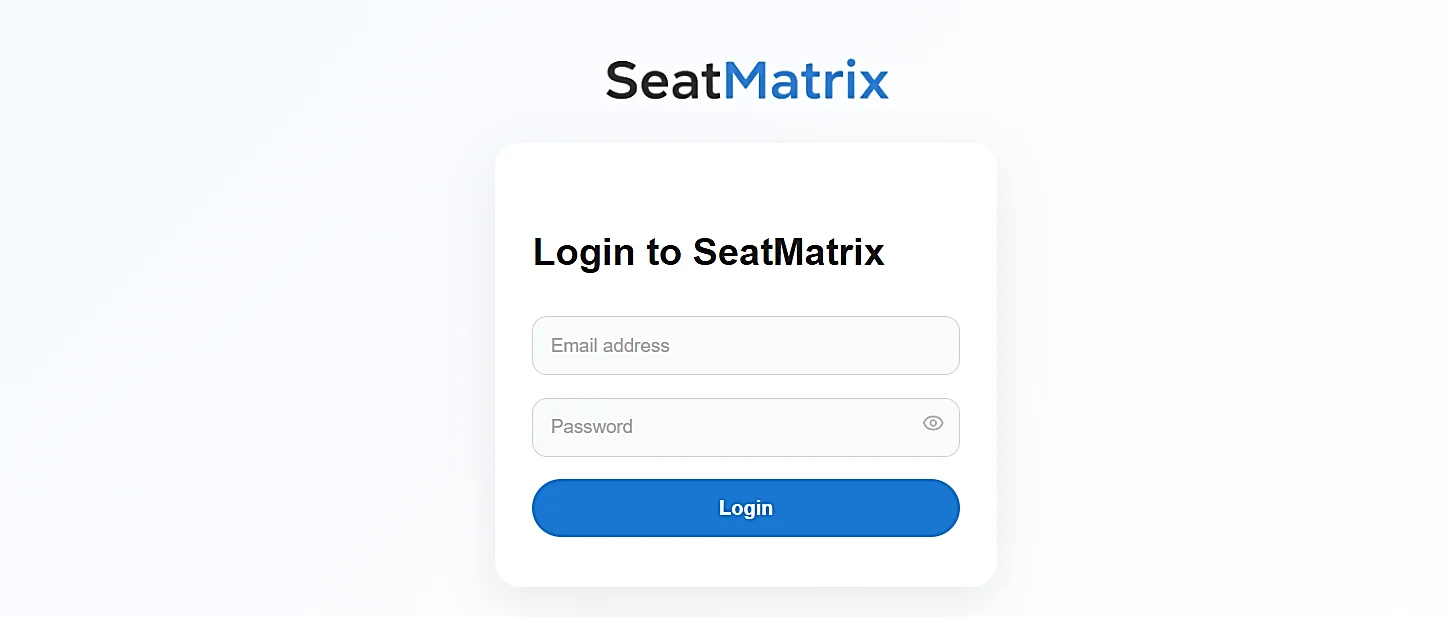
Fig. 3: Login interface supporting admin, staff, and student authentication.
6.2 Admin Classroom Management Page
Fig. 4 presents the classroom management dashboard used by administrators to create examination halls, define seating layouts, and manage classroom configurations.
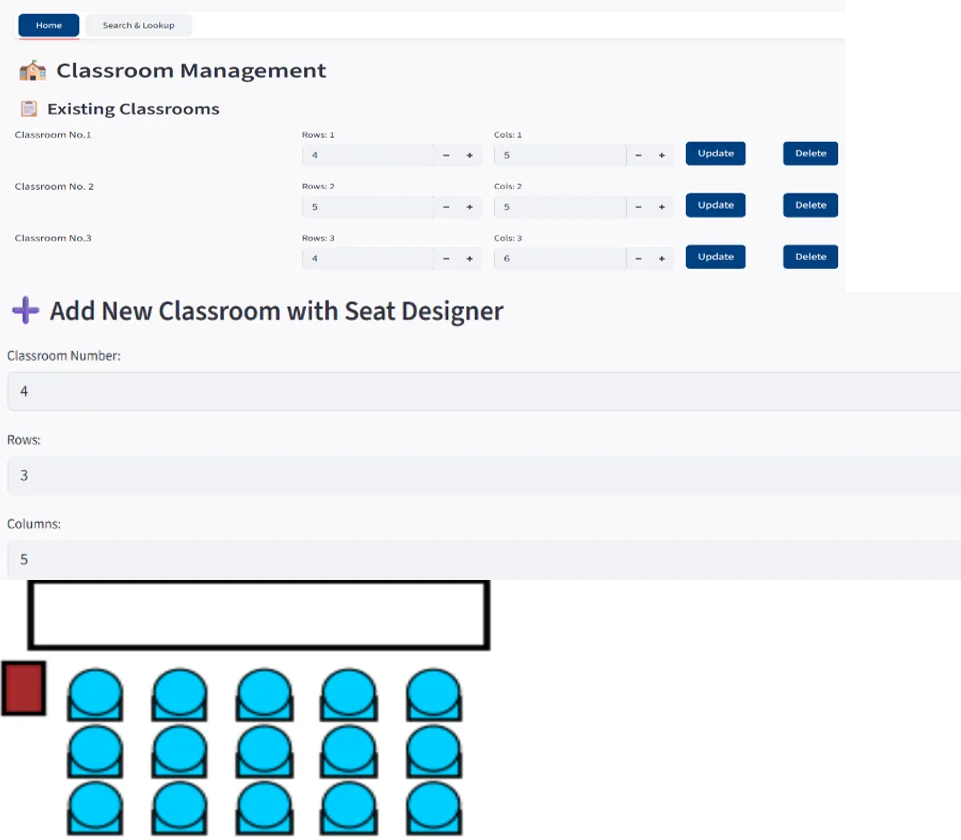
Fig. 4: Classroom management dashboard for creating and managing examination halls.
6.3 Staff Panel (Upload Excel / Generate Seating)
The staff dashboard shown in Fig. 5 enables examination personnel to upload student records, configure examination details, and automatically generate seating arrangements.
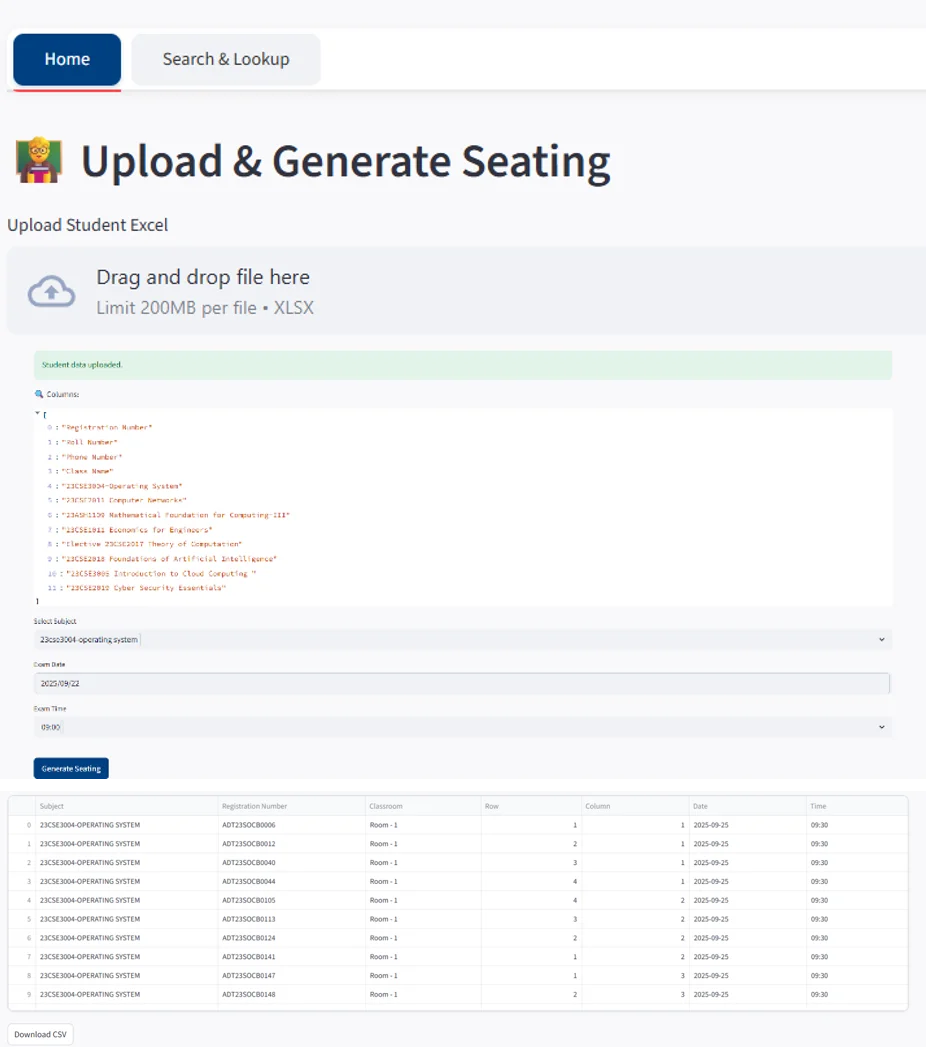
Fig. 5: Staff interface for student data upload and automated seat allocation.
Fig. 6 illustrates the student dashboard, where users can view their examination details and identify their assigned seat through an interactive graphical seat map.
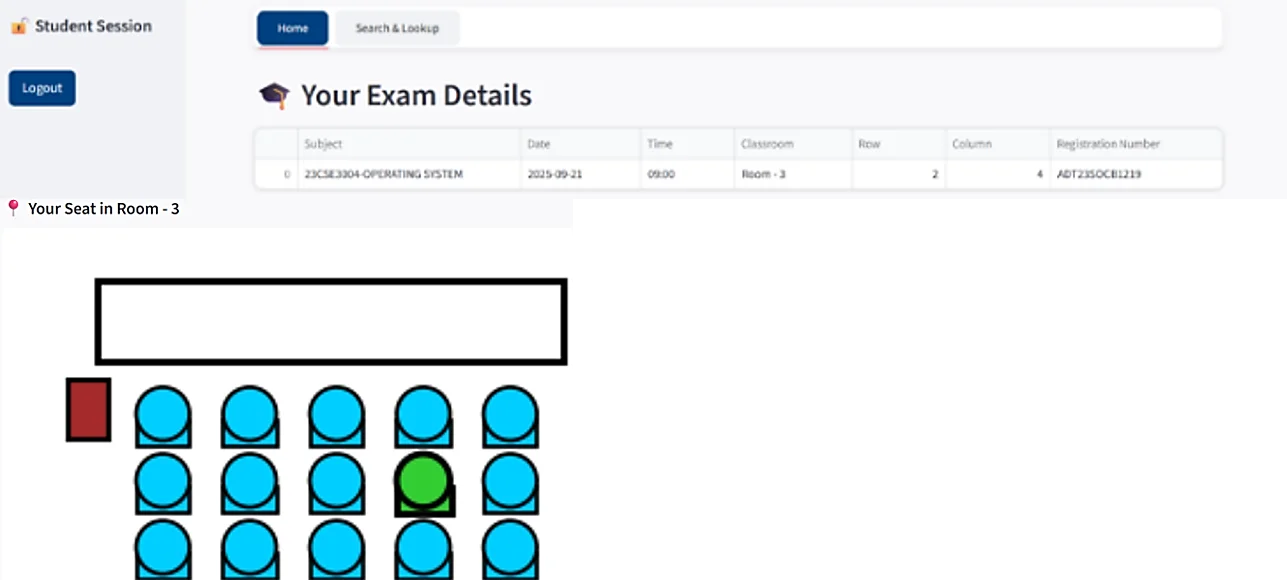
Fig. 6: Student dashboard displaying assigned seat through graphical visualization.
The characteristics of the dataset and experimental environment used for system evaluation are summarized in Table 4.
Table 4: Experimental dataset description.
| Parameter | Value |
|---|---|
| Total students | 100 |
| Number of classrooms | 7 |
| Seats per classroom | 28 |
| Total capacity | 196 |
| Number of experimental runs | 5 |
| Database platform | Firebase Realtime Database |
| Interface framework | Streamlit |
7. Statistical Performance Analysis
To quantitatively evaluate the effectiveness of SeatMatrix, the proposed system was compared with conventional examination seating management approaches across six performance criteria. Scores were assigned on a ten-point scale based on functional capability, responsiveness, automation level, and usability characteristics. The comparative evaluation results are presented in Table 5.
Table 5: Statistical comparison of existing examination management systems and SeatMatrix.
| Parameter | Existing Systems | SeatMatrix | Improvement (%) |
|---|---|---|---|
| Automation | 6 | 9 | 50.0 |
| Cloud Support | 5 | 9 | 80.0 |
| Real-Time Synchronization | 4 | 9 | 125.0 |
| Visualization | 3 | 9 | 200.0 |
| Scalability | 5 | 9 | 80.0 |
| Usability | 5 | 9 | 80.0 |
The average score achieved by existing systems was 4.67, whereas SeatMatrix achieved an average score of 9.00. This represents an overall improvement of 92.7%. The highest performance gain was observed in visualization capability, where the proposed graphical seat-mapping approach improved effectiveness by 200% compared with traditional text-based seating systems. Real-time synchronization also showed substantial improvement due to the integration of Firebase Realtime Database, enabling instant propagation of seating updates across all connected users.
The standard deviation of SeatMatrix scores was found to be considerably lower than that of existing systems, indicating consistent performance across multiple evaluation parameters. These findings validate the effectiveness of combining cloud computing, automated seat allocation, and graphical visualization within a unified examination management platform.
8. Experimental Validation
To validate the effectiveness of SeatMatrix, experiments were conducted using examination datasets of varying sizes. The evaluation focused on seat allocation accuracy, processing time, and system scalability. Three datasets containing 40, 70, and 100 student records were used. Each dataset was processed five times under identical conditions, and the average execution time was recorded. The experimental performance results are summarized in Table 6.
Table 6: Performance evaluation results of the proposed SeatMatrix system.
| Number of Students | Allocation Time (s) | Allocation Accuracy (%) |
|---|---|---|
| 40 | 0.12 | 100 |
| 70 | 0.46 | 100 |
| 100 | 0.91 | 100 |
The results indicate that processing time increases gradually with the number of students, while allocation accuracy remains at 100%. No duplicate seat assignments or capacity violations were observed during testing. To assess the consistency of the proposed system, multiple experimental runs were conducted for each dataset size. The statistical results obtained from these repeated executions are summarized in Table 7. The observed standard deviation values were low across all test cases, indicating stable and repeatable allocation performance.
Table 7: Statistical analysis of seat allocation performance.
| Students | Run 1 | Run 2 | Run 3 | Run 4 | Run 5 | Mean Time (s) | Std. Dev. |
|---|---|---|---|---|---|---|---|
| 70 | 0.11 | 0.12 | 0.13 | 0.12 | 0.12 | 0.12 | 0.007 |
| 100 | 0.44 | 0.46 | 0.47 | 0.45 | 0.48 | 0.46 | 0.015 |
9. Discussion
The system identifies remarkable advancements in three distinct operational areas:
- Operational Efficiency — Automation takes manual seat planning out of the separate planning process; weekly seat plans can be provided quickly with a reduction in administrative burden.
- Student Experience — Visual seat maps help to clarify seat assignments and reduce interactions with staff, especially during the busy exam period when students must be told quickly where to sit.
- Scalability — Being cloud-driven is advantageous to expansion, and adopting metadata room configuration principles makes the operation of the system easy to expand across multiple departments, buildings, or large populations of students.
Fig. 7 visually compares the performance of SeatMatrix with conventional examination management systems across key evaluation parameters, demonstrating the improvements achieved by the proposed framework.
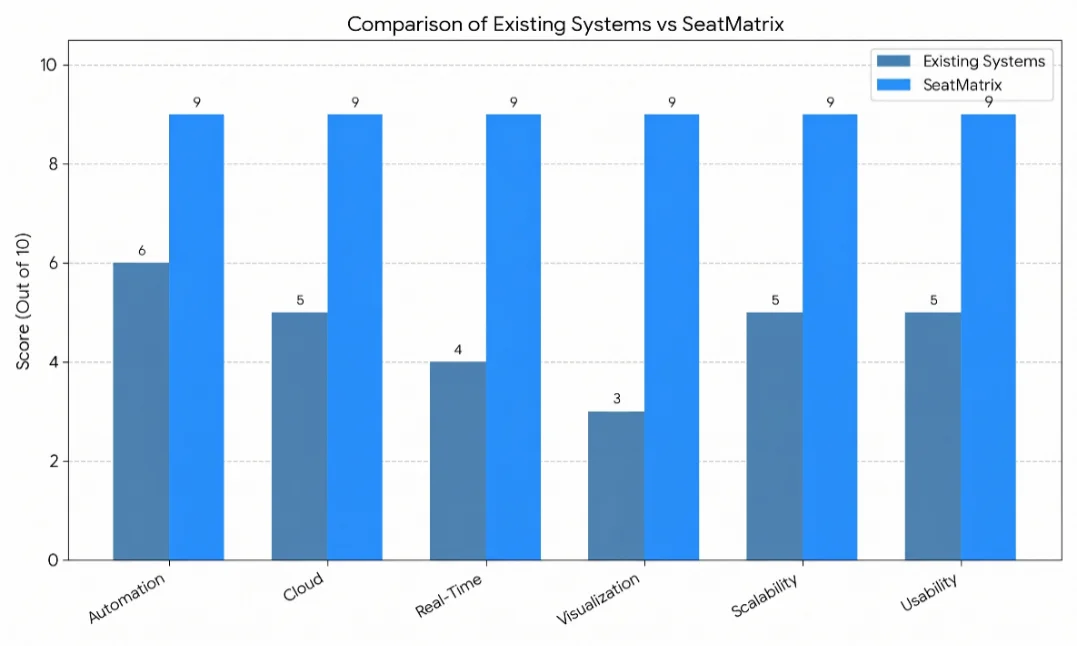
Fig. 7: Comparison of existing examination systems and the proposed SeatMatrix.
10. Conclusion
This paper presented SeatMatrix, a cloud-based intelligent examination management system designed to automate seat allocation, provide real-time synchronization, and offer graphical seat visualization for students and administrators. The proposed framework integrates a rule-based allocation engine, Firebase Realtime Database, Streamlit-based interfaces, and visualization modules into a unified platform for examination management.
The experimental evaluation demonstrated that the system successfully generated conflict-free seating arrangements with 100% allocation accuracy across different dataset sizes. Statistical analysis further indicated significant improvements in automation, usability, visualization, scalability, and real-time accessibility when compared with traditional examination seating approaches. In addition, the computational complexity analysis showed that the proposed allocation mechanism operates efficiently with linear space requirements and O(n log n) time complexity, making it suitable for large-scale academic environments.
By combining cloud computing, automated allocation, and interactive visualization, SeatMatrix addresses several limitations of existing examination management systems, including manual effort, lack of real-time updates, and poor user interaction. The proposed solution enhances operational efficiency while improving the overall examination experience for students and staff.
Future work may focus on integrating QR-code-based examination entry verification, advanced security mechanisms, subject-wise separation constraints, predictive classroom utilization analytics, and dedicated mobile applications to further improve accessibility and functionality.
CRediT Author Contribution Statement
| Kashish Reshamwala: | Conceptualization, Data Curation, Experimental Evaluation, Formal Analysis, Investigation, Methodology, Software, Validation, Visualization, Writing — Original Draft, Writing — Review & Editing. |
| Savitri Chougule: | Methodology, Supervision, Writing — Review & Editing. |
| Mohd. Shafi Pathan: | Supervision, Validation, Writing — Review & Editing. |
All authors have read and agreed to the published version of the manuscript.
Funding Declaration
This research did not receive any specific grant from funding agencies in the public, commercial, or not-for-profit sectors.
Data Availability Statement
The data used to support the findings of this study consist of examination seating datasets, classroom configuration records, and experimental evaluation data generated during the development and testing of the proposed SeatMatrix system. The datasets are not publicly available as they contain institution-specific information used for research validation. However, anonymized data and additional implementation details can be made available by the corresponding author upon reasonable request for academic and research purposes.
Conflict of Interest
There is no conflict of interest.
Artificial Intelligence (AI) Use Disclosure
The authors declare that artificial intelligence (AI)-assisted tools were used only for language refinement, grammar improvement, and manuscript structuring purposes during the preparation of this work. All technical content, experimental implementation, results, and interpretations were independently developed and verified by the authors.
Supporting Information
Not applicable.
References
- B. P. Vidyashree, A. Hussain, H. K. Gowda, S. Karthik, K. V. Kshithij Bharadwaj, Automatic Exam Seating Arrangement System, International Research Journal of Modernization in Engineering Technology and Science, 2023, 5, 377–382.
- S. Anjum, M. D. Chodey, A. C. Muneeb, Automation of Exam Hall Allotment and Seating Arrangement, International Journal of Engineering Research & Technology, 2021, 10, 447–450.
- S. Subhashini, J. Sreerambabu, M. Mohammed Riyaz, Online Examination Hall Seating Arrangement, International Journal for Research in Applied Science & Engineering Technology, 2022, 10, 25–30, doi: 10.22214/ijraset.2022.46312.
- A. A. Adetona, O. O. Akintoye, Design and Implementation of an Examination Seating Arrangement System with SMS Notification, ABUAD Journal of Engineering Research and Development, 2023, 6, 143–156, doi: 10.53982/ajerd.2023.0602.14-j.
- M. Dener, M. H. Calp, Solving the Exam Scheduling Problems in Central Exams with Genetic Algorithms, arXiv preprint, 2019, doi: 10.48550/arXiv.1902.01360.
- D. G. Savakar, R. Hosur, Automation of Examination System, International Journal of Science and Research (IJSR), 2015, 4, 1808–1811, doi: 10.21275/NOV151523.
- O. C. Onyedeke, U. M. Ihedioha, B. C. Uzo, I. C. Agubata, C. Obidigbo, Online Hall Allocation System (OHAS) for Improved Examination Center Scheduling, International Journal of Innovative Science and Research Technology, 2020, 5, 592–601.
- C. E. Omenogor, N. Chidera, M. C. Michaels, P. C. Nnadi, Development of Web Based Examination Timetable Management and Reporting System, Technical Report, 2021, doi: 10.13140/RG.2.2.32720.72968.
- E. K. Burke, S. Petrovic, Recent research directions in automated timetabling, European Journal of Operational Research, 2002, 140, 266–280, doi: 10.1016/S0377-2217(02)00069-3.
- M. Sangeetha, K. Subanesh, M. Dinesh Kumar, S. Praveen, Automatic Exam Hall Allotment, International Journal of Innovative Science and Research Technology, 2023, 8, 1539–1541.
- H. Babaei, J. Karimpour, A. Hadidi, A survey of approaches for university course timetabling problem, Computers & Industrial Engineering, 2015, 86, 43–59, doi: 10.1016/j.cie.2014.11.010.
- H. G. Fonseca, H. G. Santos, E. G. Carrano, T. J. R. Stidsen, Integer programming techniques for educational timetabling, European Journal of Operational Research, 2017, 262, 28–39, doi: 10.1016/j.ejor.2017.03.020.
- B. Shneiderman, The eyes have it: A task by data type taxonomy for information visualizations, in Proceedings of IEEE Symposium of Visual Languages, 1996, 336–343.
- C. Ware, Information Visualization: Perception for Design, 3rd ed. Burlington, MA, USA: Morgan Kaufmann, 2012.
- J. Heer, B. Shneiderman, Interactive dynamics for visual analysis, Communications of the ACM, 2012, 55, 45–54.
- G. Coulouris, J. Dollimore, T. Kindberg, Distributed Systems: Concepts and Design, 5th ed. Harlow, U.K.: Pearson Education, 2011.
- P. Sikarwar, A. Tiwari, R. Joshi, J. Agrawal, Cloud Computing in Education: A Revolution in Learning Management Systems, Journal of Advanced Research in Technology and Innovation Management, 2025, 13, 10–17, doi: 10.22159/ijoe.2025v13i5.54161.
- J. Singh, V. Mansotra, A Cloud Based Solution for Online Examination Management in Education — An Architecture, International Journal of Science and Research, 2016, 5, 1922–1928.
- UNESCO, Re-imagining the Future of Education Management Information Systems (EMIS), UNESCO, Paris, France, Technical Report, May 2021.
- X. Zhang, V. C. S. Lee, D. Xu, J. Chen, M. S. Obaidat, An Effective Learning Management System for Revealing Student Performance Attributes, in 2024 Proceedings International Conference on Computer, Information and Telecommunication Systems (CITS), 2024, 1–8, doi: 10.1109/CITS.2024.10607981.